
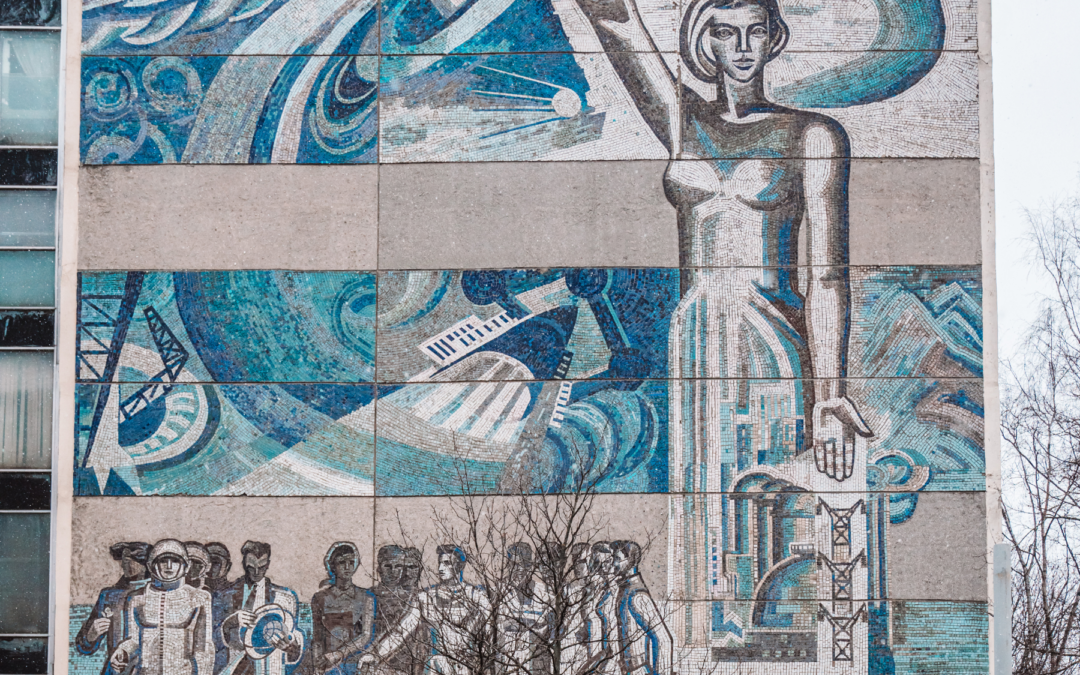
Slavic mosaic art has always belonged to the public. Unlike artworks meant for private interiors, mosaics were created to be seen by many people every day. Their placement in shared locations gave them an important role in public ritual and community life.
Public buildings were natural homes for Slavic mosaic art. Cultural centers, schools, transit halls, and gathering spaces became visual landmarks. These mosaics were not passive decoration. They helped define how people moved through and used community spaces.
In many Slavic cities, public ritual did not always mean formal ceremony. It often meant everyday actions repeated over time. Walking to school. Meeting neighbors. Waiting for transportation. Slavic mosaic art became part of these routines, shaping shared experience through constant presence.
Mosaics often marked entrances or central walls. Their placement guided movement and attention. People passed them daily, sometimes without stopping, yet the images became familiar. Over time, this familiarity created emotional attachment and a sense of belonging within community spaces.
Public ritual also includes seasonal events, celebrations, and gatherings. Mosaics provided visual backdrops for these moments. They framed performances, meetings, and collective activities. Their durability allowed them to witness decades of shared use.
Themes in Slavic mosaic art often emphasized unity, continuity, and collective effort. These themes reinforced public ritual by reminding viewers of shared values. Even abstract mosaics used repetition and rhythm to suggest harmony and cooperation.
Community spaces shaped how mosaics were designed. Artists considered distance, lighting, and movement. Images needed to remain clear as people passed by. Colors were chosen for visibility and balance. Slavic mosaic art was created to function within active environments.
Public ritual is strengthened by repetition. Seeing the same mosaic daily builds connection. Over time, people associate personal memories with shared spaces. A mosaic becomes part of local identity rather than a separate artwork.
In schools, Slavic mosaic art often reflected learning, growth, or shared responsibility. In transit spaces, mosaics emphasized movement and connection. In cultural centers, they reinforced continuity and creativity. Each setting shaped how the artwork interacted with public ritual.
As cities changed, some mosaics were neglected or covered. When rediscovered, communities often responded strongly. The return of familiar images restored a sense of place. This reaction shows how deeply mosaics were woven into community spaces.
Preserving Slavic mosaic art means preserving these connections. Restoration protects not only materials, but relationships between people and place. Removing or altering a mosaic can disrupt long-standing public ritual.
Education plays a key role in preservation. When people understand why a mosaic exists in a specific location, they value it more. Awareness strengthens protection of community spaces and their visual history.
Slavic mosaic art continues to influence how people experience public environments today. New projects often draw inspiration from historic placement and scale. Artists recognize the power of mosaics to shape movement, memory, and shared experience.
For Slavic Art Alliance, this relationship between mosaic art and public ritual is central. These works were created to live with people, not apart from them. They shaped daily life through presence, repetition, and meaning.
Mosaics remind us that art does not need to demand attention to matter. Sometimes its power comes from quiet endurance. In Slavic communities, mosaic art continues to support public ritual by simply being there—day after day, generation after generation.