
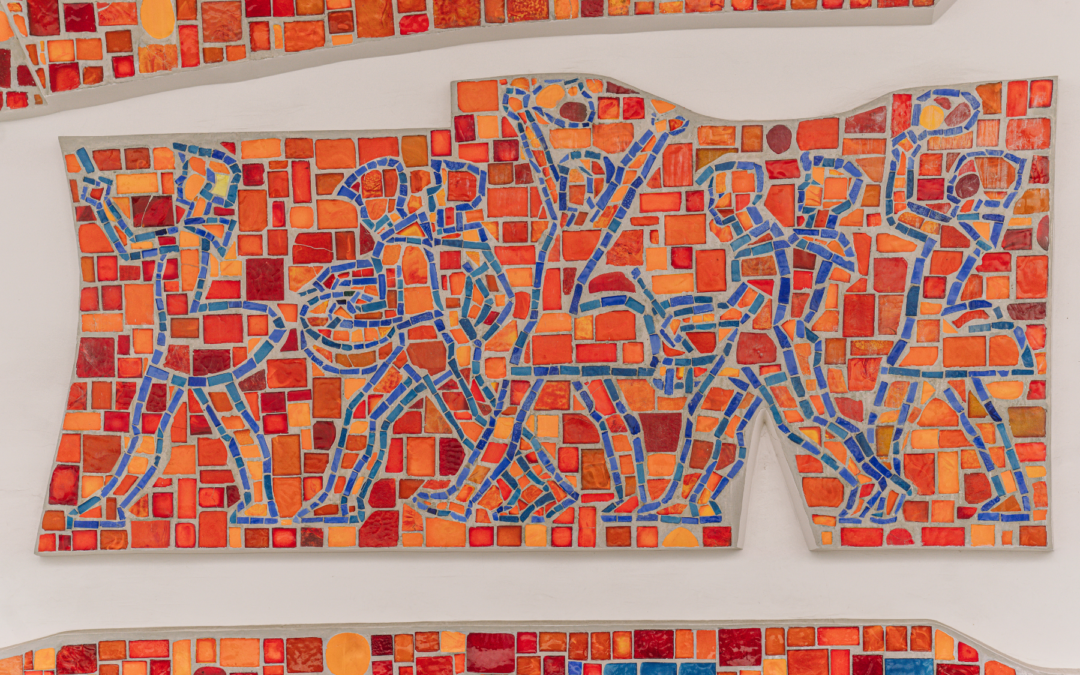
The Slav Epic is one of the most ambitious art projects connected to Slavic cultural heritage. Created as a cycle of large-scale paintings, it was designed to reflect shared history, values, and cultural memory. Over time, its influence extended beyond painting and into other forms of Slavic visual art, including public murals and mosaics.
The scale of The Slav Epic is central to its impact. Large compositions allow stories to unfold across wide surfaces. This approach influenced how artists later thought about public murals and large mosaic walls. Size became a way to communicate importance and collective meaning.
Rather than focusing on individual figures, The Slav Epic emphasizes groups, movement, and atmosphere. This approach resonates strongly with Slavic visual art traditions, which often favor community over individuality. In mosaics and murals, this translated into scenes that feel shared rather than personal.
Color plays a key role in the legacy of The Slav Epic. Soft transitions, layered tones, and controlled contrast create emotional depth without overwhelming the viewer. These color principles later appeared in public murals and mosaic compositions, especially those designed for large public spaces.
Public murals share an important connection with The Slav Epic. Both are meant to be experienced physically, not just observed. Viewers move through space, taking in the artwork gradually. This sense of movement influenced how murals and mosaics were planned within architectural settings.
In Slavic visual art, storytelling often happens through suggestion rather than detail. The Slav Epic uses atmosphere, gesture, and composition to guide interpretation. Mosaic artists adopted similar strategies, using shape and rhythm instead of fine detail to communicate meaning across large surfaces.
The influence of The Slav Epic is also visible in how artists approached symbolism. Rather than direct illustration, symbols are layered and repeated. This approach works well in public murals and mosaics, where clarity from a distance is essential.
Educational institutions and cultural centers embraced these visual ideas. Large mosaic panels began to appear in shared spaces, echoing the sense of collective identity found in The Slav Epic. These works helped translate painted ideas into durable materials.
Another lasting influence is the balance between narrative and abstraction. The Slav Epic does not rely on strict realism. This allowed later artists to adapt its principles to mosaic art, where abstraction is often necessary due to material limitations.
Public murals inspired by these ideas became visual anchors in cities and towns. They reinforced shared memory through repetition and placement. Slavic visual art used walls as storytelling surfaces, much like The Slav Epic used canvas.
Preservation efforts today recognize The Slav Epic as more than a painting series. It is a reference point for understanding scale, composition, and cultural storytelling in Slavic visual art. Its influence helps explain why mosaics and murals became such important public art forms.
For Slavic Art Alliance, this legacy highlights the connection between fine art and public craft. The Slav Epic shows how visual storytelling can move from canvas to wall to mosaic without losing meaning.
The continued interest in The Slav Epic reminds us that cultural heritage adapts over time. Ideas shift across materials and generations. Public murals and mosaics carry these ideas forward in visible, accessible ways.
By studying The Slav Epic, viewers gain insight into how Slavic visual art balances history, emotion, and collective identity. Its influence remains present wherever large-scale art invites communities to pause, reflect, and connect.