
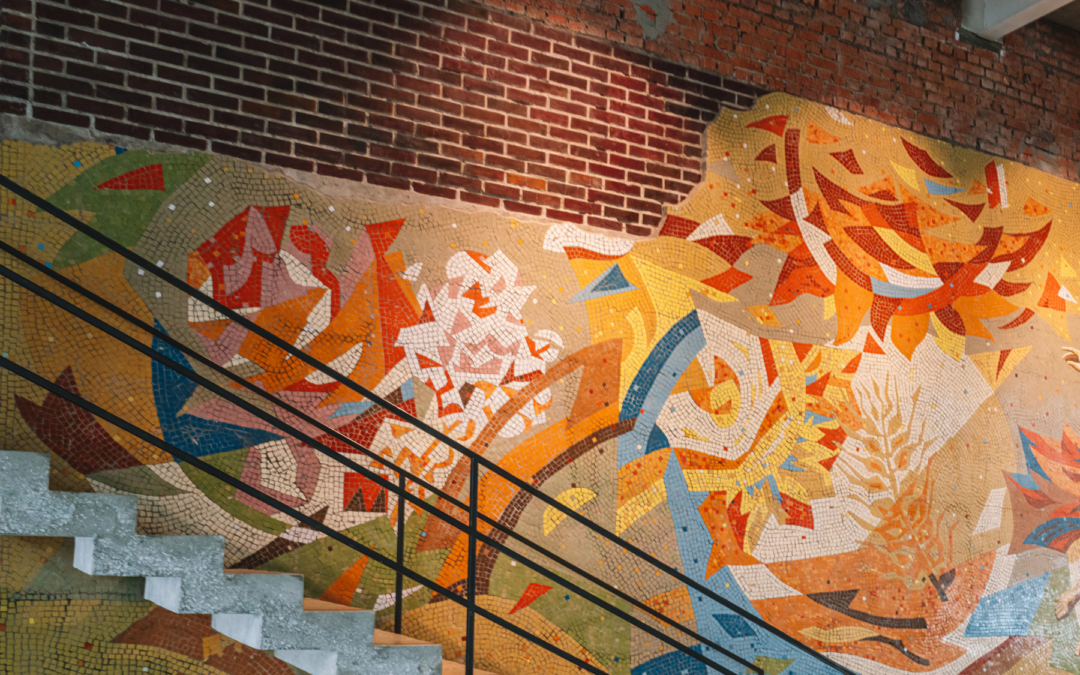
Slavic mosaics are built to last, but they are not immune to time. Weather, renovations, and neglect slowly change public art. One of the most important tools for protecting these works today is photography. Slavic mosaic photography plays a key role in preservation, even when physical restoration is not possible.
Photography allows mosaics to be recorded exactly as they exist. Colors, textures, and placement are captured in detail. This record becomes especially valuable when mosaics are damaged, altered, or removed. In many cases, photographs are the only remaining evidence that a mosaic ever existed.
Mosaic preservation begins with visibility. When a mosaic is photographed, it becomes easier to recognize its value. Images allow researchers, conservators, and communities to see what might otherwise be overlooked. Slavic mosaic photography brings hidden or forgotten works back into public awareness.
Public art documentation also helps track change over time. Comparing older photographs with newer ones shows how mosaics age. Small cracks, fading colors, or missing tesserae become visible. This information supports informed decisions about restoration and care.
Photography captures context as well as detail. A mosaic does not exist in isolation. Its relationship to architecture, light, and movement matters. Wide shots show placement within public space. Close-ups show craftsmanship. Together, these views support deeper understanding of mosaic preservation.
Many Slavic mosaics are located in active environments. Schools, transit buildings, and residential spaces change frequently. Photography allows documentation without disrupting daily use. It provides a non-invasive way to preserve visual information.
Lighting is an important consideration in Slavic mosaic photography. Natural light changes how colors appear. Photographers often document mosaics at different times of day to capture surface variation. These images reveal depth and texture that might be missed otherwise.
High-quality public art documentation also supports education. Photographs are used in articles, exhibitions, and teaching materials. They allow wider audiences to engage with Slavic mosaics beyond geographic limits. This access strengthens appreciation and advocacy.
Photography is especially important when mosaics are at risk. Before renovations or demolition, documentation preserves knowledge of the artwork. Even when a mosaic cannot be saved physically, its visual record remains part of cultural history.
Digital archives have expanded the role of photography. Images can be stored, shared, and compared easily. Slavic mosaic photography contributes to collective databases that support research and preservation planning.
Photographs also support community memory. Residents often recognize mosaics through images even if the original is no longer visible. This connection reinforces the cultural importance of public art documentation.
For mosaic preservation, photography works alongside conservation. It does not replace restoration, but it strengthens it. Accurate visual records guide material choices and technique during repair work.
For Slavic Art Alliance, photography is an essential preservation tool. It aligns with the mission of education and awareness. By documenting mosaics, the organization helps ensure these works remain visible, even when circumstances change.
Slavic mosaic photography reminds us that preservation is not only physical. Recording, sharing, and remembering are equally important. Each photograph protects a moment in the life of a mosaic.
Through careful public art documentation, mosaics continue to speak. Even when surfaces fade or walls change, their visual presence remains accessible. Photography ensures that Slavic mosaics are not lost to time, but carried forward through images and shared knowledge.