
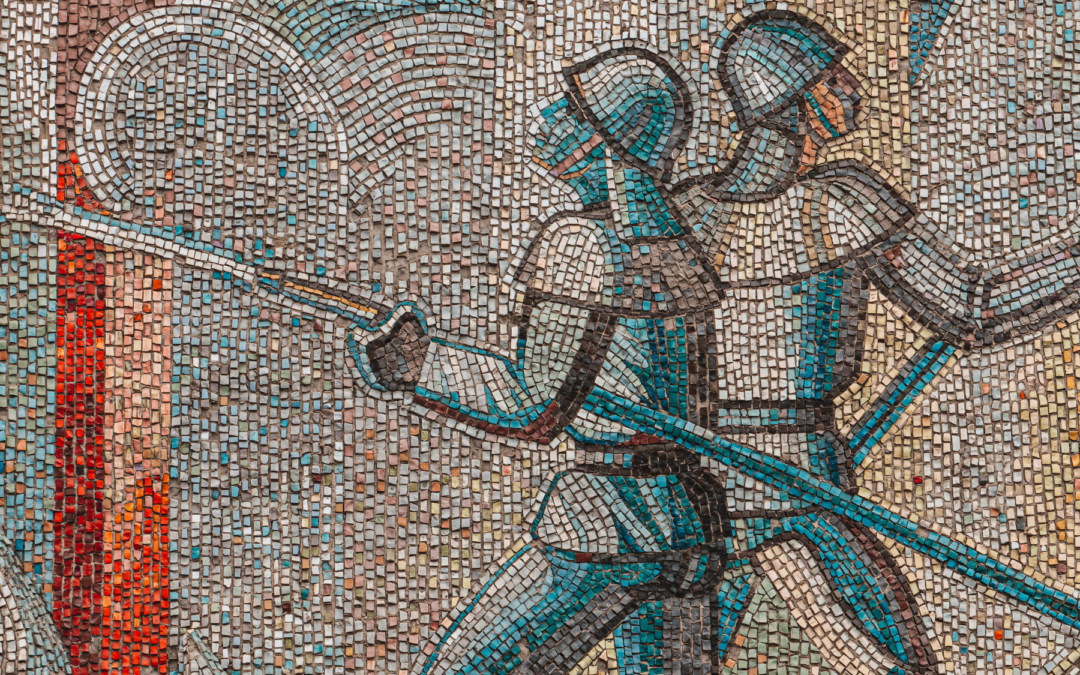
Slavic mosaic art shares common roots, but it is far from uniform. Across different Slavic countries, mosaic styles developed in distinct ways. Local materials, climate, architecture, and artistic traditions all influenced how mosaics looked and functioned in public spaces.
Slavic mosaic styles reflect regional identity. Artists responded to their surroundings and community needs. While techniques were often shared, the final appearance of mosaics varied widely from place to place.
In northern Slavic countries, mosaic surfaces often feel calm and restrained. Cooler color palettes were common. Blues, grays, and muted greens reflected both environment and available materials. These regional mosaic art traditions favored balance and quiet rhythm rather than strong contrast.
Central Slavic regions developed mosaic styles that emphasized structure and clarity. Clean lines, organized layouts, and geometric forms appear frequently. Architecture played a strong role here. Mosaics were designed to fit closely within building surfaces rather than dominate them.
In southern Slavic countries, mosaic art often appears brighter and more expressive. Warmer climates allowed for bold colors and higher contrast. Artists used strong reds, yellows, and blues to ensure visibility in bright sunlight. These Slavic mosaic styles feel energetic and open.
Material availability also shaped regional mosaic art. Areas with access to stone favored heavier textures. Regions with glass production traditions used reflective surfaces. These material choices influenced not only appearance but also how mosaics aged over time.
Themes varied across Slavic countries as well. Some regions focused on nature and landscape. Others emphasized human activity, craftsmanship, or community life. Even abstract mosaics reflect regional priorities through composition and movement.
Public placement influenced design decisions. In colder regions, mosaics were often installed indoors or in sheltered spaces. In warmer regions, exterior mosaics became landmarks. Slavic mosaic styles adapted to these conditions, balancing durability with visibility.
Despite differences, shared values connect regional mosaic art across Slavic countries. Emphasis on community, continuity, and public access appears everywhere. Mosaics were created to be seen daily, not reserved for elite spaces.
Artists often traveled or trained outside their home regions. This movement allowed techniques to spread while still adapting to local conditions. As a result, Slavic mosaic styles show both unity and diversity.
Over time, political and architectural changes affected regional mosaic art. Some styles faded, while others evolved. Yet many mosaics remain, offering insight into how different Slavic countries expressed identity through visual form.
Preservation efforts benefit from understanding regional differences. Restoring a mosaic requires knowledge of its local context. Colors, materials, and layout choices all carry regional meaning.
For Slavic Art Alliance, highlighting regional mosaic art supports appreciation for diversity within shared heritage. Slavic mosaic styles are not a single tradition, but a collection of related practices shaped by place.
Studying these regional differences deepens understanding of Slavic visual culture. Each mosaic reflects a conversation between artist, environment, and community. Together, they form a rich and varied artistic landscape.