
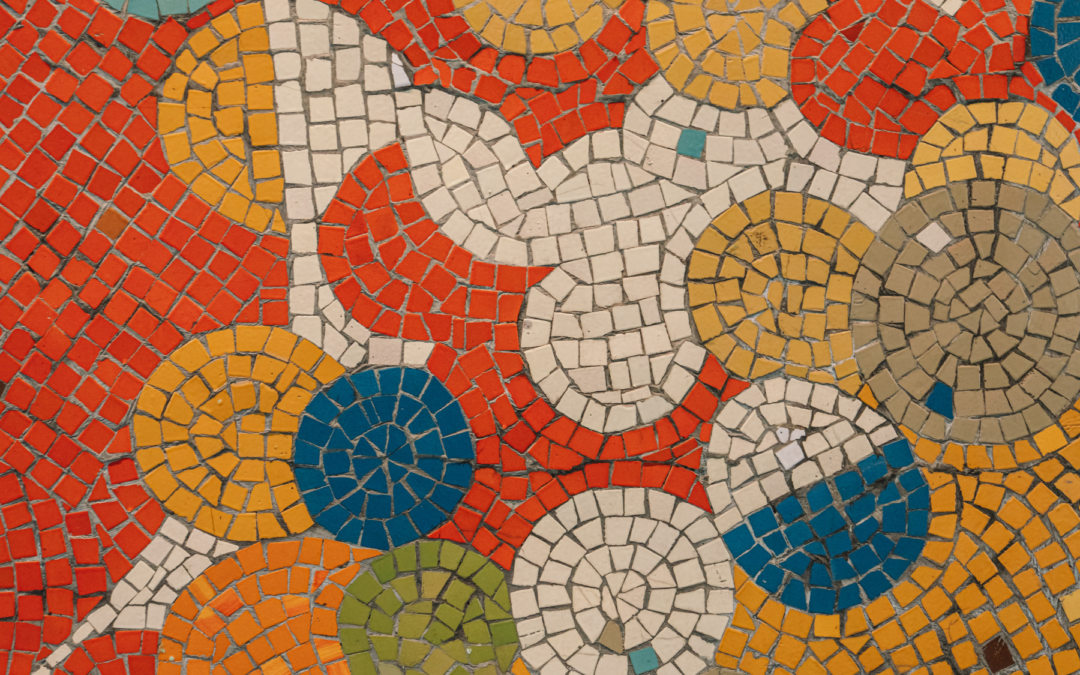
Slavic mosaics appear in many types of spaces. Some are found in sacred settings, while others belong to everyday public life. Together, sacred mosaics and secular mosaics show how mosaic art adapted to different needs while remaining deeply rooted in cultural tradition.
Sacred mosaics are often found in religious buildings or spaces connected to spiritual practice. These mosaics are designed to support reflection, continuity, and reverence. Their placement and imagery encourage stillness and focus. In Slavic mosaics created for sacred spaces, balance and harmony are key.
Colors in sacred mosaics are often calm and controlled. Blues, golds, and soft earth tones dominate. These colors help create a quiet atmosphere. The goal is not to overwhelm the viewer, but to support contemplation. Light plays an important role, interacting with surfaces throughout the day.
Secular mosaics serve a different purpose. They are placed in schools, cultural centers, transit spaces, and residential buildings. Secular mosaics are part of daily movement and routine. People encounter them while walking, working, or gathering. As a result, they are designed to remain clear and engaging over time.
In secular mosaics, composition tends to be more open and dynamic. Artists often use stronger contrasts and bolder shapes. These choices help the artwork remain visible in busy environments. Slavic mosaics in secular spaces often emphasize community, labor, nature, or shared identity.
While sacred mosaics focus inward, secular mosaics reach outward. Sacred mosaics guide attention toward reflection. Secular mosaics encourage connection and familiarity. Both types rely on repetition, rhythm, and structure to communicate meaning.
Material choices also differ. Sacred mosaics often use smoother surfaces and refined tesserae placement. This creates a sense of unity and calm. Secular mosaics may use more varied textures. Slight irregularities add movement and energy, making the artwork feel approachable.
Despite these differences, sacred mosaics and secular mosaics share important qualities. Both are designed for longevity. Both rely on careful craftsmanship. And both are meant to serve communities rather than individuals.
Architectural context shapes how Slavic mosaics function. In sacred spaces, mosaics often align with focal points like walls or ceilings. In secular settings, mosaics respond to pathways, entrances, and open areas. Placement is intentional and meaningful in both cases.
Over time, some mosaics have shifted roles. A mosaic originally created for a secular space may gain symbolic importance. Likewise, sacred mosaics may become historical landmarks visited beyond religious practice. This fluidity shows how Slavic mosaics continue to adapt.
Preservation efforts must consider original context. Restoring sacred mosaics requires sensitivity to spiritual use. Restoring secular mosaics requires understanding their relationship to daily life. Both demand respect for purpose as well as material.
Education helps audiences appreciate these differences. Learning why a mosaic was created and where it was placed deepens understanding. Sacred mosaics and secular mosaics are not opposing forms. They are complementary expressions of shared culture.
For Slavic Art Alliance, exploring this contrast highlights the flexibility of mosaic art. Slavic mosaics are capable of supporting reflection and celebration alike. They meet people where they are, whether in quiet spaces or active ones.
By studying sacred mosaics and secular mosaics together, we see a fuller picture of Slavic visual culture. Mosaic art adapts without losing identity. It remains present, meaningful, and connected to the spaces people inhabit every day.