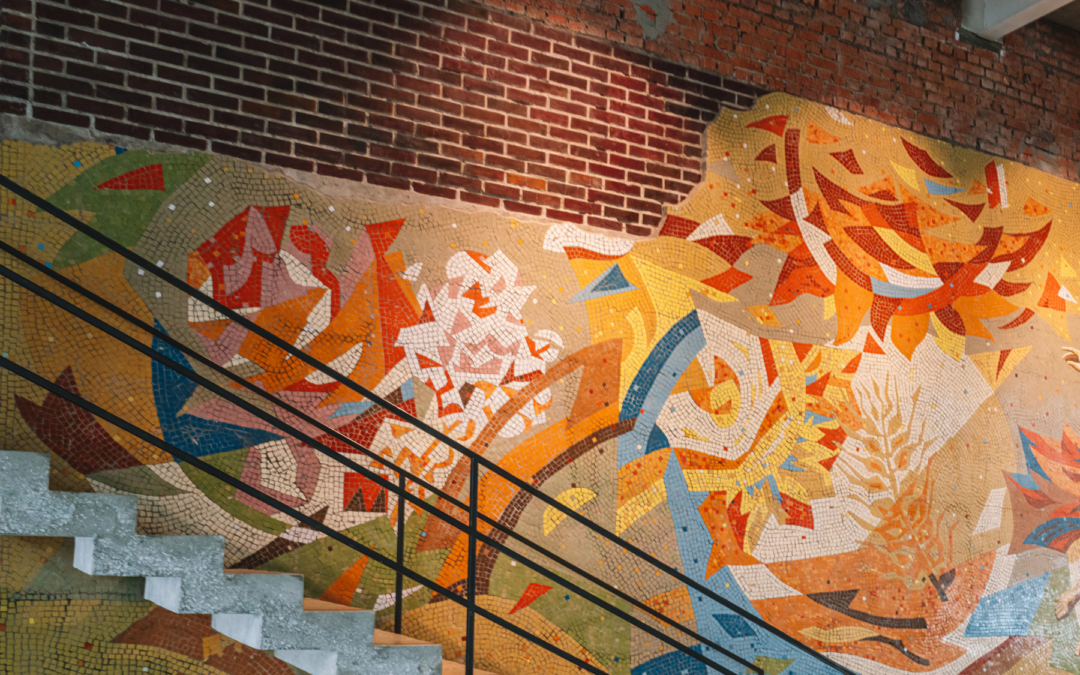
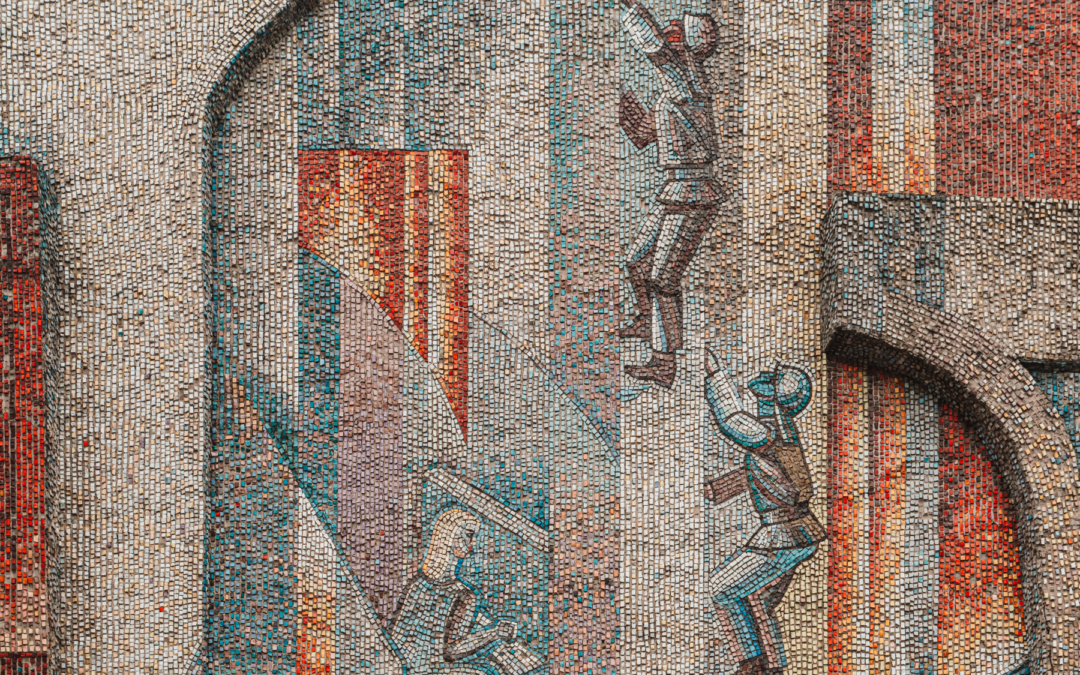
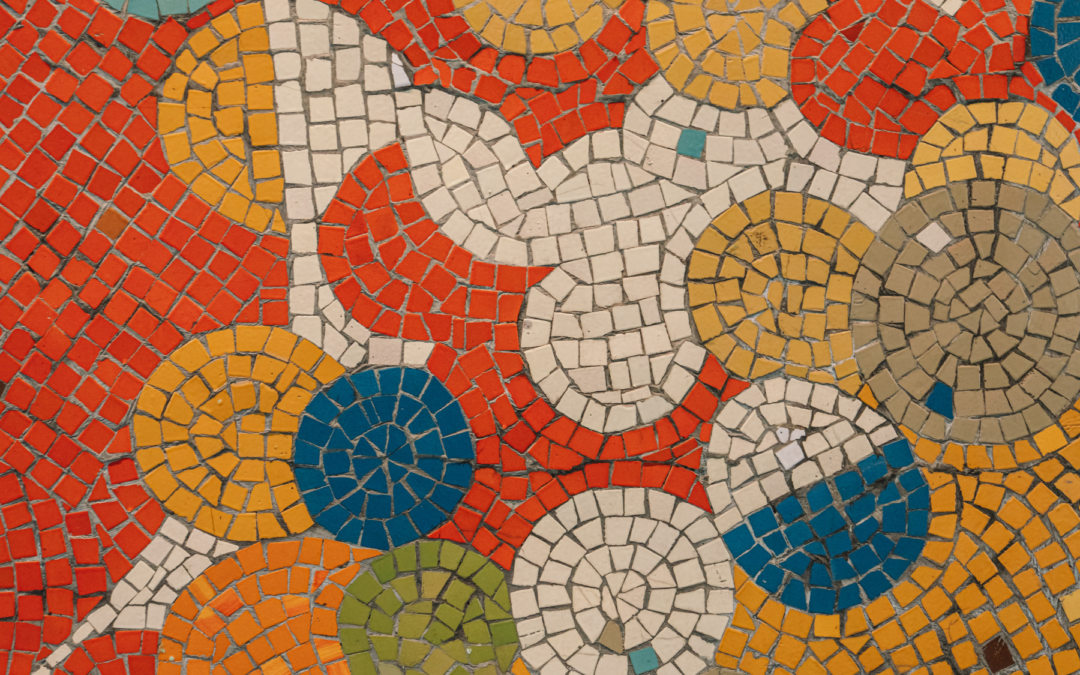
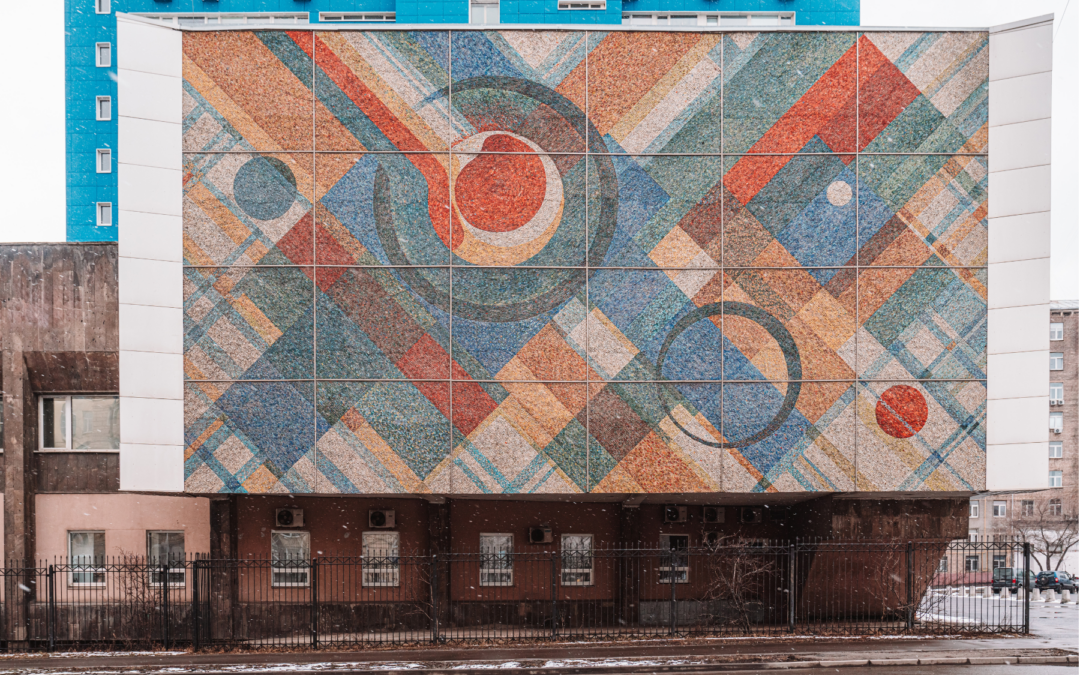
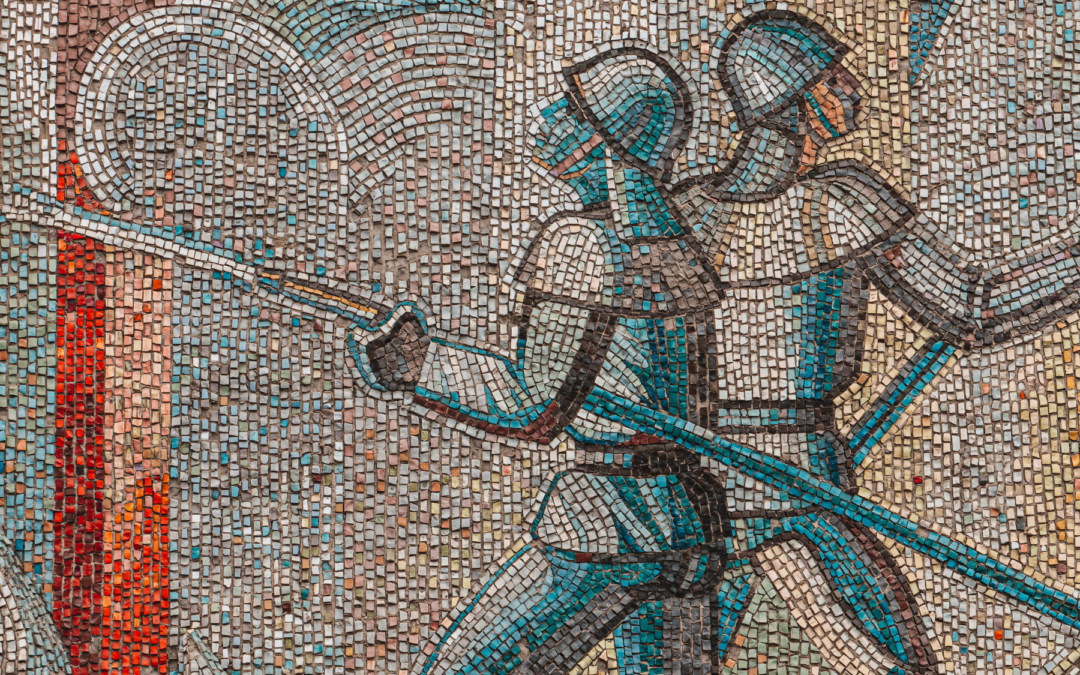
Slavic mosaics are built to last, but they are not immune to time. Weather, renovations, and neglect slowly change public art. One of the most important tools for protecting these works today is photography. Slavic mosaic photography plays a key role in preservation,...
Slavic mosaic art is often admired for its beauty and durability, but behind every finished mosaic is a practical reality. Materials cost money. Labor takes time. Space, tools, and planning all require support. Understanding Slavic mosaic production means looking...
Slavic mosaics appear in many types of spaces. Some are found in sacred settings, while others belong to everyday public life. Together, sacred mosaics and secular mosaics show how mosaic art adapted to different needs while remaining deeply rooted in cultural...
In Slavic mosaic art, meaning does not stop at the central image. The edges matter. Borders play an important role in how mosaics are read, understood, and experienced. Through careful use of framing and edge patterns, artists shaped how viewers approached the artwork...
Slavic mosaic art shares common roots, but it is far from uniform. Across different Slavic countries, mosaic styles developed in distinct ways. Local materials, climate, architecture, and artistic traditions all influenced how mosaics looked and functioned in public...