Essay · November 19, 2026 · 3 min read
Pella’s Mosaic Floors and the Difference Between Looking Down and Looking Across
By Slavic Art Alliance ·
A mosaic floor and a mosaic wall may share repeated shapes, but they do not meet a viewer in the same way. The first belongs to the space beneath and around the body; the second is encountered across or above it. Pella offers a useful starting point for thinking about that difference.
The Greek Ministry of Culture describes mosaics in the reception and banquet rooms of richer houses at Pella. That documented domestic context should come before any comparison with later public murals.
Read the room before isolating the image
When studying a floor mosaic, ask where the room begins and ends. Where is the entrance? How is the decorated field positioned within the room? Does the record distinguish the main image from surrounding ornament?
A photograph of a central scene may omit the borders and room layout. Seek a plan or wider institutional image when available. Do not reconstruct missing architecture from a tightly cropped reproduction.
These questions help keep the mosaic connected to use and space. They are not permission to invent how every ancient guest moved, sat or interpreted the picture. Such claims require archaeological or textual evidence.
Compare with a wall, not with an imagined ancestor
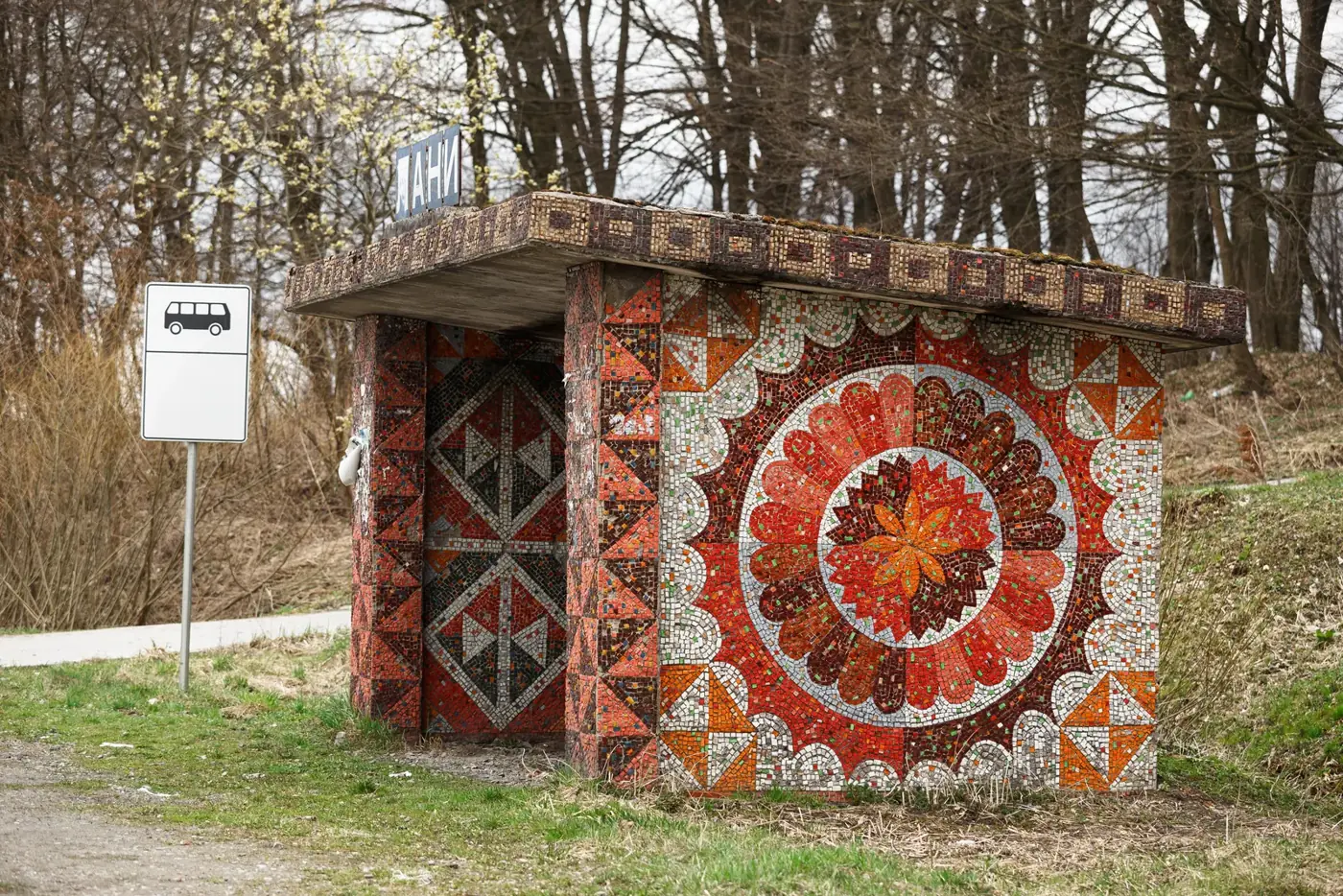
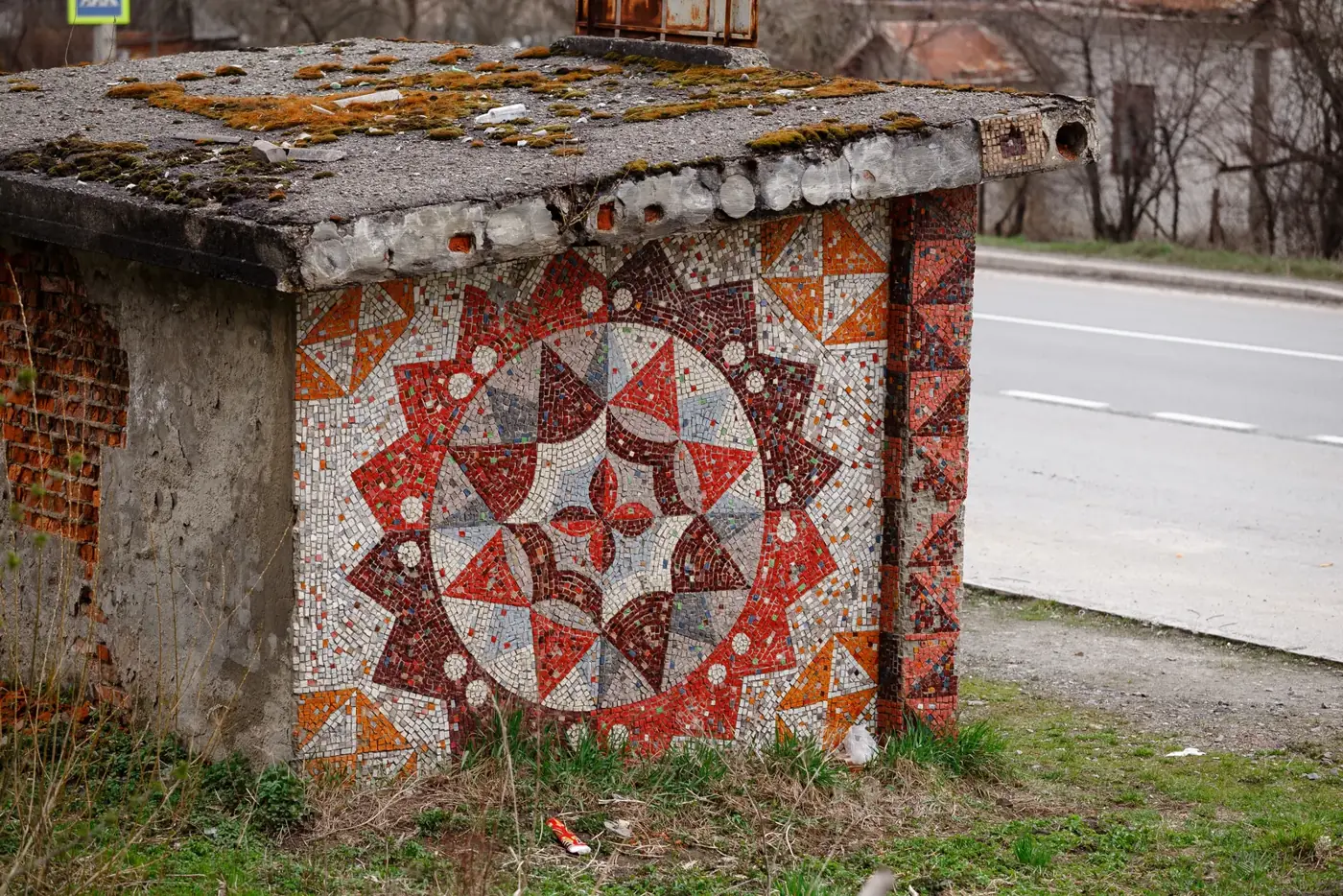
The featured photograph shows an angular patterned wall at Lany in Ukraine. It is not a photograph of Pella. The comparison is architectural: a wall-sized design faces a roadside environment, while the Pella material introduces decorated domestic floors.
At Lany, the outer boundary of the wall and the roof edge establish the field. In a floor record, the room perimeter and surviving pavement establish it. Compare those boundaries first. Similar stars, circles or repeated divisions do not by themselves demonstrate a direct historical connection.
Four useful comparison questions
Viewing direction: Is the image normally approached from above, across a space or from below?
Distance: Is it available to close inspection, or does the setting place the viewer farther away?
Completeness: Does the photograph show the entire decorated area or only one surviving section?
Context: Is the work recorded in its original setting, after relocation, or in a museum?
Write the answer for each work separately before drawing a conclusion. If information is absent, leave the field open. A table with an honest “not established” is more useful than a fluent paragraph built on guesses.
Avoid a simple story of progress
It is tempting to describe ancient floors as a starting point and later walls as a more advanced form. That framing overlooks different purposes and conditions. A medium can be used differently without one use replacing or improving on another.
The aim of comparison is to notice what changes when a design occupies another kind of surface. It can sharpen our attention to both works while preserving their historical separation.
Use the Pella institutional record for the ancient context and the Alliance’s Lany catalogue for the photographed modern comparison. If you contribute another example, include its original location and a source for any date or attribution.
Explore further
Help us document the next mosaic.
Every gift funds photography, research and preservation advocacy.
Donate