Essay · November 19, 2026 · 3 min read
Babukhiv’s Mosaic Bus Shelters: Two Designs, One Place Name
By Slavic Art Alliance ·
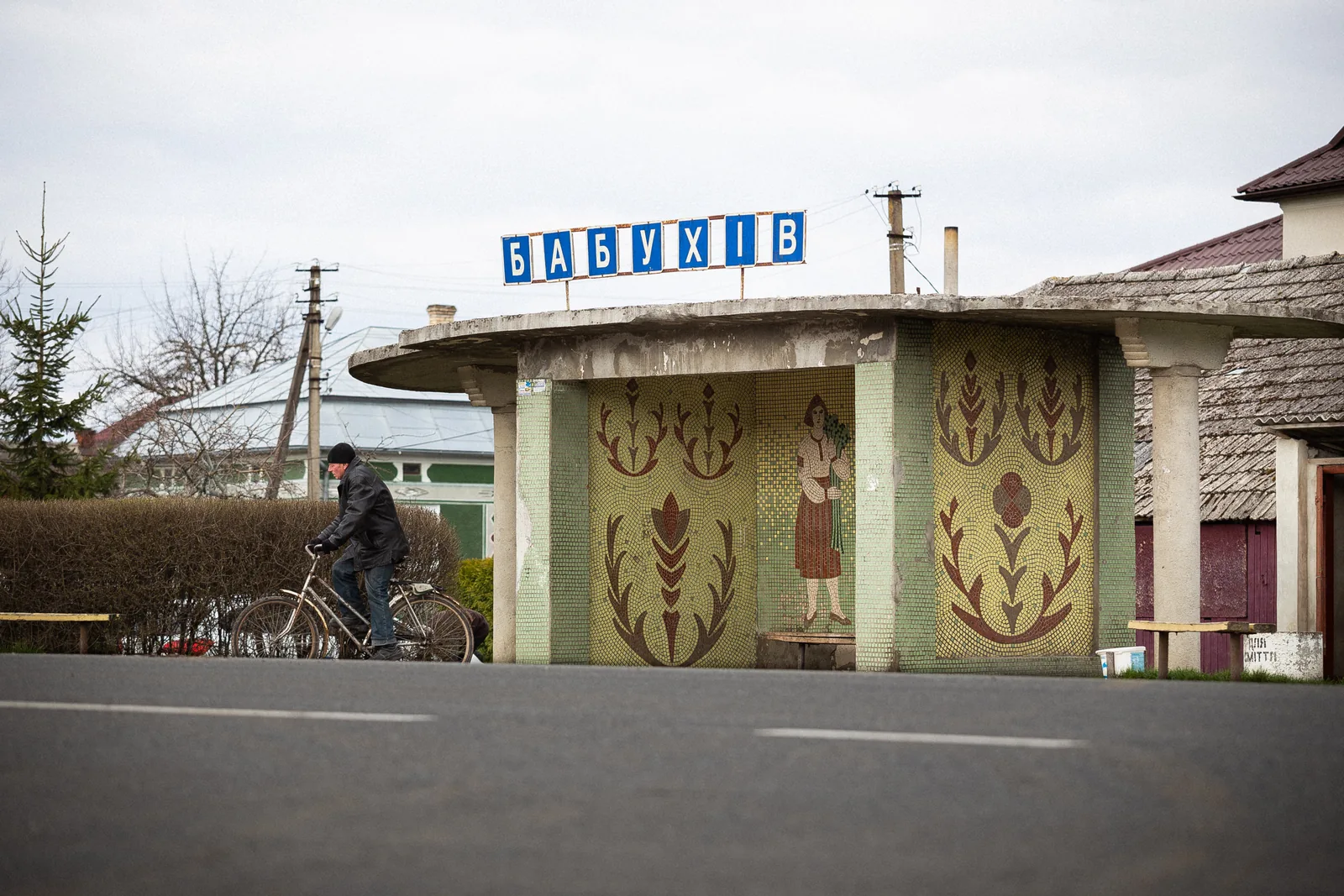
A place name can hide more than one artwork. In the Slavic Art Alliance’s Babukhiv photograph collection, shelters carrying the same blue-and-white name sign present markedly different images. One has large branching motifs on pale backgrounds; another places a group of figures across its back wall. Treating them as interchangeable photographs would erase a useful distinction.
The supplied location notes identify Babukhiv in Ivano-Frankivsk Oblast, Ukraine. They are the source for that identification, while Andrii Shustykevych’s photographs provide the visual evidence discussed here. The collection does not establish a maker or installation date. Those fields should remain open.
Start with the shelter, then the panel
In the featured photograph, the roadway, roof and supports establish the scale of the artwork. A cyclist occupies the surrounding street scene. The person is incidental to the photograph, not identified as an artist, participant or representative of the Alliance.
The composition is organised into wall-sized sections. Upright, branching forms occupy much of each pale field, and the roof creates a strong horizontal boundary above them. Looking first at that framework helps separate the shelter’s architecture from the shapes represented in the artwork.
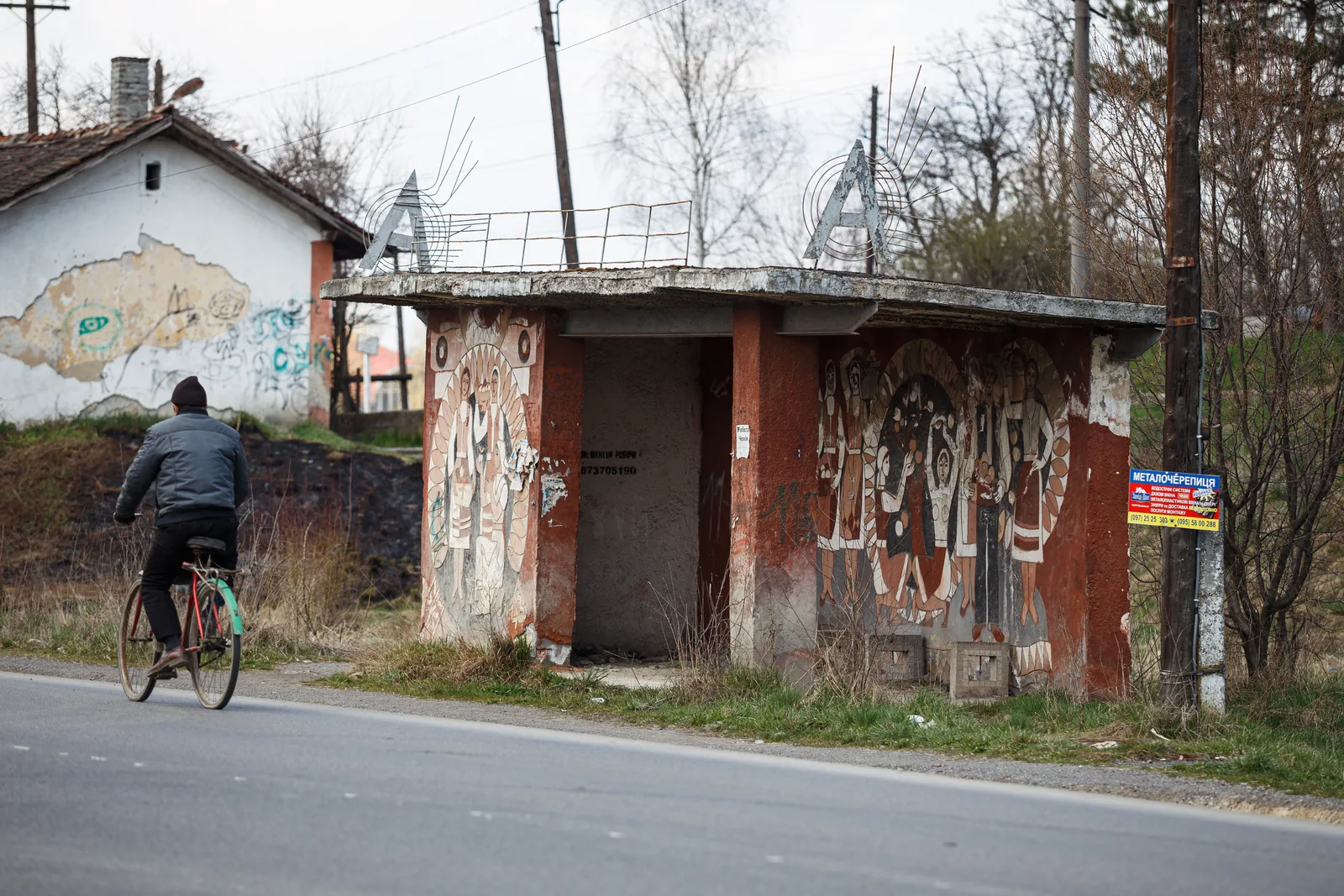
Next, examine the group of figures in the other photographs from this collection. Their clothing and raised or extended arms offer a different visual rhythm. It is reasonable to describe a row of people and repeated gestures. Naming a particular dance, celebration or ethnic costume would require evidence beyond the photograph.
Why two records are better than one vague caption
A caption reading only “Babukhiv mosaic” cannot tell a researcher which shelter is shown. A more useful description adds a distinguishing feature: “shelter with branching motifs” or “shelter with a group of figures.” These are descriptive labels, not claims about official artwork titles.
For a personal research notebook, record:
- The place name exactly as supplied, together with its region.
- Which composition appears in the image.
- The source filename and photographer.
- Whether the photograph shows a whole structure, a wall or a detail.
- Any uncertainty about the relationship between the views.
Do not use road direction or apparent distance to assign precise positions unless the location evidence supports that conclusion. The two map links in the collection notes are helpful leads, but a photograph is not a current navigation instruction.
A small comparison worth making
Put the two compositions side by side and ask how each uses the wall. The branching design emphasises tall repeated units. The figure scene establishes a lateral relationship between bodies. Both can be discussed without turning motifs into a universal code for prosperity, protection or communal harmony.
This is the value of a closely documented local collection: it makes differences visible. If you know who designed either Babukhiv shelter, share the basis for that knowledge through the Alliance’s contact page. A dated photograph, commission record or named recollection can help turn an open question into a traceable attribution.
Primary visual evidence: Andrii Shustykevych, Babukhiv photograph series and accompanying location notes, supplied to Slavic Art Alliance in November 2026. Delivery date is not an installation date or confirmation of present condition.
Explore further
Help us document the next mosaic.
Every gift funds photography, research and preservation advocacy.
Donate