Essay · November 19, 2026 · 3 min read
Bedevlia’s Bus-Stop Art: Reading a Shelter Around Its Corners
By Slavic Art Alliance ·
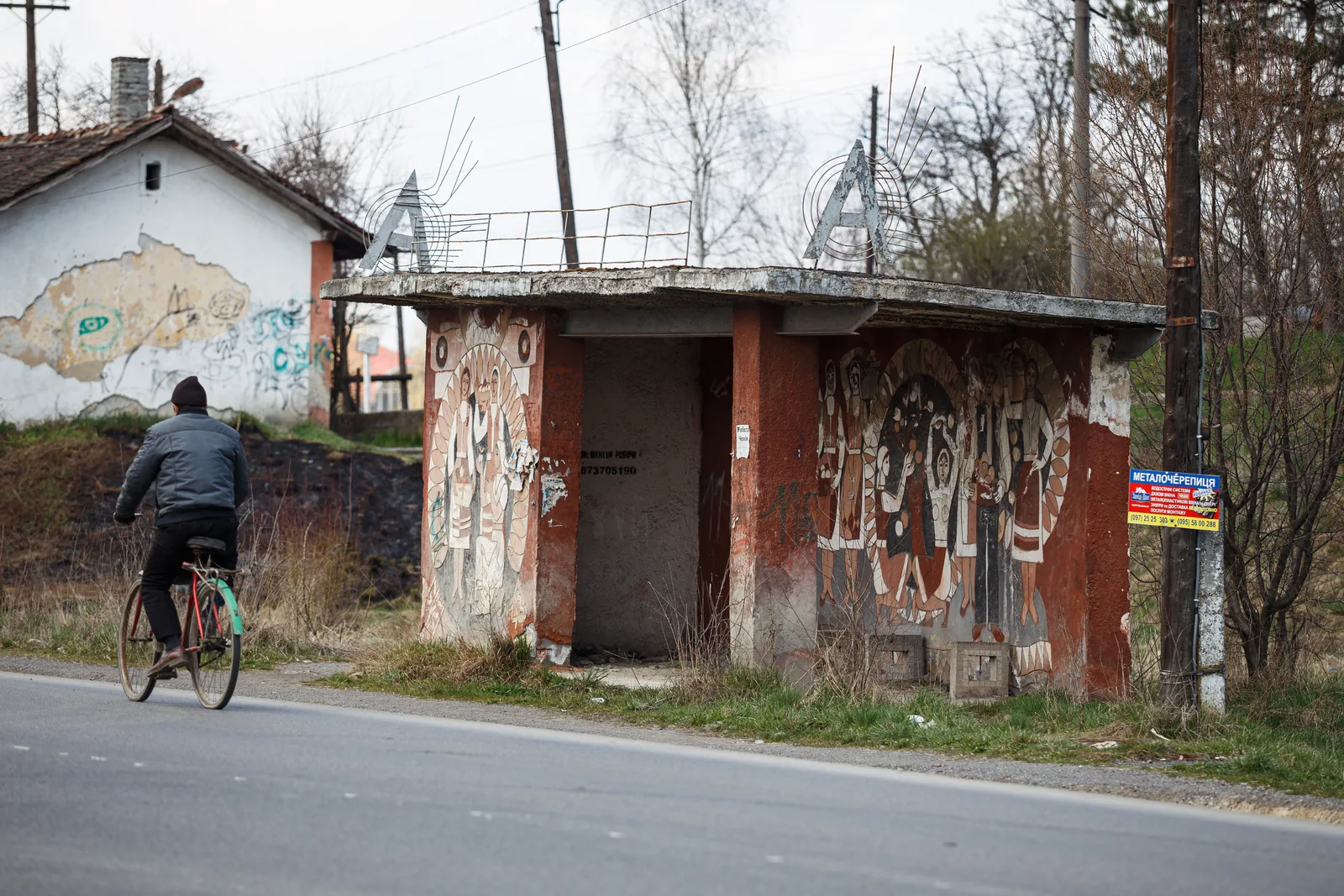
The Bedevlia shelter rewards a change of viewpoint. A frontal photograph shows an opening and several decorated surfaces, but a view from the side reveals another composition. The building is small enough to seem immediately understandable and complex enough to resist a single-image summary.
The Alliance’s supplied notes locate this collection in Bedevlia, Zakarpattia Oblast, Ukraine. The folder uses the spelling “Bedevlya”; retaining that alias helps connect the original files to an English-language article. It should not create a second entry for the same photographed place.
Read the corners as boundaries
Begin at the roofline. Its horizontal shape connects walls that face different directions. Under it, supports and openings interrupt the imagery. Those interruptions are useful: they tell you where one visible surface ends and another begins.
Across the photographs, figures and contrasting light and dark shapes appear on several walls. One side includes a large circular form with a central dark geometric motif. Another view concentrates on people arranged vertically within the available space. Describe these features before attempting to name the scene.
A circle is not enough to establish a sun cult, and clothing alone is not enough to identify a specific community or ceremony. The strongest first reading is a record of visible relationships: which shapes repeat, where the figures stand, and how each image fits the structure.
What the passing cyclist adds
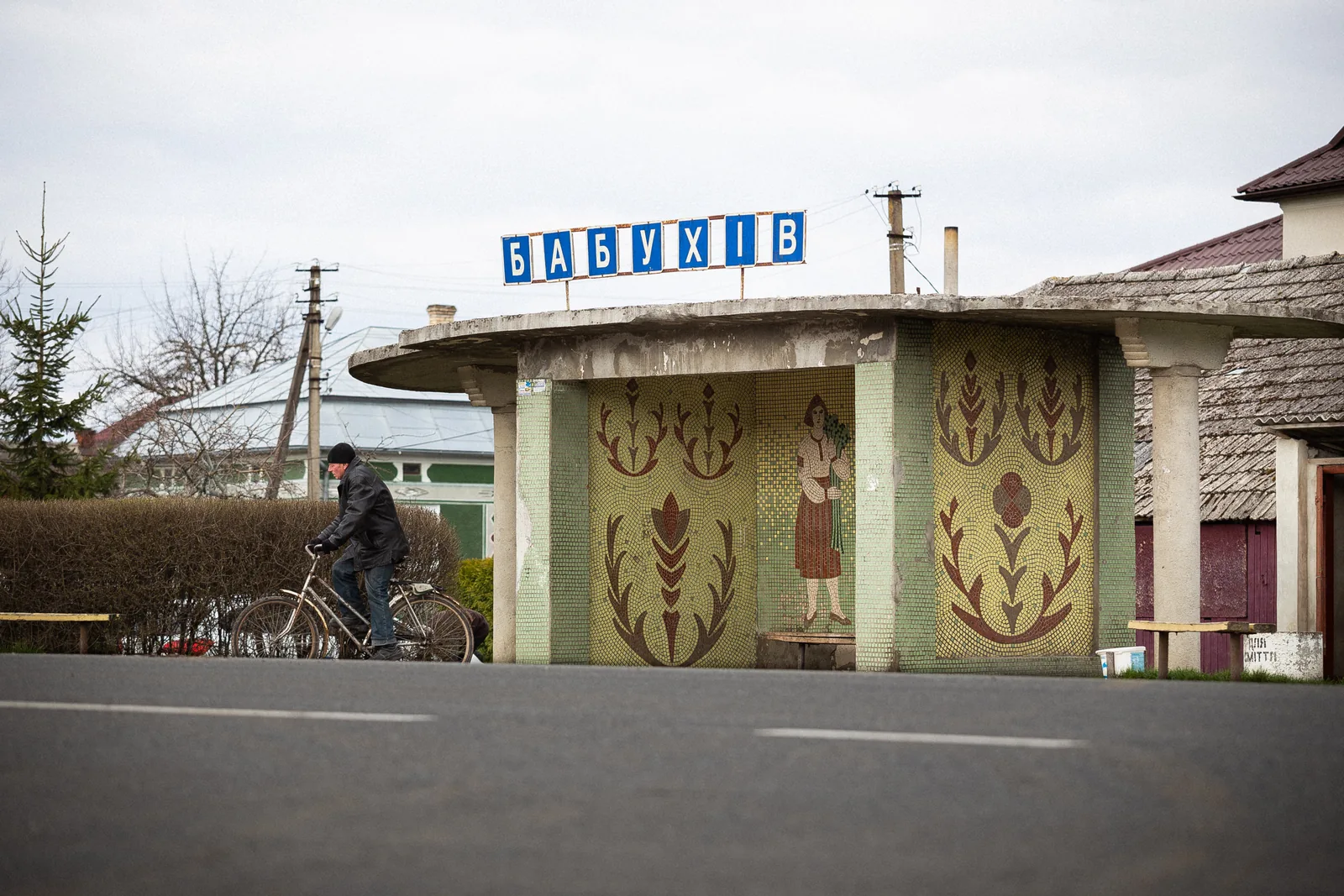
The featured photograph includes a cyclist alongside the shelter. This incidental street activity provides a sense of scale and setting. It does not prove that the stop remains in service today, identify a bus route or tell us anything about the person’s relationship to the artwork.
Keeping that distinction matters. An archive photograph can show a place as part of ordinary life while still being a record of one moment. Neither the scene’s apparent normality nor the date an article is published updates the photograph.
Build a surface-by-surface description
For this type of structure, a short viewing log is more informative than a single broad caption. Start with “front view,” then identify “side with circular motif” and “wall with grouped figures.” Keep these labels consistent across images. If you cannot establish orientation, avoid calling a wall north-facing or east-facing.
Record visible interruptions separately from interpretations. An area that looks pale or irregular may deserve closer examination, but a compressed photograph cannot establish its material, cause or stability. Do not label it a failed restoration without supporting records.
The resulting account should let another person find the same feature in the same photograph. That is a practical test of good description: can someone follow your words without sharing your assumptions?
Leave the unanswered questions visible
The source packet does not establish the designer, completion date or official title. Instead of filling those gaps with a familiar Soviet-era date range, preserve them as research questions. Local testimony and archival records may eventually clarify them.
Readers with additional evidence can contact the Alliance, identifying the Bedevlia collection and the particular wall they mean. A specific correction is easier to evaluate than a broad statement that a shelter “looks like” another artist’s work.
Primary visual evidence: Andrii Shustykevych’s Bedevlia photograph series and supplied location notes. The historical discussion above is limited to what those records establish.
Explore further
Help us document the next mosaic.
Every gift funds photography, research and preservation advocacy.
Donate