Essay · November 19, 2026 · 3 min read
Cheremkhiv’s Bird Mosaic: Looking Beyond the Central Motif
By Slavic Art Alliance ·
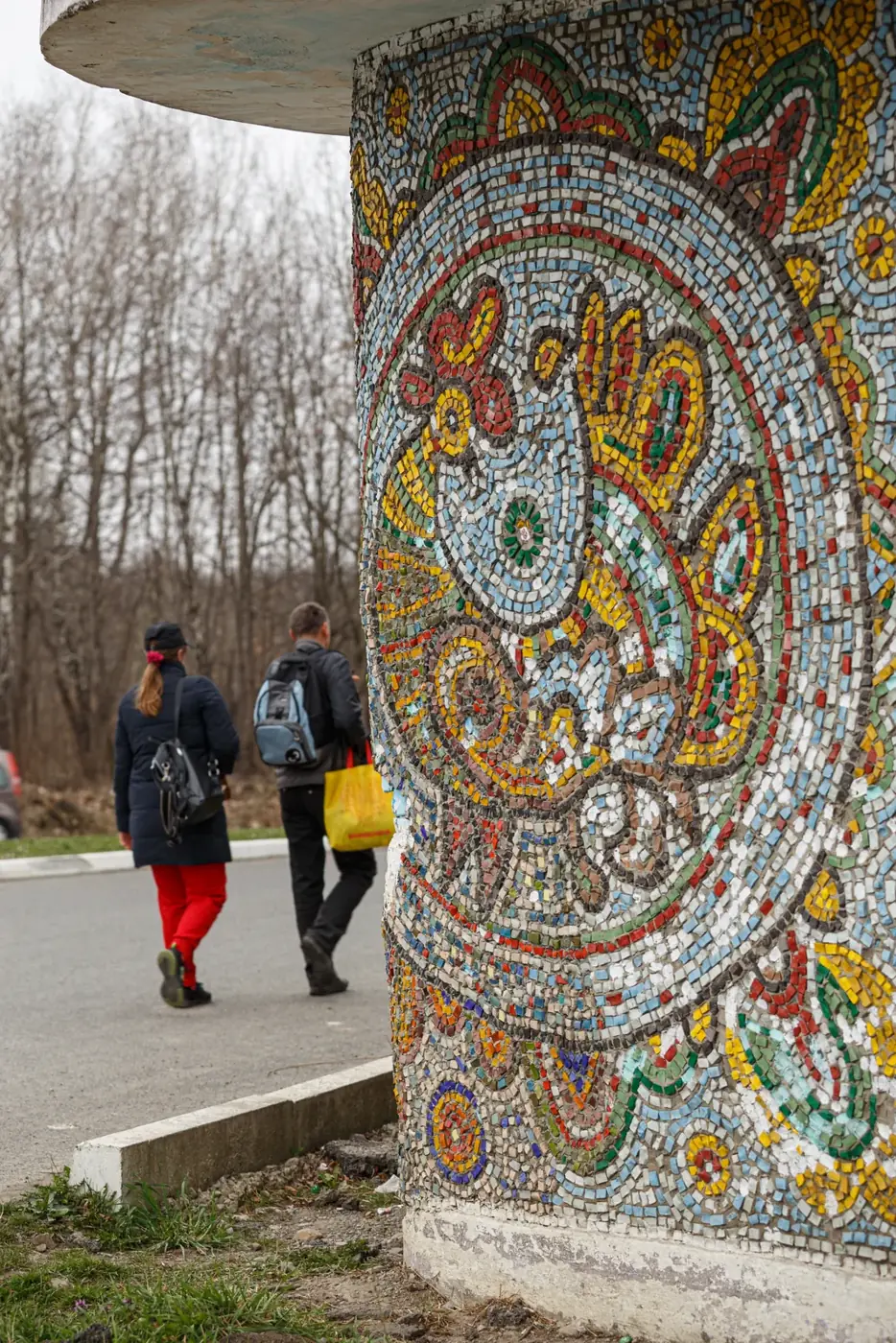
A bird-like figure fills a circular field on a photographed shelter in Cheremkhiv. Its eye, patterned body and surrounding curves immediately draw attention. Yet the image becomes more interesting when we stop trying to translate it into one symbolic meaning and begin looking at how it is assembled.
The location is identified in the supplied collection notes as Cheremkhiv in Ivano-Frankivsk Oblast, Ukraine. Andrii Shustykevych’s photographs show the decorated shelter from several positions. They support a close visual reading, but they do not supply an artist’s explanation of the motif.
Three distances, three kinds of information
At the widest distance, the circular composition belongs to a wall beside the shelter’s opening. The structure, pavement and nearby vegetation help explain how a passerby encounters it. In the featured view, two pedestrians also make the scale easier to understand. They are incidental people in the original photograph, not identified participants in an Alliance programme.
At a middle distance, the outline becomes easier to follow. The bird-like shape sits within an enclosing arrangement of curves and coloured areas. Look for the points where its outline merges with or separates from the surrounding pattern. Those transitions matter more than a quick label such as “decorative bird.”
At close range, the small individual pieces interrupt the apparent smoothness of the lines. A curve that looks continuous from the street becomes a sequence of edges and joints. The maker’s arrangement can be studied visually even when the identity of the maker remains unknown.
Description before folklore
Calling the figure a firebird, a phoenix or a symbol of freedom would introduce a claim that the photographs alone cannot establish. Similar silhouettes can belong to different traditions, and a familiar motif can be used for many reasons.
A useful caption might say “bird-like figure within a circular mosaic composition.” A more developed interpretation should name its evidence: an artist’s statement, an original design drawing, a local publication or a recorded account with a clear source. Keep that interpretation separate from the literal description so a reader can assess both.
Compare the wall with the whole shelter
The collection also shows other decorated surfaces. A central image should not make those surfaces disappear from the record. Note the relationship between the circular panel, the roof, supports and adjacent imagery. A detached crop is useful for detail, but the wide view preserves the artwork’s setting.
For your own viewing exercise, write two sentences. In the first, describe only what you can point to in the photograph. In the second, record a question you would ask the artist. The difference between those sentences is the space where research begins.
If you have a reliable name, date or explanation for this Cheremkhiv work, contact the Alliance with the supporting record. A modest, well-supported addition is more valuable than an elaborate interpretation that cannot be checked.
Primary visual evidence: the Cheremkhiv series by Andrii Shustykevych and its accompanying location file. No current condition, installation date or maker is established here.
Explore further
Help us document the next mosaic.
Every gift funds photography, research and preservation advocacy.
Donate