Essay · November 19, 2026 · 3 min read
A Classroom Looking Exercise: Compare Two Mosaic Photographs
By Slavic Art Alliance ·
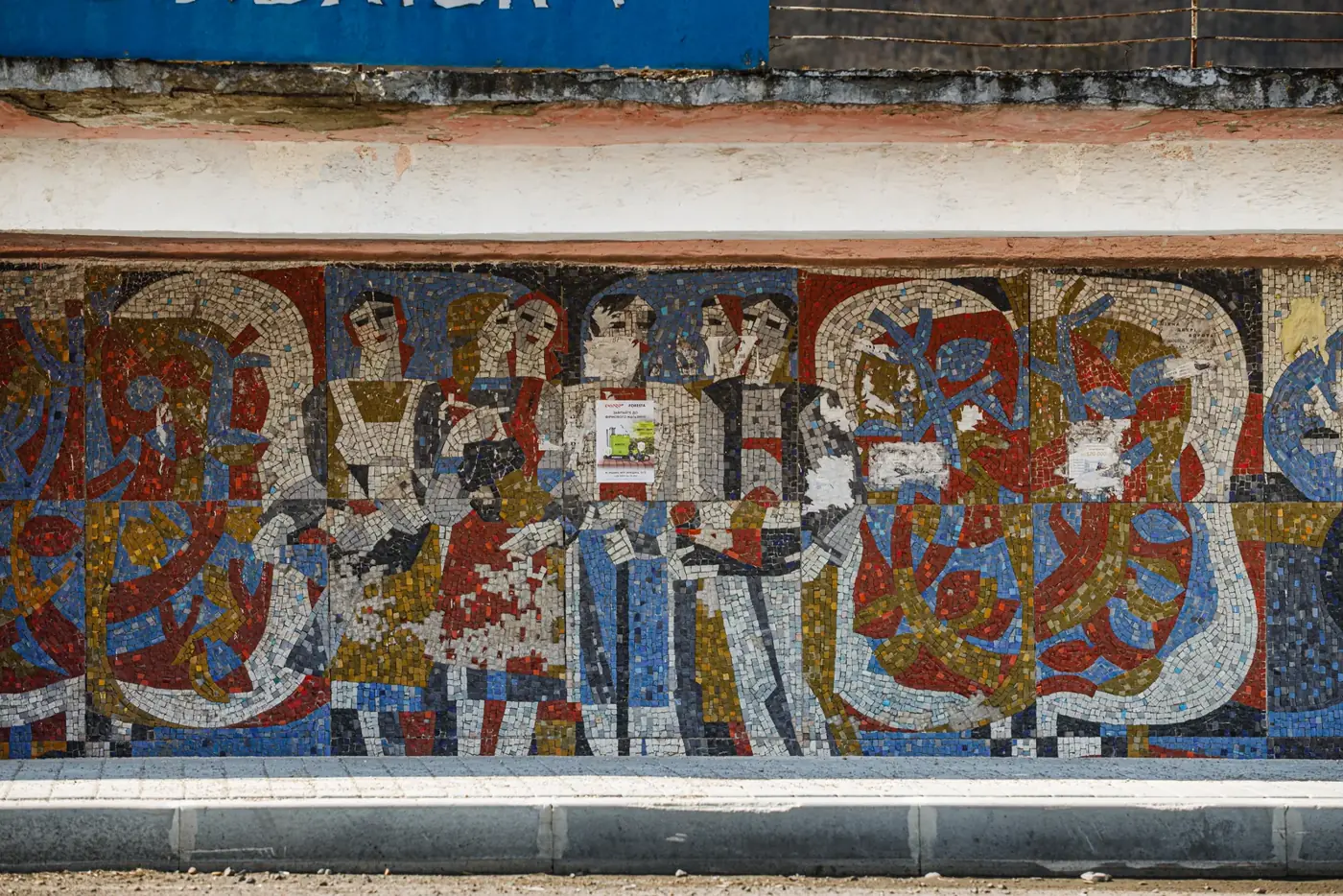
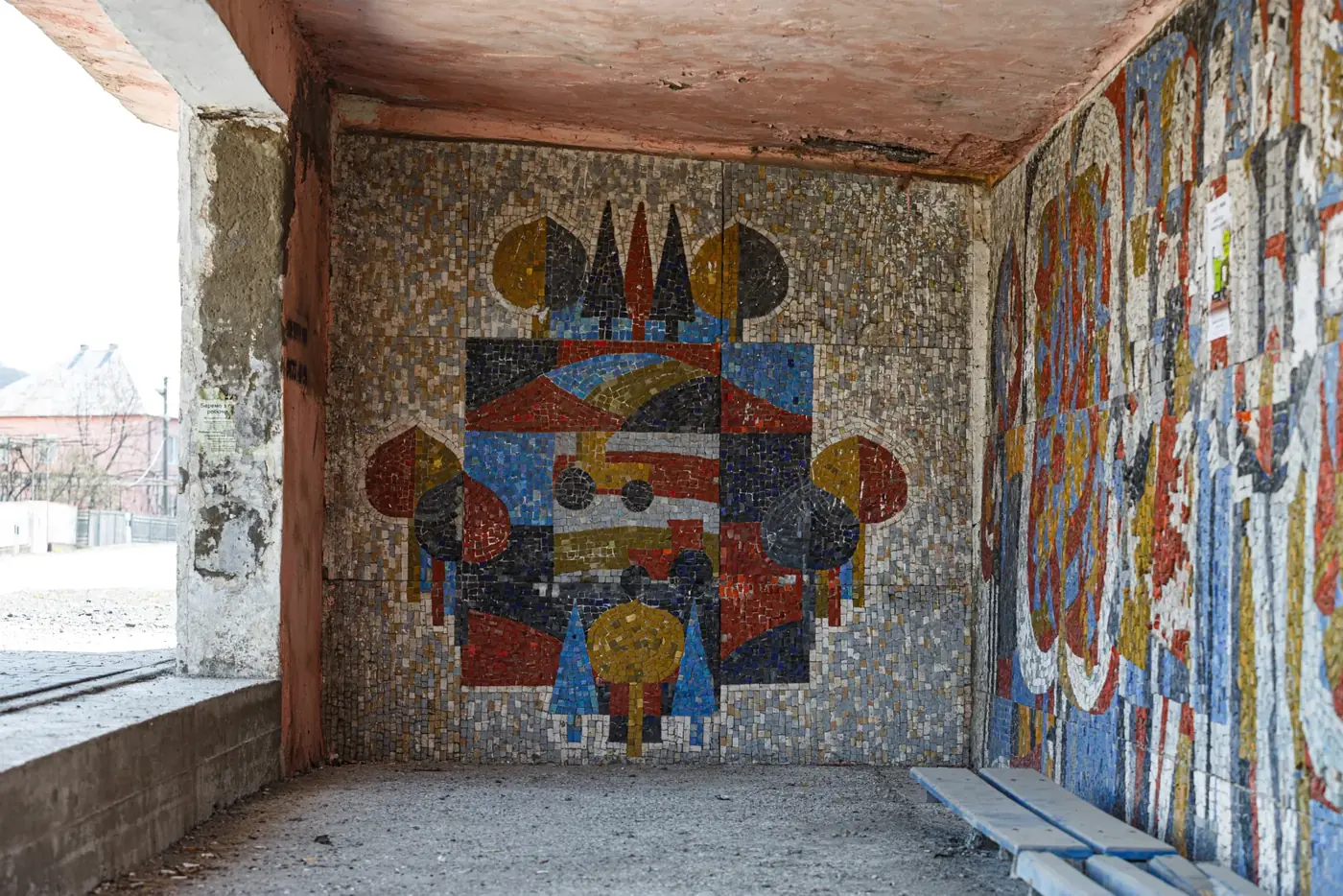
Two photographs can support a rich classroom discussion without requiring students to know an artist’s biography in advance. The key is to separate looking from guessing. This proposed activity uses the Alliance’s archive as a visual resource; it is not an advertised Alliance workshop or a report of a programme already delivered.
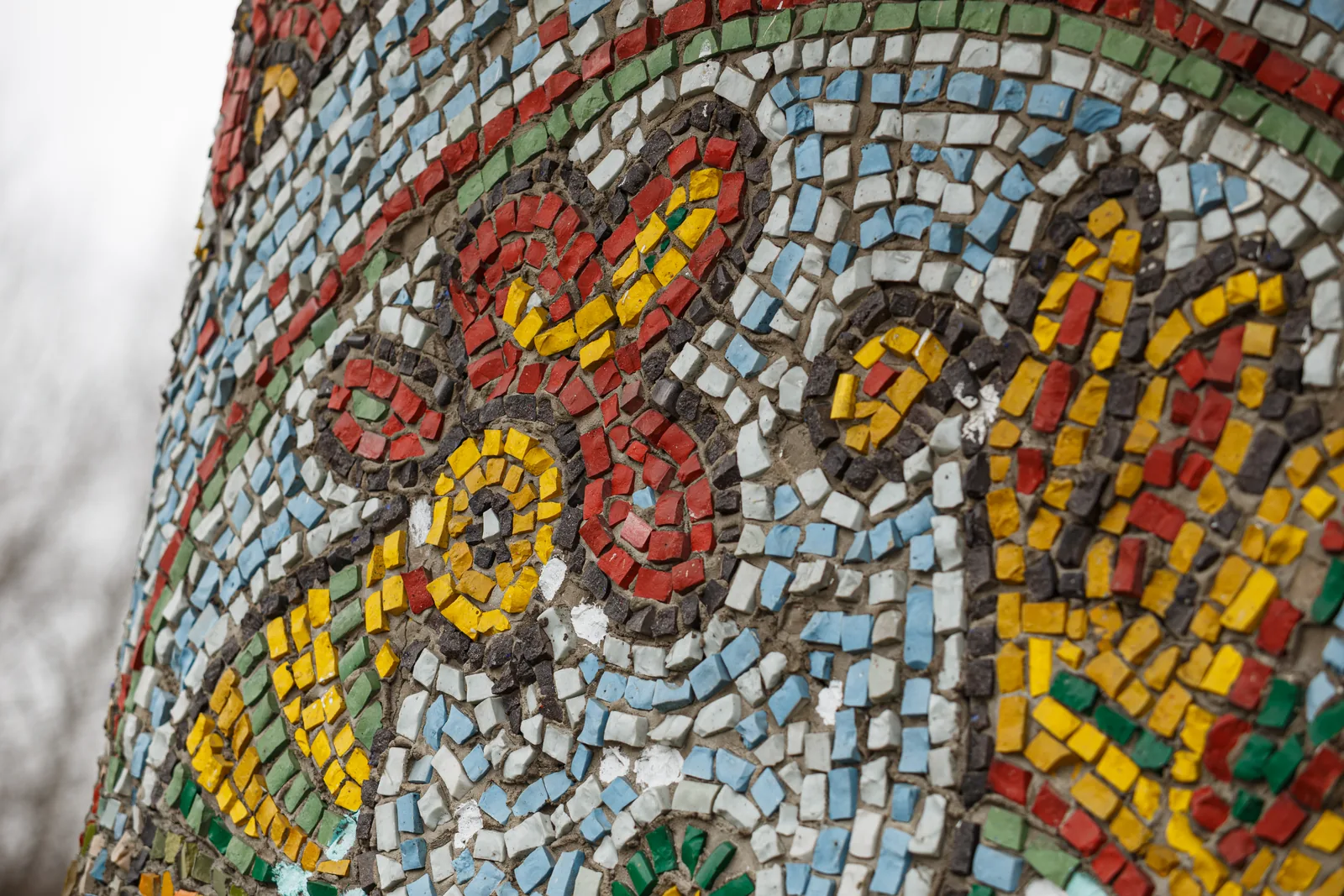
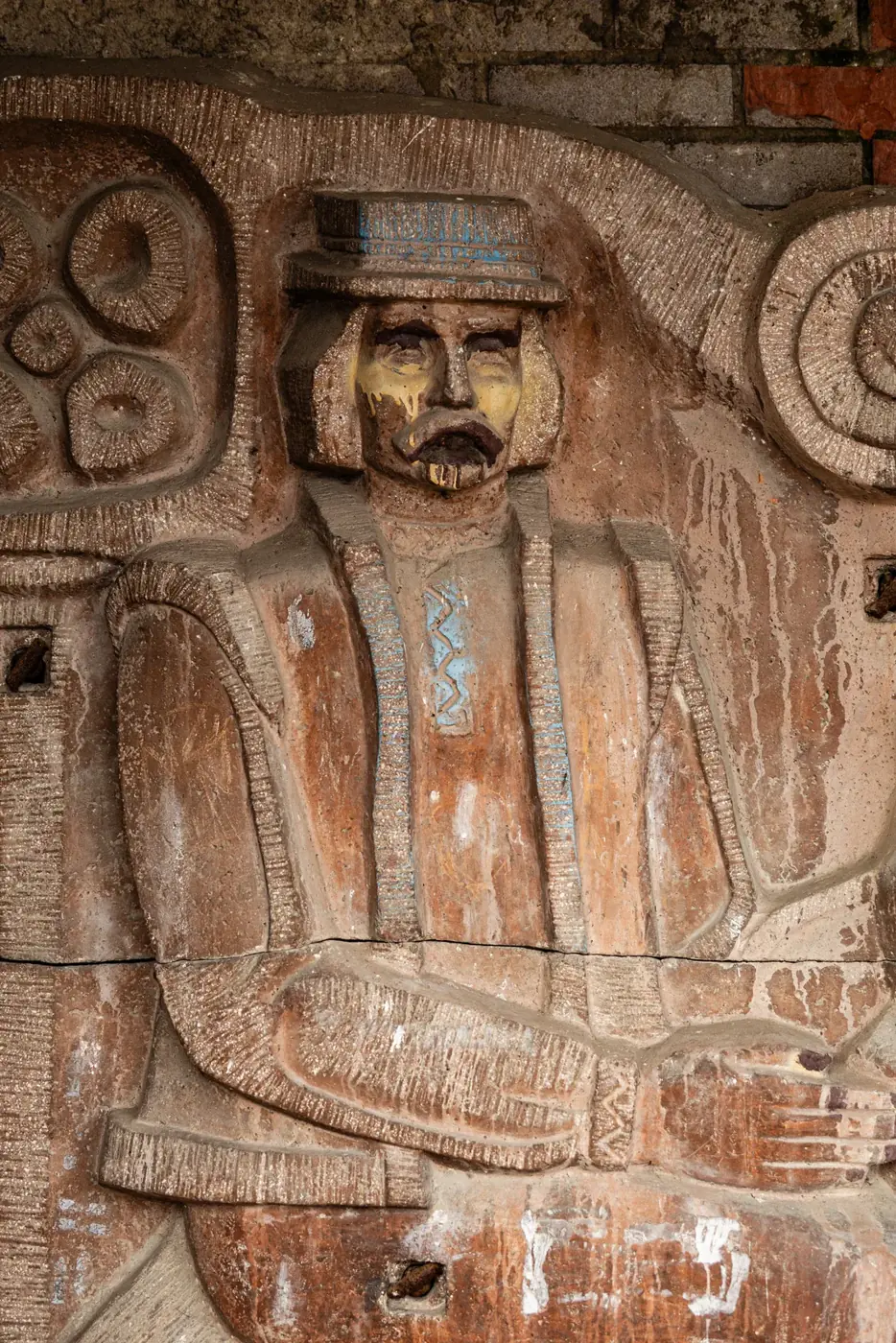
Use the featured Vilkhivka photograph and the Lany catalogue as contrasting examples. Identify both as Ukrainian shelter photographs and keep the available credits with them.
First round: describe without interpreting
Give students a few quiet minutes to look. Ask them to write three observations that another person could locate in the image. Examples might concern a repeated colour, a group of figures or the boundary between wall and roof.
Discourage words such as “happy,” “sacred” or “propaganda” during this first round unless the task is explicitly to discuss interpretation. Those terms may become useful later, but they are not equivalent to naming a visible shape.
Second round: compare the settings
Ask how the photographs show the relationship between artwork and shelter. Which includes more of the road or interior? Which makes the composition easier to follow? Does the camera angle change the apparent shape of the wall?
Make a simple table with rows for setting, main forms, repeated elements and viewpoint. Add a final row labelled “information not supplied.” That row gives uncertainty a visible place in the exercise.
Third round: formulate research questions
Invite students to turn an interpretation into a question. “This is a harvest celebration” becomes “Is there a source identifying the scene as a harvest celebration?” “The artist wanted everyone to feel united” becomes “What evidence could tell us about the artist’s intentions?”
Discuss which source might help: an inscription, a design drawing, a catalogue or a recorded account. A photograph is strong evidence for some questions and weak evidence for others.
Make the exercise accessible
Provide descriptive text for the images and read the relevant visual details aloud when needed. Allow students to respond through speech, writing or a labelled diagram. The W3C’s informative-image guidance offers a useful principle: communicate the information the image contributes to the task.
Avoid making colour recognition the only route to participation. Shape, position, repetition and architectural boundaries can support the comparison as well.
Finish with a careful caption
Ask each student to write a short caption containing the known location, one visible feature and one unanswered question. Compare the captions for accuracy, not for how confident or elaborate they sound.
The activity succeeds when students can explain the difference between an observation and a claim needing research. It also shows that an artwork with an unknown maker or date can still reward attention.
Teachers who develop further resources can contact the Alliance to discuss the archive and image-use information. Do not assume that an educational purpose removes the need to preserve credits and check the relevant permissions.
Explore further
Help us document the next mosaic.
Every gift funds photography, research and preservation advocacy.
Donate