Essay · November 19, 2026 · 3 min read
Writing Alt Text for Mosaic Photographs: Describe What the Reader Needs
By Slavic Art Alliance ·
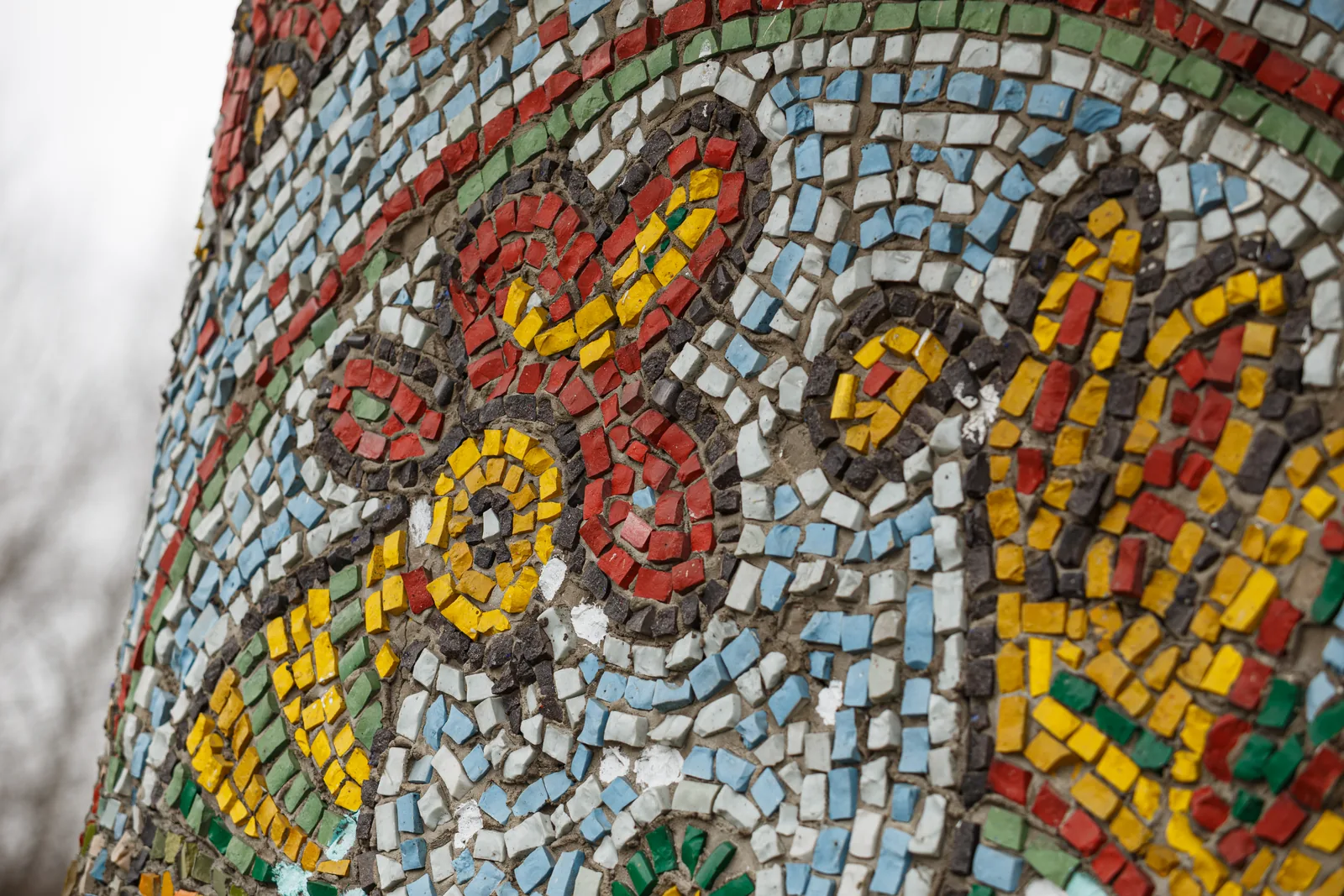
A mosaic photograph can communicate a subject, a setting, a technique or a condition detail. Its alt text should help a reader understand the information that matters in that context. It is not a place to repeat every keyword associated with the article.
The W3C’s guidance for informative images explains that text alternatives should convey the essential information an image provides. Applying that principle to art requires a distinction between what is visible and what is interpreted.
Start with the image’s purpose
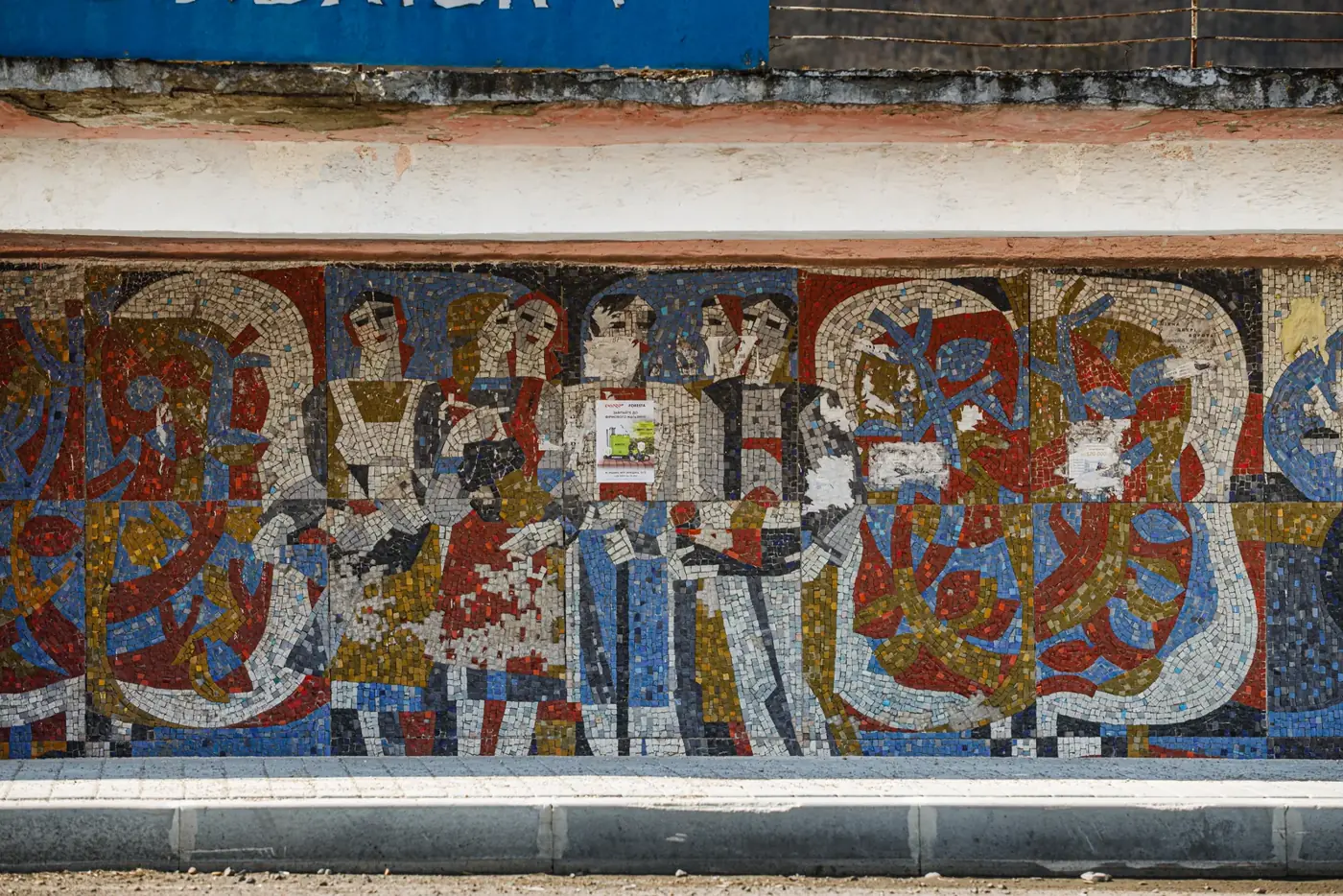
Ask why the photograph is on the page. A wide shelter view may establish setting; a close-up may show the arrangement of pieces. The description should match that purpose.
For the featured Cheremkhiv detail, a useful alternative is: “Close view of a bird-like mosaic figure with yellow, red, white and blue pieces at Cheremkhiv.” It identifies the visible subject and the detail scale. It does not invent a mythological identity for the bird.
Keep interpretation in the article
An alt description such as “ancient symbol of freedom protecting the village” makes several historical claims that a photograph cannot establish. If a reliable source supports an interpretation, explain and cite it in the article rather than disguising it as visual description.
Likewise, do not describe a surface as restored, endangered or abandoned merely because it looks bright, worn or empty. Those are contextual claims requiring evidence.
Use captions for different information
A visible caption can carry the photographer credit, capture-date qualification and explanation of a comparison. Alt text does not need to reproduce all of that if the surrounding text already communicates it accessibly.
The two should work together. If a photograph from Ukraine appears in a comparison about Greek mosaics, the visible caption must make the actual location clear. Avoid a misleading alt description that names the article’s geographic topic instead of the photographed place.
Describe people accurately
If a passerby is relevant to scale or setting, say that a person or cyclist is present. Do not infer their nationality, occupation, emotions or relationship to the organisation. An incidental figure is not evidence of a workshop, guided tour or community project.
For a complex scene, a short alt description can point towards a fuller nearby explanation. There is no need to compress a complete art-historical essay into one attribute.
Test the description against the page
Read the sentence without looking at the image. Does it explain the relevant visual information? Then compare it with the photograph. Can every descriptive claim be supported?
Finally, check for duplication. Repeating the title alone usually adds little when the title does not describe the picture. Repeating a long caption word for word can also make the page cumbersome.
Accessible image description is part of careful documentation. It gives more readers access to the artwork while requiring the writer to be precise about what the photograph actually shows.
Explore further
Help us document the next mosaic.
Every gift funds photography, research and preservation advocacy.
Donate