Essay · November 19, 2026 · 3 min read
Reading a Mosaic Catalogue Entry: What “Attributed,” “Dated” and “Unknown” Mean
By Slavic Art Alliance ·
A catalogue entry is a structured claim about an artwork. Its short phrases can contain important limits: “attributed to,” “circa,” “possibly,” or “artist unknown.” Removing those words to make a caption cleaner can change the meaning of the record.
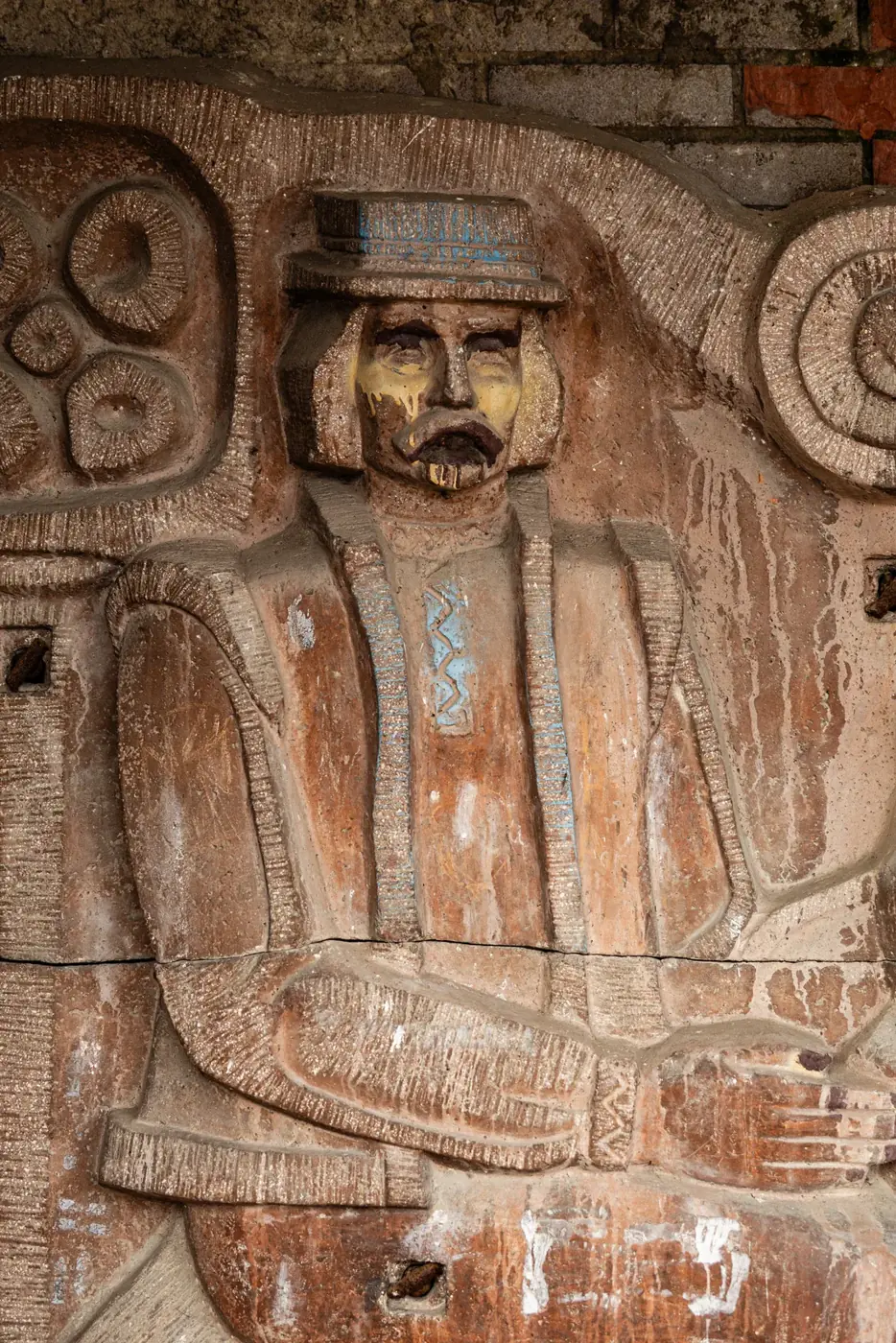
The featured Hlyboka relief photograph offers a useful starting example. The location is documented in the supplied notes, while maker, date and material are not established here. The absence of those fields does not make the visual record useless.
Read the object identity first
Check that the title or descriptive label refers to the work you are viewing. A building can contain several decorated surfaces, and a museum display may show a fragment from a larger composition.
An official title and a convenient catalogue label are not necessarily the same. “Mosaic at the station” can identify a record without claiming that the artist used that title.
Preserve attribution language
“By” and “attributed to” do not express the same certainty. A record may also distinguish a designer, workshop or collaborator. Keep those distinctions when summarising it.
If an older catalogue gives a different attribution, note the date and basis of each source. Do not automatically treat the newest website as the strongest evidence; it may repeat an older error without citing it.
Ask what the date belongs to
A date may identify a drawing, installation, relocation, photograph or publication. Read the surrounding wording. A range or approximate date should not be narrowed without new evidence.
For an inscription, record the visible date separately from its interpretation. Getty’s inscription guidance explains why text on an object requires careful documentation rather than automatic acceptance as a creation record.
Trace the location history
A current museum or building location may differ from the original setting. If a work has moved, a record should distinguish those stages. An older photograph may show the earlier location even when it appears on a current page.
Do not infer that a work remains accessible because a catalogue entry exists. A scholarly record and a visitor notice serve different purposes.
Look for the evidence behind the summary
A bibliography, archive reference or source note gives you a route to check the claim. Follow the reference that supports the specific fact you need. A general book about mosaics may not establish the maker of one shelter.
If no source is provided, treat the statement as a catalogue claim to be corroborated. You can quote its qualified wording without presenting it as independently verified.
Write a faithful summary
A good summary may be slightly longer than the original label because it explains uncertainty. For example, “The catalogue attributes the panel to…” tells the reader where the claim comes from.
When suggesting a correction to the Alliance, include the record URL, the disputed field and the supporting source. That lets a future update improve the record while preserving its research history.
Explore further
Help us document the next mosaic.
Every gift funds photography, research and preservation advocacy.
Donate