Essay · November 19, 2026 · 3 min read
Vilkhivka’s Mosaic Shelter: A Composition That Wraps Around Space
By Slavic Art Alliance ·
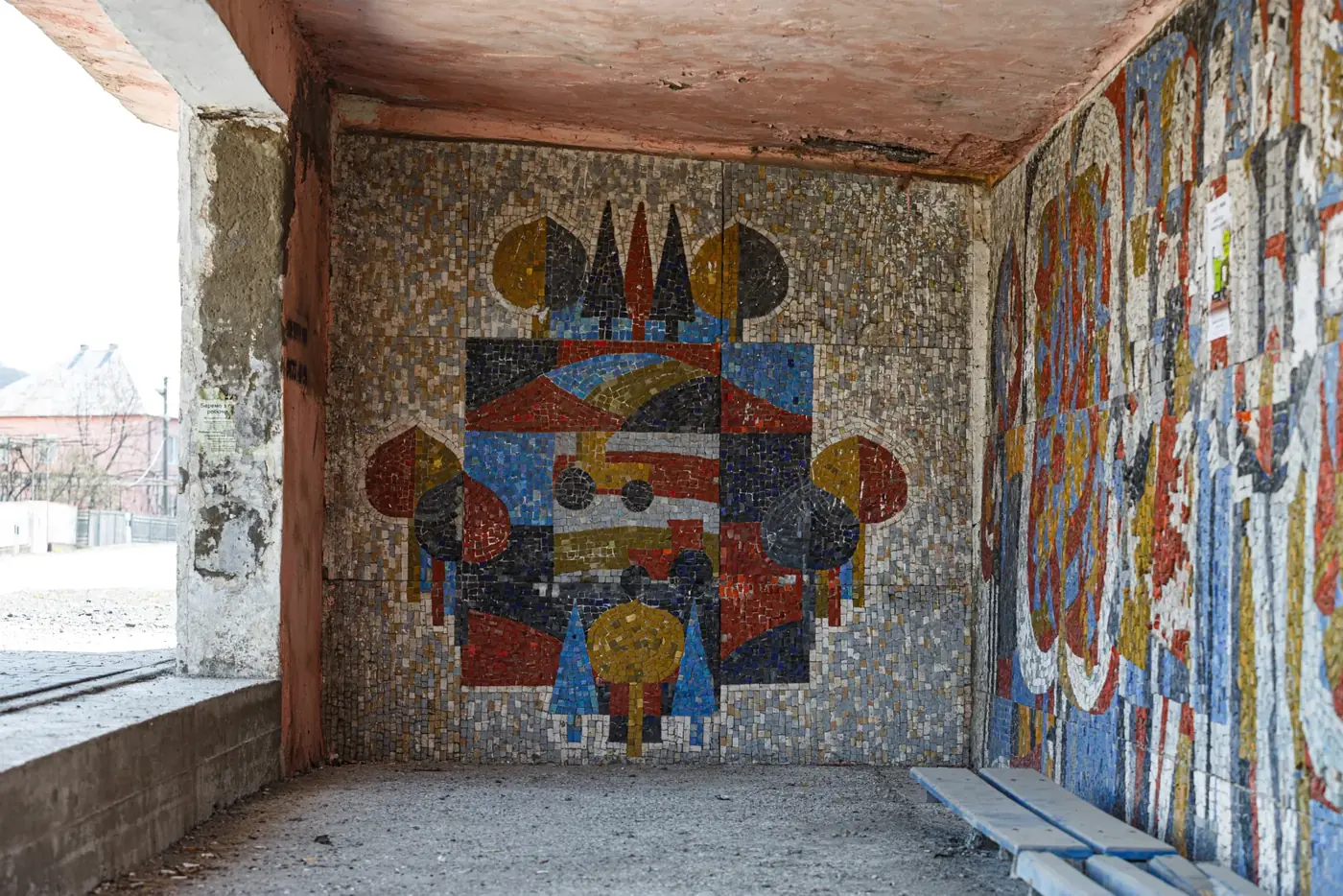
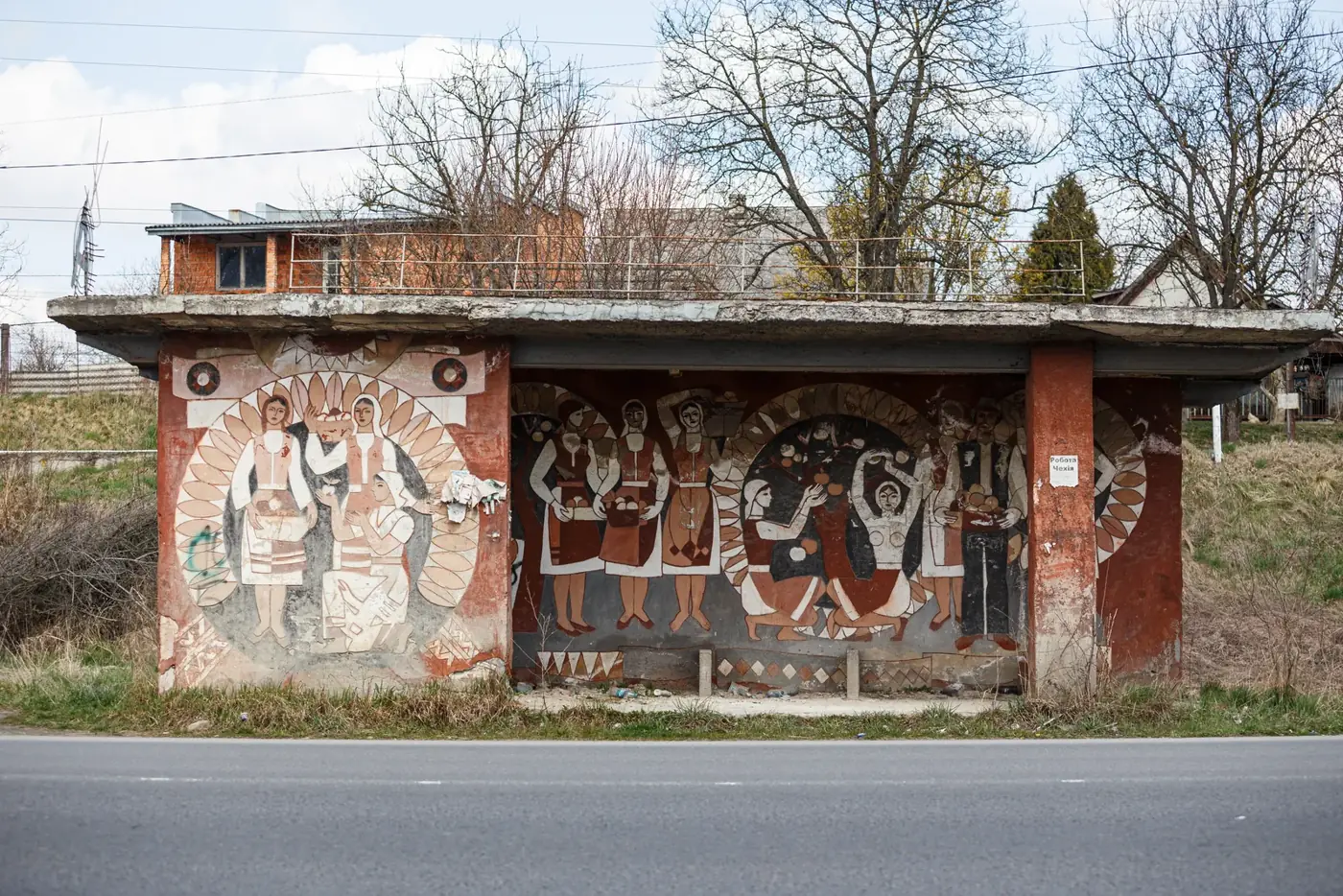
An exterior view of Vilkhivka’s shelter presents a long decorated structure beside the road. An interior view changes the experience. The image surrounds a shallow waiting space, and the end wall becomes a focal point framed by other patterned surfaces.
Andrii Shustykevych’s supplied photographs document these different viewpoints. The accompanying notes place the collection in Zakarpattia Oblast, Ukraine. They do not establish the designer, official title or installation date, so the discussion here begins with the visible composition.
The interior is not just a closer exterior
In the featured photograph, a compact arrangement of coloured forms occupies the end wall. The neighbouring wall carries another pattern that extends towards the opening. The floor and ceiling remain visible, making the artwork’s relationship to the shelter clear.
This is different from a flat reproduction of one panel. The wall planes meet, and the viewer reads their relationship through perspective. A shape near the camera appears larger than a similar shape farther away. That apparent difference is not necessarily a difference in the original design.
Follow the image around the structure
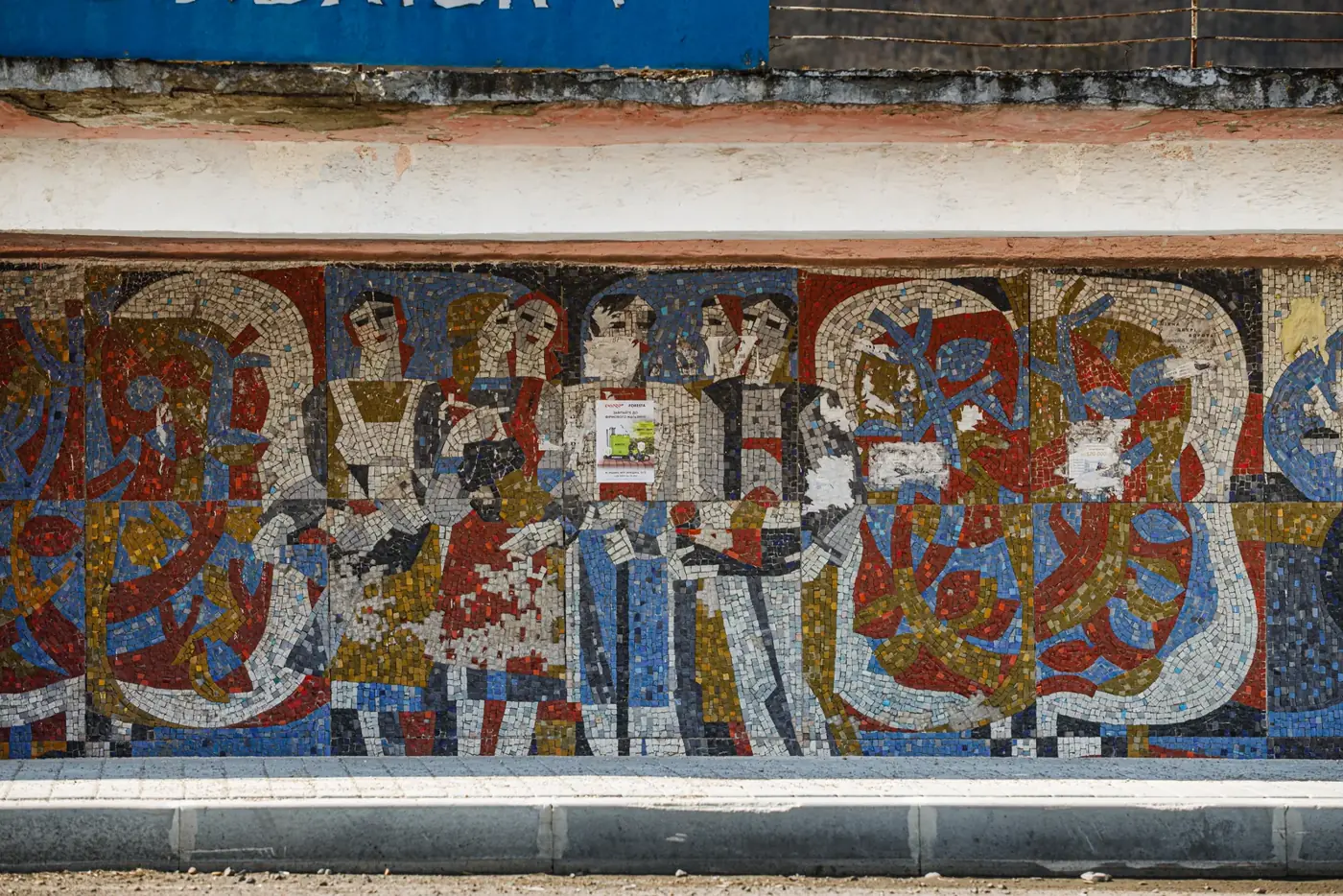
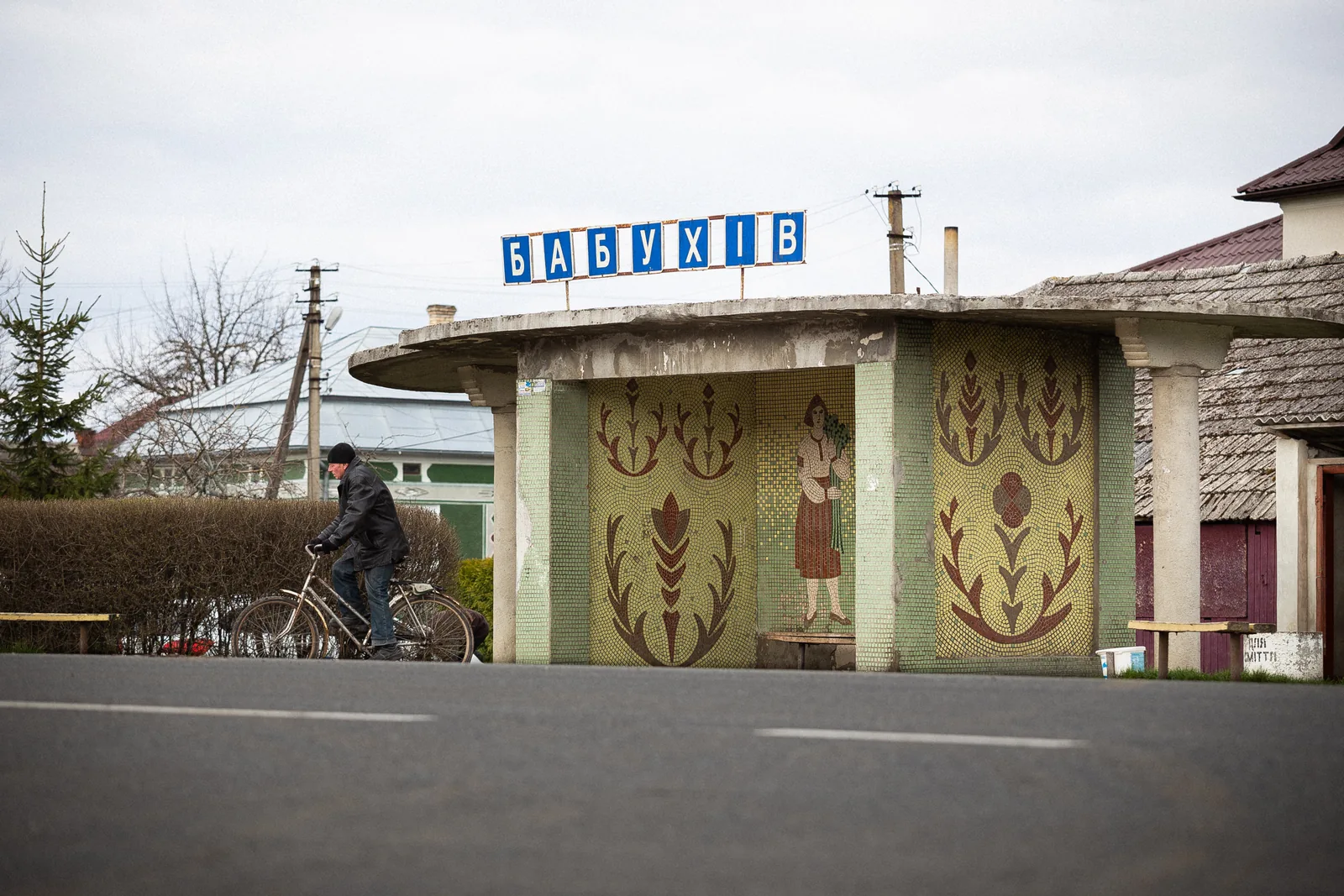
Other photographs in the series show figurative imagery on the exterior and the shelter’s relationship to nearby buildings and the road. Those views help answer a basic question: which decorated surface are we looking at?
For a photographic sequence, label the views by visible feature or position: exterior long wall, exterior end, interior end wall, interior side. Avoid a compass direction unless the location record supports it. A consistent sequence allows a reader to move mentally around the structure without pretending that the photographs form a measured survey.
Read colour as arrangement
Blue, red, yellow and pale areas create contrasts within the photographed surfaces. You can compare their distribution, repetition and visual weight. You cannot reliably identify the precise glass or ceramic composition from these colours alone.
Nor does a palette by itself establish a political or folkloric message. Ask which forms repeat, where an outline continues and where a wall opening interrupts it. Those questions produce a grounded description before any historical interpretation is added.
Keep the everyday setting visible
The roadside context is part of the record. It shows how the decorated shelter relates to a place of waiting and movement. It does not confirm current bus routes, opening arrangements or safe access. An archive image should never be turned into a travel instruction simply because a road is visible.
A responsible article can preserve that ordinary setting without romanticising it. The structure is neither an anonymous “Soviet relic” nor evidence of a restoration campaign. It is a specific photographed place with a history still worth researching.
What would make this record stronger?
An original drawing could clarify the intended sequence of images. A dated photograph could extend the visual history. A documented maker’s name could connect the shelter to other work. Each would add something different, and each should retain its source.
If you have information about Vilkhivka’s decorated shelter, contact the Alliance with the particular wall or photograph identified. The more precise the contribution, the more useful it becomes to future readers.
Primary visual evidence: the Vilkhivka series by Andrii Shustykevych and accompanying location notes. Observations concern the archived views, not a present-day site inspection.
Explore further
Help us document the next mosaic.
Every gift funds photography, research and preservation advocacy.
Donate