Essay · November 19, 2026 · 3 min read
A Three-View Photo Sequence for Documenting a Mosaic with a Phone
By Slavic Art Alliance ·
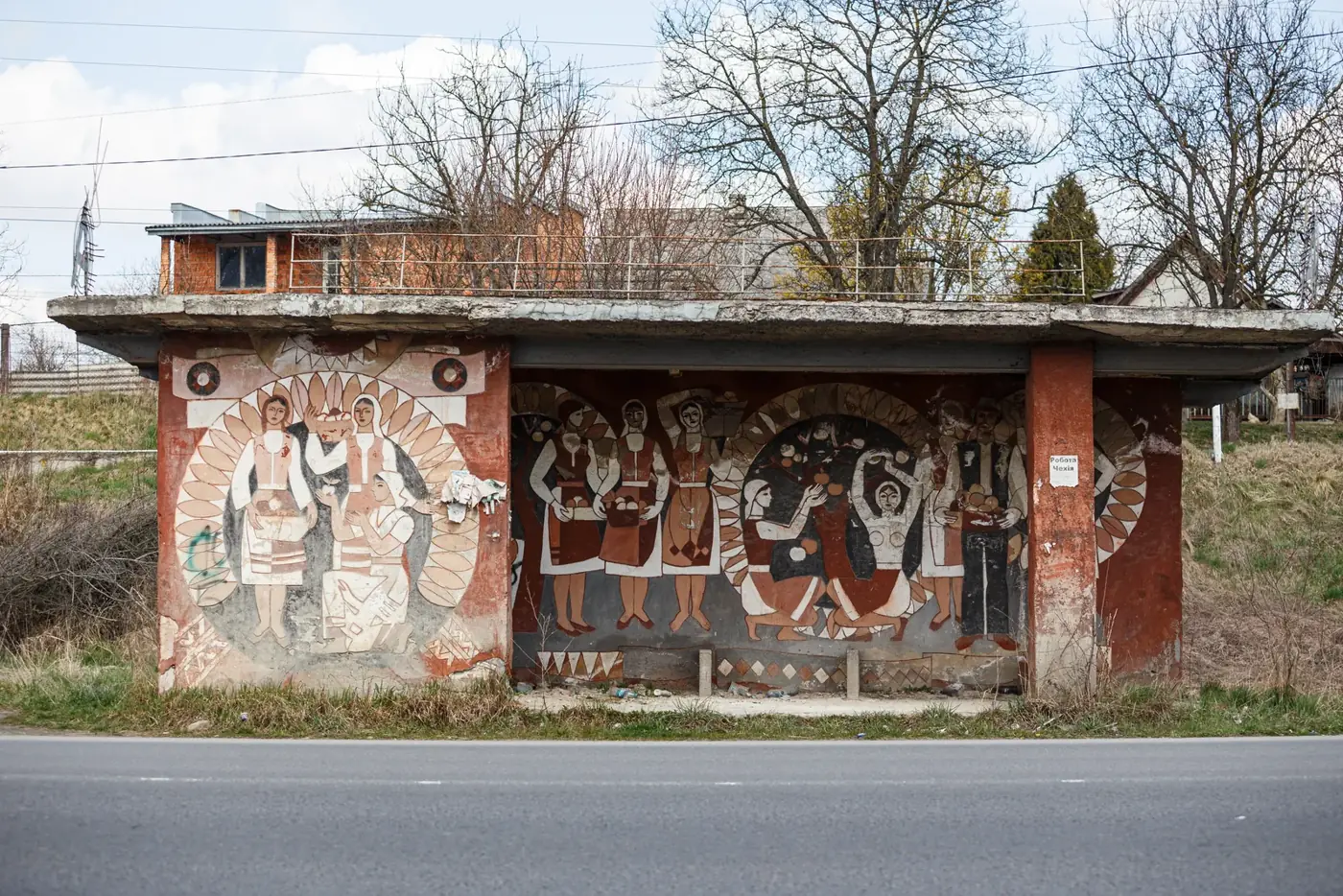
A phone can produce useful mosaic documentation when the photographs answer distinct questions. The goal is not to collect the most images. It is to make a small sequence that another person can understand without standing beside you.
The featured Bedevlia photograph shows why a complete structure matters. Its opening and several decorated surfaces help locate the individual panels. A close-up alone would lose that relationship.
View one: the setting
Include enough of the building or shelter to identify where the artwork sits. Look for a place name, entrance or other stable feature. Avoid including unnecessary personal details about bystanders, homes or vehicles.
Record the location separately rather than relying on the photograph to explain it. If the site is restricted or unsafe, do not enter or move closer for the sake of a better image.
View two: the complete visible artwork
Make a photograph that includes the entire panel or decorated surface where possible. Leave a little space around its boundary so later editors can distinguish the artwork from the crop.
If columns, vegetation or another obstruction prevent a complete view, record that limitation. Do not use generative fill to invent the hidden section. Several honest partial views are preferable to a seamless false whole.
View three: a purposeful detail
Choose a detail that answers a question: an inscription, a change in the pattern, a visible edge or the arrangement of individual pieces. Make sure the detail can be located in the wider view.
Check focus at an enlarged size before leaving. Avoid excessive digital zoom if it turns the surface into indistinct blocks. A less tightly cropped but sharper original may be more useful.
Keep the sequence connected
Use a shared site identifier and a short view label in your filenames or notes. Preserve the original camera files, even if you make smaller copies for sharing. Write down the capture date, photographer and any uncertainty about location or orientation.
The Library of Congress’s archiving guidance supports descriptive filenames and organised copies. For this sequence, the additional aim is to keep each detail attached to its context.
Avoid accidental claims
A photograph of a shelter does not verify a current bus service. A photograph of a worn surface does not diagnose its cause. An image of someone passing the work does not make them a project participant.
Captions should say what the image shows and what the accompanying record establishes. Keep historical interpretation separate until a source supports it.
Prepare the contribution
Select the clearest images, add concise captions and include the available location information. The Alliance’s submission form supports one featured photograph and up to three additional images; check the form’s current instructions when submitting.
The current form includes ownership-transfer terms. Read those terms before submitting; contact the Alliance first if you need to discuss a different arrangement. If your sequence needs more explanation, use the contact page. A small, well-labelled set gives an editor a stronger starting point than a large collection whose views, dates and permissions are unclear.
Explore further
Help us document the next mosaic.
Every gift funds photography, research and preservation advocacy.
Donate