Essay · November 19, 2026 · 3 min read
Greek Mosaics: A Research Route from Ancient Floors to Byzantine Walls
By Slavic Art Alliance ·
Searching for “Greek mosaics” can bring together ancient house floors, Byzantine churches, modern craft and contemporary travel information. A useful research route separates those subjects before comparing them. The question is not simply where mosaics exist, but which period, setting and kind of evidence you want to understand.
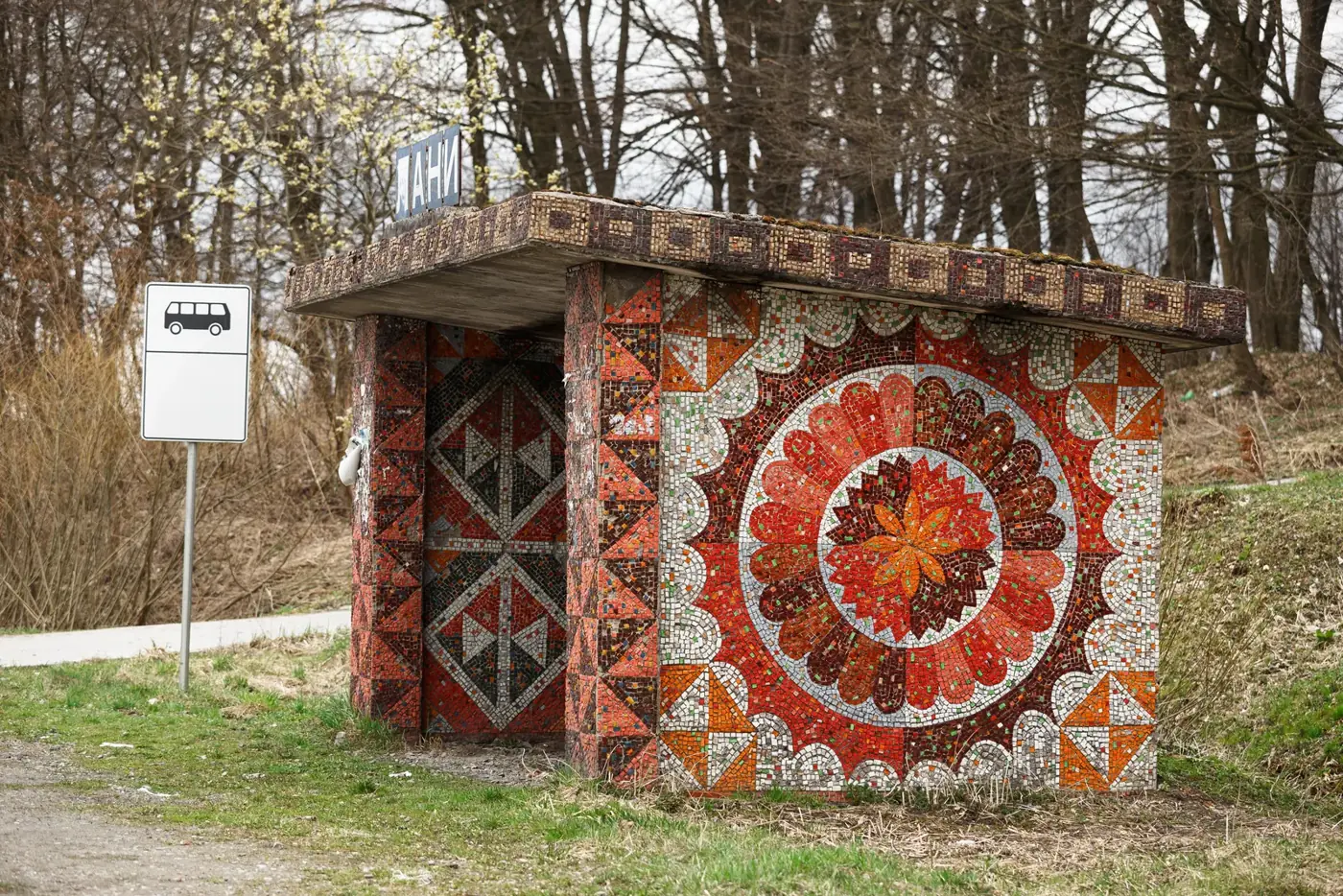
The featured photograph is a later Ukrainian example from Lany, not a Greek monument. It appears here as a clearly identified comparison: the same broad medium can occupy very different social and architectural settings.
Choose an ancient starting point
For ancient domestic mosaics, begin with the Greek Ministry of Culture’s Pella resource. It connects decorated floors to the houses and rooms in which they were found. That relationship is more informative than a free-floating image labelled “ancient mosaic.”
When reading a record, note the findspot, the object or room name, the date as stated by the institution, and whether you are looking at an original setting or a museum display. These are different pieces of information. A museum’s location is not necessarily the artwork’s original location.
Choose a Byzantine starting point
For medieval church mosaics, the UNESCO entry for Daphni, Hosios Loukas and Nea Moni identifies a group of monuments in Greece with important gold-background decoration. Use the institutional record to orient your research, then seek the individual monument’s documentation for particular scenes.
Do not treat “Byzantine” as a synonym for every Greek mosaic. It describes a historical context, while “Greek” can refer to a place, language or national frame. A precise article explains which meaning it uses.
Add a collection-based perspective
The Museum of Byzantine Culture’s mosaic collection offers another route: works and fragments studied as museum objects. Here the questions include provenance, technique and the relationship between surviving fragments and their former buildings.
Build a small source list rather than collecting dozens of unattributed pictures. For each source, record what it can actually establish. A monument record may explain a building; a collection entry may identify a fragment; a conservation report may discuss an intervention.
Compare without inventing a continuous lineage
Return to the Lany photograph. Its roadside setting, large repeated pattern and wall placement differ from the ancient floors and medieval church programmes introduced above. Those differences make comparison productive.
Similar materials or shapes do not prove direct transmission from one workshop to another across centuries. To make an influence claim, look for evidence of training, copying, written references or documented artistic study. Without that evidence, use “comparison” rather than “influence.”
Keep the next step specific
Choose one question: how a floor relates to a room, how a wall image relates to worship, or how a modern shelter addresses passersby. Follow that question through a small set of reliable records. This produces a stronger understanding than treating all mosaics as one timeless tradition.
Explore the Alliance’s existing archive for later comparisons, and contact the organisation if you can contribute documented photographs or sources that extend its geographic coverage.
Explore further
Help us document the next mosaic.
Every gift funds photography, research and preservation advocacy.
Donate