Essay · November 19, 2026 · 3 min read
Byzantine Gold Backgrounds and Modern Mosaic Facades: Compare the Setting First
By Slavic Art Alliance ·
A gold-coloured surface can be visually compelling, but colour alone is a poor guide to historical meaning. Comparing Byzantine church mosaics with modern architectural mosaics works best when the setting comes first.
UNESCO’s record of Daphni, Hosios Loukas and Nea Moni places their gold-background mosaic decoration in the eleventh and twelfth centuries. That is a specific historical and architectural context, not a description of all mosaics in Greece.
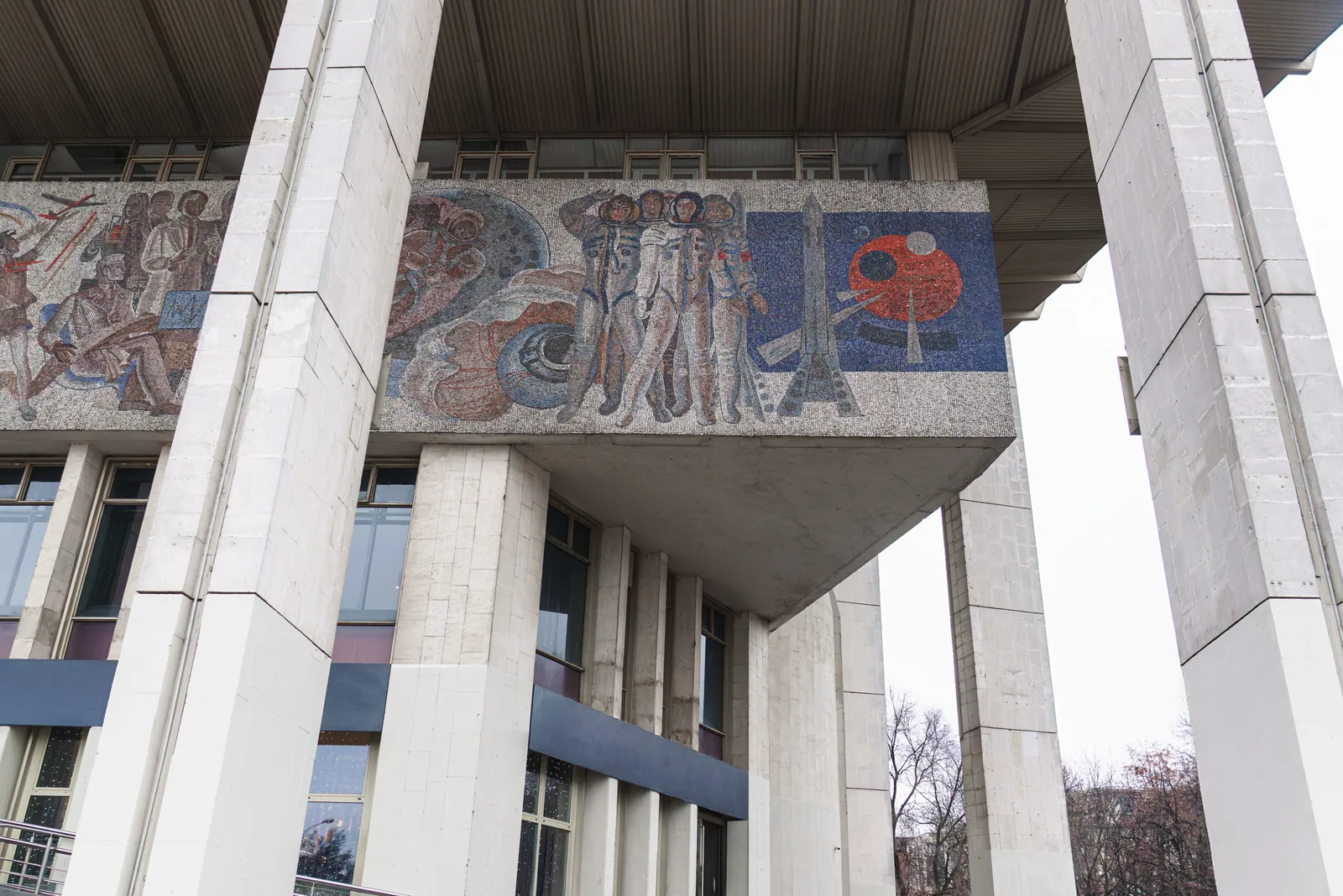
The featured photograph, by contrast, shows Moscow Youth Palace. It is a modern facade comparison, not an illustration of a Greek church or a gold-glass technique.
Start with what surrounds the image
For a church mosaic, identify the architectural position of the scene through the monument’s documentation. A dome, apse or wall is not an interchangeable location. Ask how the image relates to the building’s religious use, while keeping any interpretation tied to an appropriate source.
For the Youth Palace photograph, the visible columns, window band and overhead structure establish a different setting. The image occupies a facade encountered across space. Describe those visible relationships before making claims about an intended audience response.
Separate light from material identification
Photographs record the effects of lighting, exposure and viewpoint as well as the surface itself. A bright area may be reflective; it is not therefore proven to contain gold. A muted photograph does not prove that the original surface was dull.
When a source identifies gold glass or another technique, cite that source for that particular work. Do not transfer the identification to a different mosaic because it looks similar on a screen.
Compare scale and framing
The Youth Palace view is interrupted by architectural supports. A viewer cannot see every part equally from every position. For a Byzantine example, the documented architectural setting may impose another set of sightlines and distances.
The comparison should ask how images occupy buildings, not presume that one visual device carries an unchanged message through time. A border can separate scenes in many contexts; the reason for that separation belongs to the individual work.
Keep influence claims demanding
A modern artist may have studied Byzantine mosaics, but an article should demonstrate that connection before asserting it. Relevant evidence could include the artist’s writing, a documented training history or a commission text discussing the reference.
Without such evidence, say that two works can be compared. This is not a weaker form of looking. It is a clearer account of what the evidence allows.
A practical reading exercise
Make two short descriptions, one for a documented Greek church example and one for the Moscow photograph. Include location, surface, visible framing and the source of any historical facts. Then list differences before similarities.
That order helps prevent a shared visual effect from swallowing the differences between worship, public culture, period and place. Explore the Alliance’s architectural essay and location records for further modern examples, and use the monument’s own documentation for the Greek work.
Explore further
Help us document the next mosaic.
Every gift funds photography, research and preservation advocacy.
Donate