Essay · November 19, 2026 · 3 min read
Komsomolskaya’s Mosaic Ceiling, Seen as a Whole
By Slavic Art Alliance ·
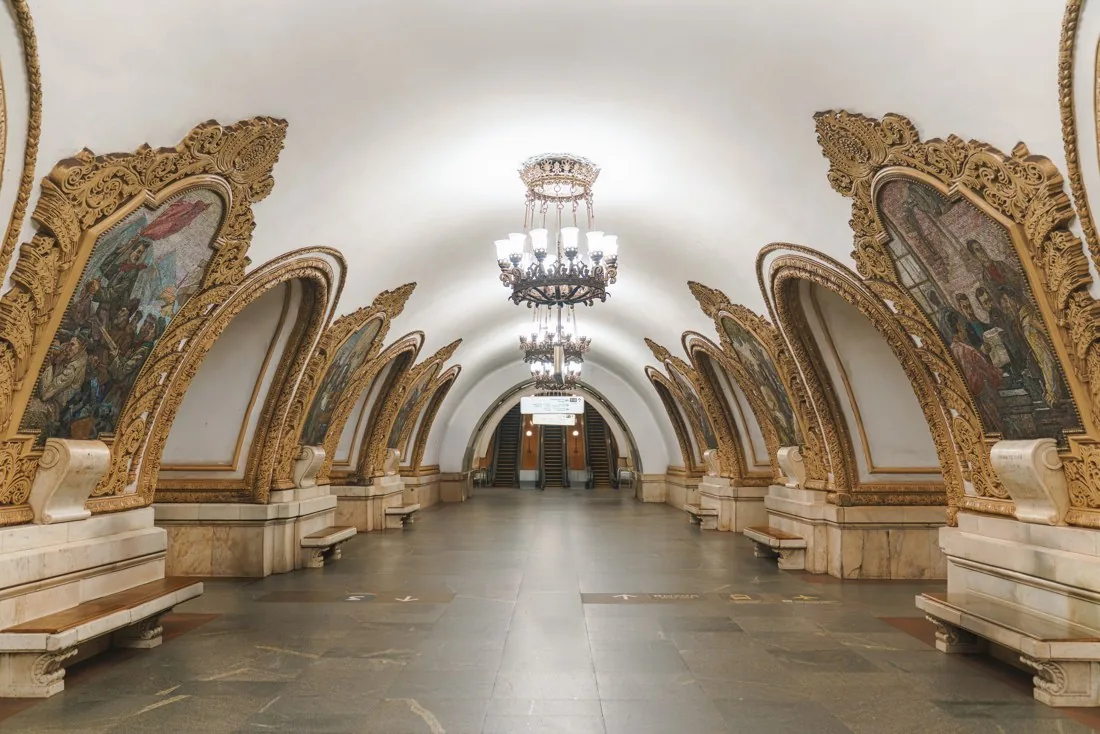
An isolated photograph of a mosaic panel gives the subject a clear boundary. A wide photograph of Komsomolskaya gives it an architectural setting. In Aigul Bedretdinova’s view, framed compositions, arches, columns and hanging lights form a sequence through the station hall.
The Alliance’s Komsomolskaya catalogue records the location and existing attribution. This essay concentrates on the photographed arrangement rather than expanding that attribution into an unsupported account of the commission.
Read the repeated frame
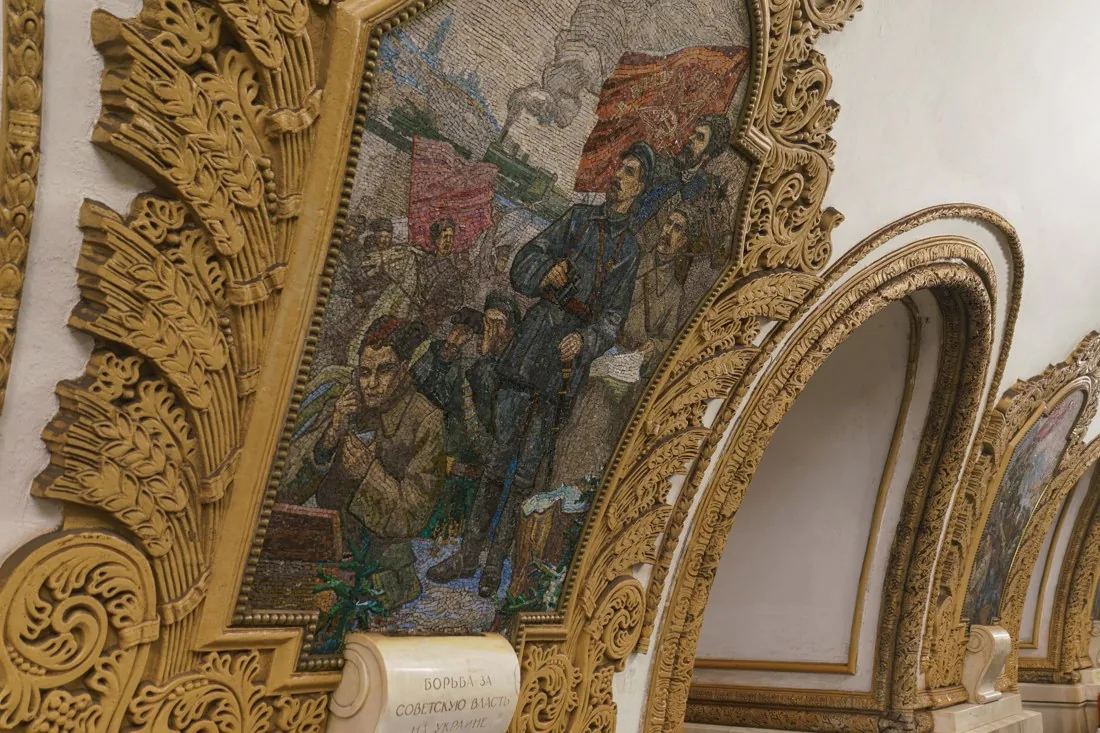
The ornate surrounds distinguish one pictorial field from the next. Seen close up, a surround can look like a self-contained border. Seen across the hall, it becomes one member of a repeated architectural rhythm.
Follow the nearest frame, then the next visible one. Their apparent dimensions change with distance and perspective. The photograph therefore shows both a designed sequence and the effects of the camera’s position. Those two things should not be confused.
Look between the mosaics
The empty spaces, arches and lighting fixtures help organise the view. They separate the pictorial fields and lead the eye towards the far end of the hall. If an image crop removes all of this, the viewer loses part of the relationship between art and circulation space.
This does not prove that an architect intended a particular emotional response or that every commuter viewed the panels in a prescribed order. It shows how the elements appear together from this recorded position.
Scale is relational
A wide view makes the mosaics seem both monumental and embedded in a larger environment. The dimensions of the room, fixtures and passages offer visual comparisons, but they are not a substitute for measured dimensions.
When making notes, describe a panel as “above the arch” or “within the nearest ornate frame” rather than estimating its size from the photograph. If measurements are needed for research, seek an architectural drawing or a documented survey.
One photograph, a bounded moment
The source image’s embedded metadata records a December 2025 capture date. That metadata is useful for the archive but has not been independently corroborated here. The photograph does not establish current access, lighting, maintenance or visitor conditions.
The visible golden colour of a surround also does not establish its material composition. The same caution applies to a mosaic’s reflective surface. Visual description and technical identification belong in separate fields.
A way to look more carefully
Use the wide view first, choose one framed panel second, and return to the wide view last. Ask whether the surrounding architecture changes your reading of the individual image. This simple exercise makes it harder to treat a ceiling mosaic as a flat picture detached from a building.
For the location record and further photographs, return to the catalogue. If you can add a primary document about the hall or its mosaics, contact the Alliance with its title, date and relevant passage. A traceable source can extend the record without turning a visual impression into a historical fact.
Explore further
Help us document the next mosaic.
Every gift funds photography, research and preservation advocacy.
Donate