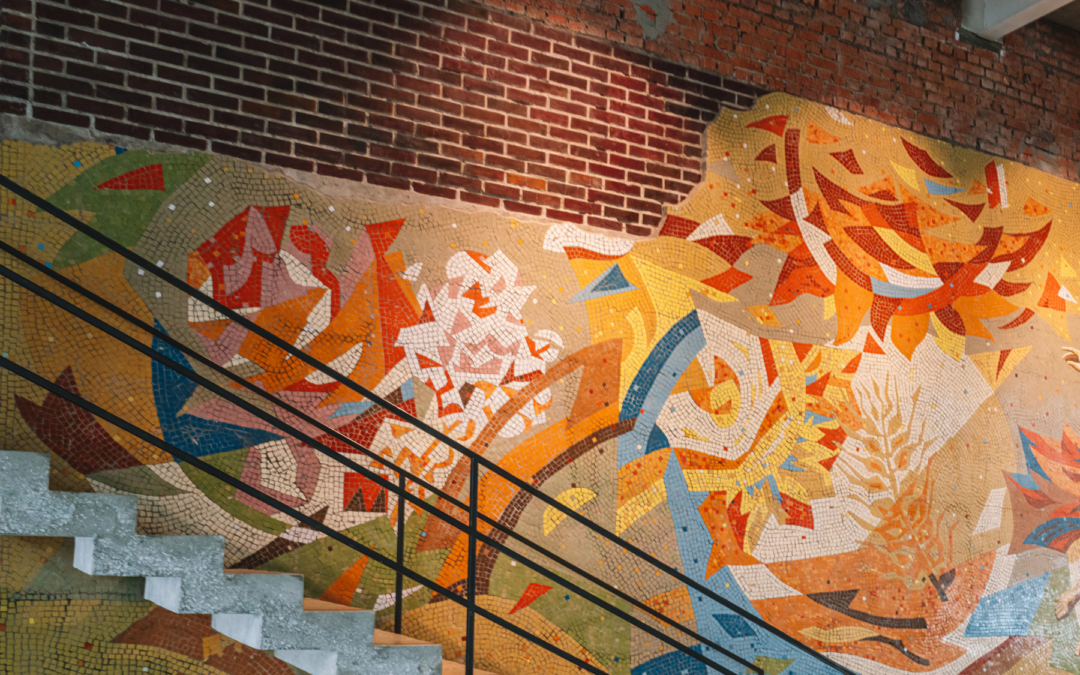
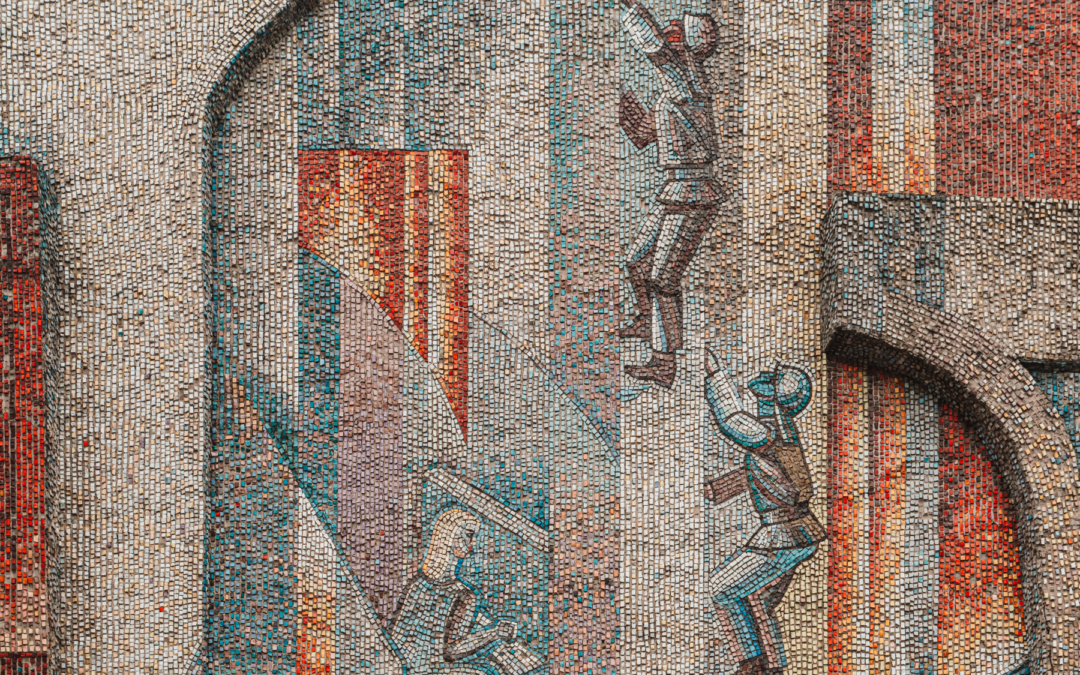
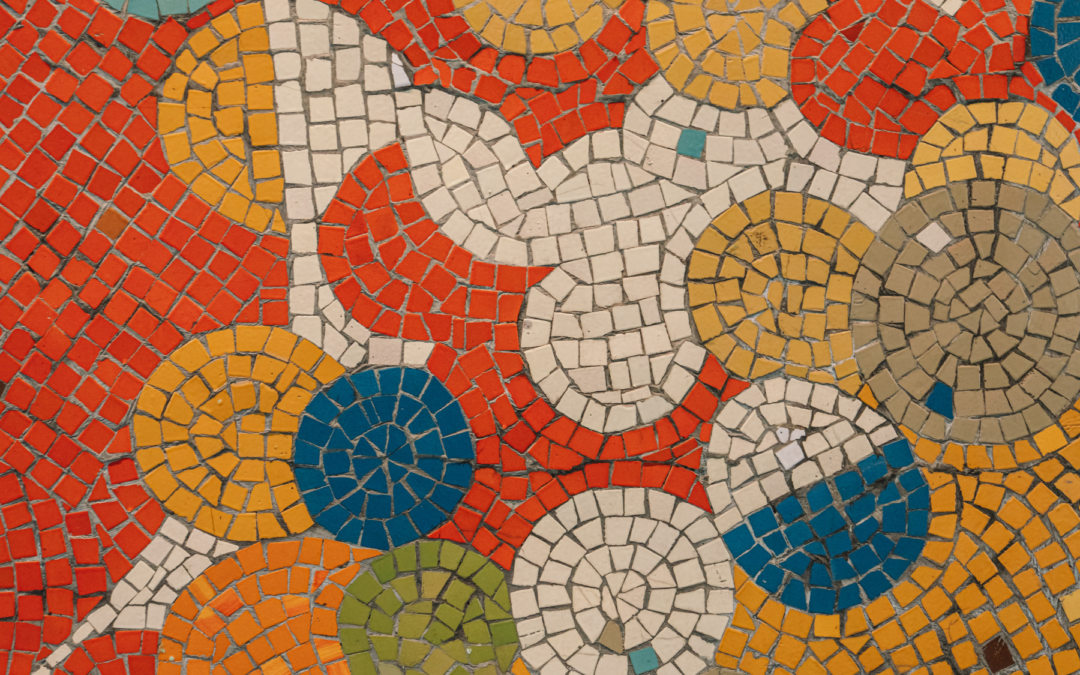
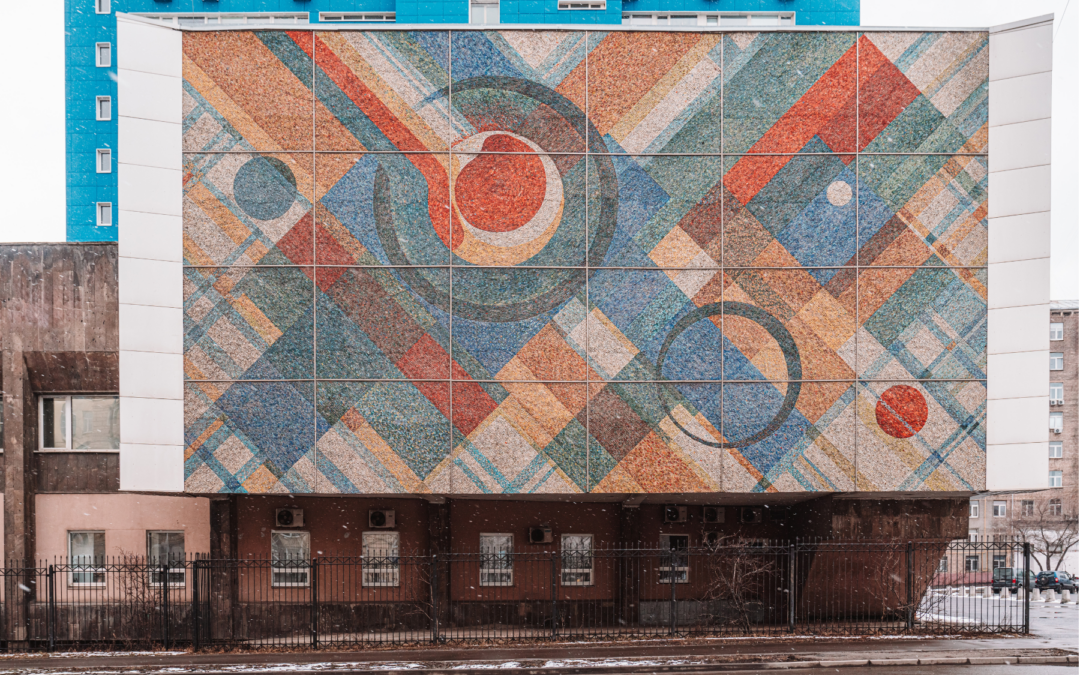
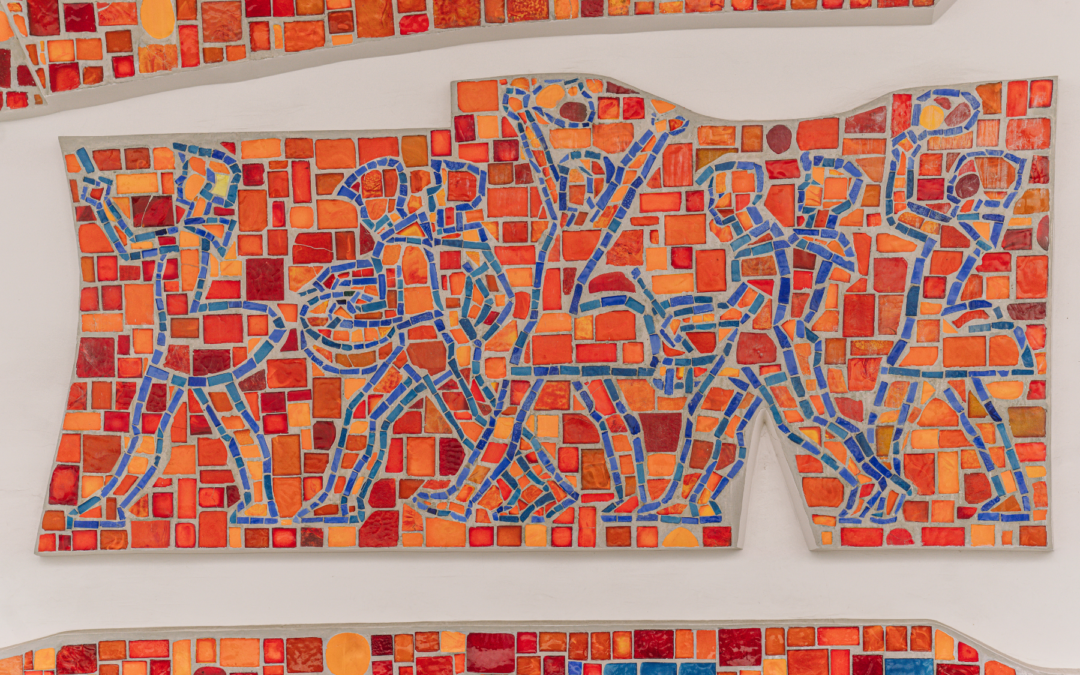
Slavic mosaics are built to last, but they are not immune to time. Weather, renovations, and neglect slowly change public art. One of the most important tools for protecting these works today is photography. Slavic mosaic photography plays a key role in preservation,...
Slavic mosaic art is often admired for its beauty and durability, but behind every finished mosaic is a practical reality. Materials cost money. Labor takes time. Space, tools, and planning all require support. Understanding Slavic mosaic production means looking...
Slavic mosaics appear in many types of spaces. Some are found in sacred settings, while others belong to everyday public life. Together, sacred mosaics and secular mosaics show how mosaic art adapted to different needs while remaining deeply rooted in cultural...
In Slavic mosaic art, meaning does not stop at the central image. The edges matter. Borders play an important role in how mosaics are read, understood, and experienced. Through careful use of framing and edge patterns, artists shaped how viewers approached the artwork...
The Slav Epic is one of the most ambitious art projects connected to Slavic cultural heritage. Created as a cycle of large-scale paintings, it was designed to reflect shared history, values, and cultural memory. Over time, its influence extended beyond painting and...