
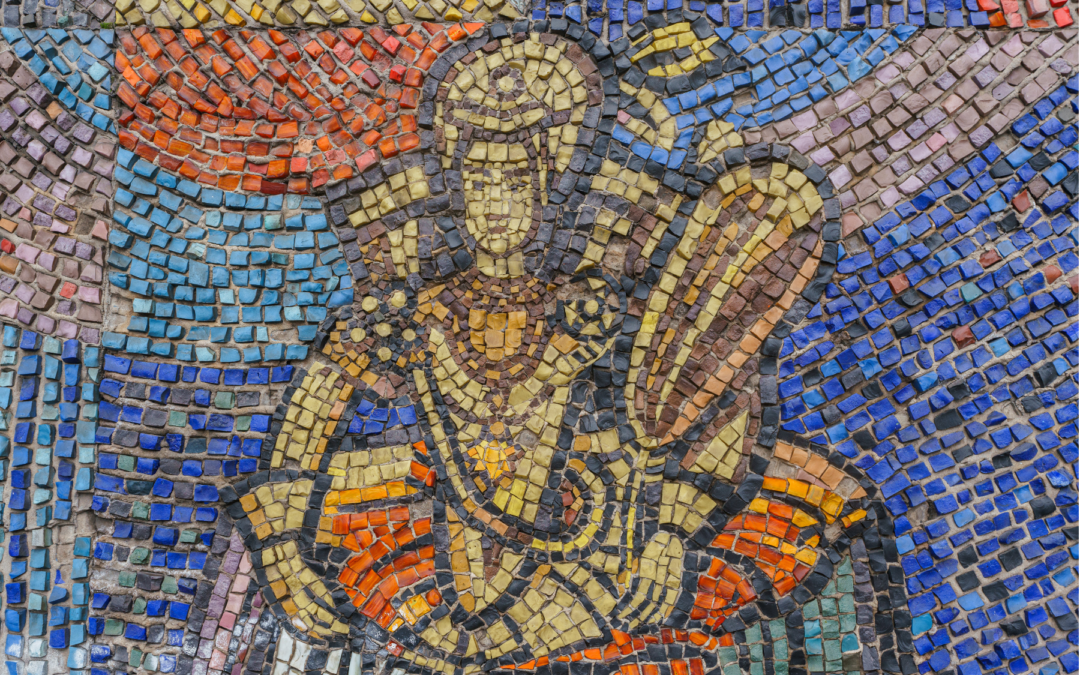
Women have always played an important role in Slavic mosaic art. Yet their contributions are often overlooked or undocumented. Many women mosaic artists worked behind the scenes, inside workshops and collective studios, helping shape public mosaics that still exist today.
In Slavic regions, mosaic creation was rarely a solitary process. Large projects required teamwork. Women mosaic artists participated in design planning, color selection, material preparation, and installation. Their work helped define the visual character of Slavic mosaic art, even when their names were not recorded.
Historically, many women mosaic artists were trained through apprenticeships and formal art education. They learned traditional methods alongside male colleagues. However, public recognition often focused on group names or workshop leaders rather than individual contributors. As a result, women’s involvement became less visible over time.
Despite this lack of recognition, women mosaic artists influenced how public mosaics were designed. Many brought strong attention to balance, rhythm, and color harmony. These qualities helped public mosaics feel approachable and integrated into daily life rather than imposing or distant.
Women often worked on mosaics installed in schools, cultural centers, and residential spaces. These locations required art that felt welcoming and durable. Slavic mosaic art in these settings emphasized connection, continuity, and shared identity. Women mosaic artists contributed to this sense of familiarity through thoughtful composition.
Education was another important area of contribution. Many women mosaic artists served as instructors and mentors. They taught cutting methods, layout planning, and surface preparation. Through teaching, they passed down skills that kept Slavic mosaic art alive across generations.
Teaching also reinforced traditional values of collaboration. Students learned that public mosaics were not personal statements but shared cultural works. This approach aligned with the communal nature of mosaic art and strengthened workshop traditions.
Women mosaic artists were also involved in material preparation, an essential but often undervalued task. Sorting tesserae, testing color combinations, and preparing surfaces required patience and precision. These steps directly affected the final appearance of public mosaics.
As time passed, many public mosaics created with women’s involvement became part of everyday scenery. People walked past them without knowing who helped create them. Yet these works continued to shape visual environments and cultural memory.
In recent years, renewed interest in Slavic mosaic art has encouraged more inclusive research. Archivists and historians are beginning to acknowledge women mosaic artists as active contributors rather than assistants. This shift helps build a fuller understanding of how public mosaics were created.
Preservation efforts also benefit from recognizing women’s roles. Understanding who worked on a mosaic can inform restoration decisions. It also highlights the diversity of skills involved in creating Slavic mosaic art.
Public mosaics serve as long-lasting records of shared values. Women mosaic artists helped ensure these works were thoughtful, balanced, and durable. Their influence is visible in the way mosaics interact with architecture and public space.
For Slavic Art Alliance, highlighting women mosaic artists supports a more accurate cultural narrative. It shows that Slavic mosaic art was shaped by many voices and experiences. Preservation is not only about materials, but about acknowledging the people behind the work.
Recognizing women mosaic artists does not change the past, but it improves how we understand it. These artists helped build visual heritage that continues to shape communities today. Their work deserves to be seen, studied, and remembered as part of the living tradition of public mosaics.