Essay · November 19, 2026 · 3 min read
Two Panels, One Entrance: Looking at the Battle of Borodino Mosaic
By Slavic Art Alliance ·
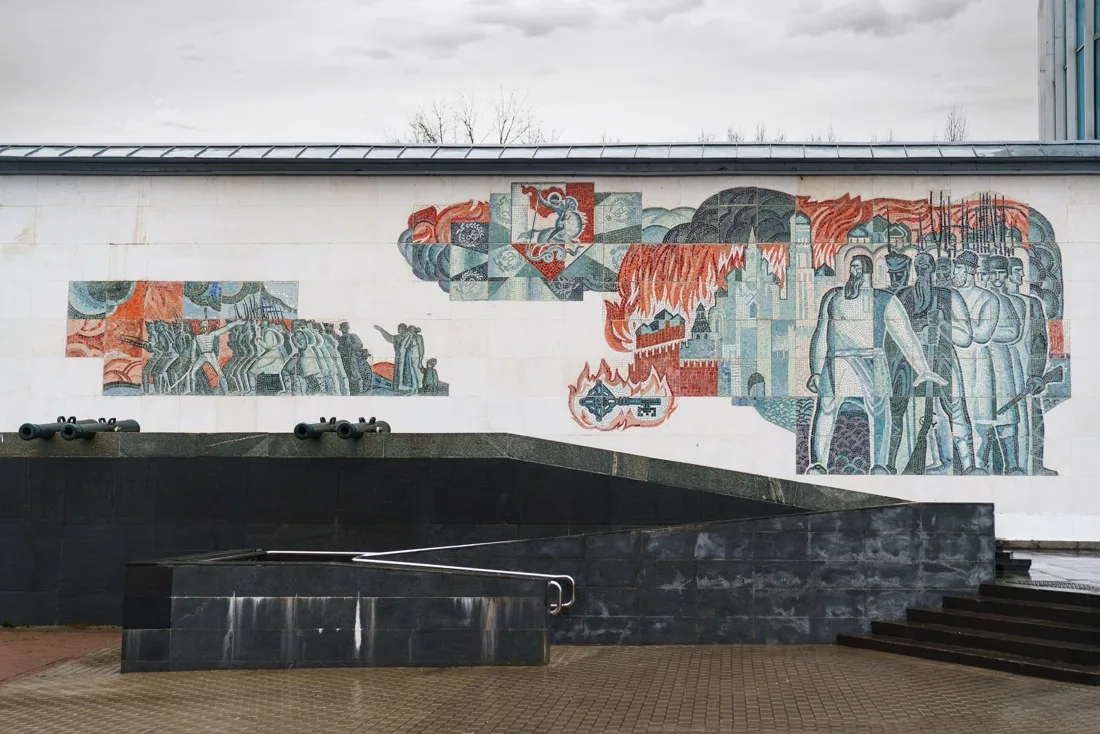
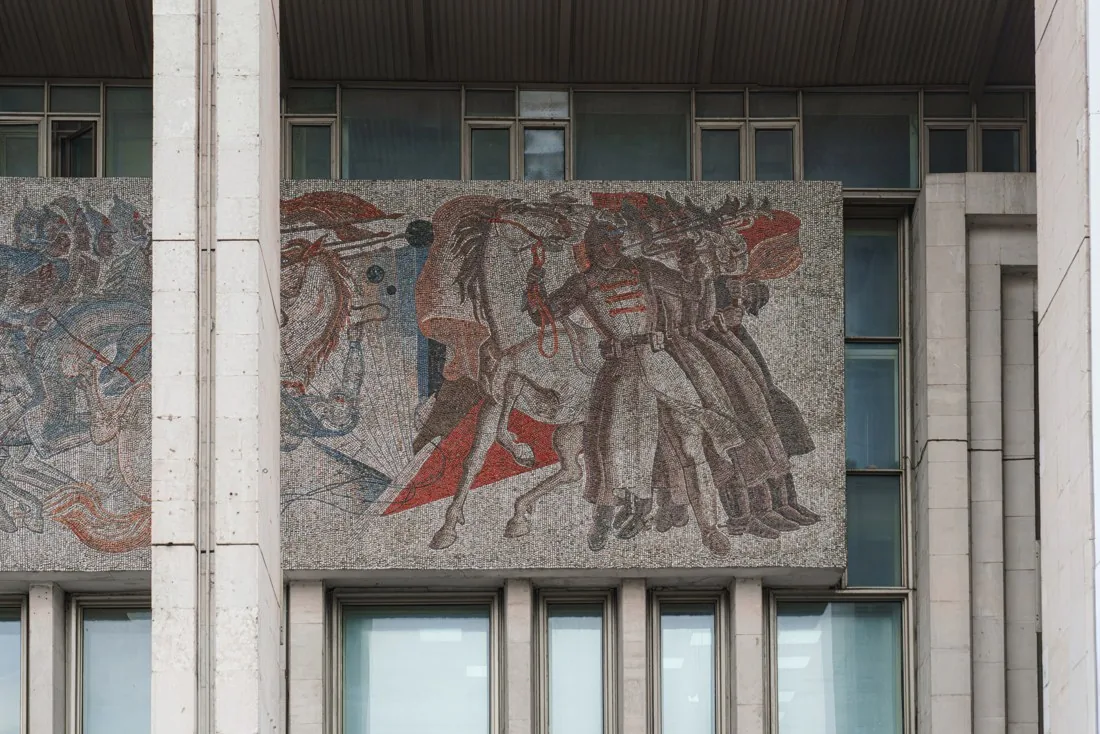
The Alliance’s catalogue describes the Battle of Borodino mosaic as two panels separated by a long central entrance area. That arrangement creates a useful viewing problem: how do we read an artwork when the building places a substantial gap between its parts?
The existing location record preserves the supplied attribution to B. Talberg, the date 1962 and the Moscow address. The photograph discussed here is by Aigul Bedretdinova. Those records establish the starting context; they do not identify every figure visible in the composition.
Start with the forecourt
The featured image includes the decorated building surface and a dark stepped area below it. Keeping that foreground in view explains the physical separation between viewer and artwork. A tight crop would make the mosaic easier to inspect but would remove part of its architectural presentation.
The pale wall around the image also matters. It gives the coloured forms a field in which to appear. The distribution of decorated and undecorated areas is part of what the photograph records.
Read a panel as one part of a larger arrangement
A single view may concentrate on one wing. It should be captioned that way rather than presented as the complete work. The catalogue’s additional photographs help locate the parts relative to the entrance.
When comparing the wings, ask where groups of figures gather, where movement appears to lead, and how each composition approaches the central gap. These questions address visible structure. They do not require guessing which historical individual a figure represents.
Keep three dates separate
The event named in an artwork’s title, the date of the artwork and the date of the photograph answer different questions. Conflating them can turn a twentieth-century representation into apparent evidence from the historical event itself.
Here, the catalogue’s 1962 date belongs to the artwork record. The source image’s embedded December 2025 date belongs to the photograph and remains uncorroborated metadata. Any publication date attached to this essay will describe a third event: when the article became public.
What a photograph cannot settle
A photographed uniform, gesture or object may suggest a historical identification, but a confident identification needs a source. Look for the museum’s own interpretation, an original programme or a documented artist account. Until then, describe the visible feature and preserve the question.
The same restraint applies to condition. An area that looks pale, interrupted or uneven is not automatically a later repair. Lighting, distance and image compression can all influence what is visible.
Make the gap part of your reading
A useful exercise is to sketch two simple rectangles and an entrance between them. Add only the largest groups or directional movements you can verify from the photographs. The sketch will show how much of your reading depends on the building’s separation of the panels.
Return to the catalogue for the complete photographic context. If you have a primary source identifying particular scenes or figures, share the relevant passage with the Alliance rather than supplying an unsupported caption. The goal is a more precise reading of this specific work.
Explore further
Help us document the next mosaic.
Every gift funds photography, research and preservation advocacy.
Donate