Essay · November 19, 2026 · 3 min read
Hlyboka’s Decorated Bus Shelter: Relief Is Not the Same as Mosaic
By Slavic Art Alliance ·
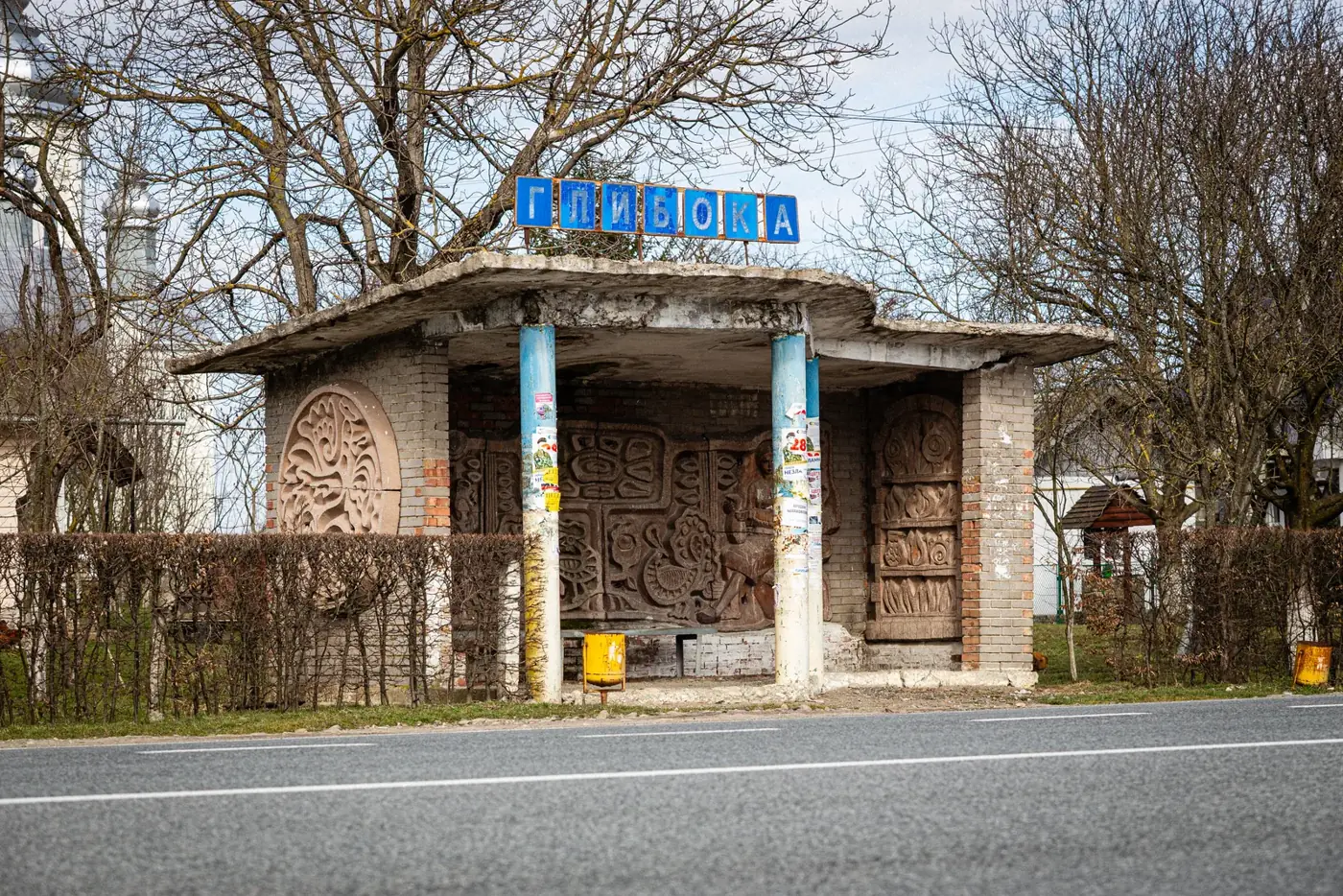
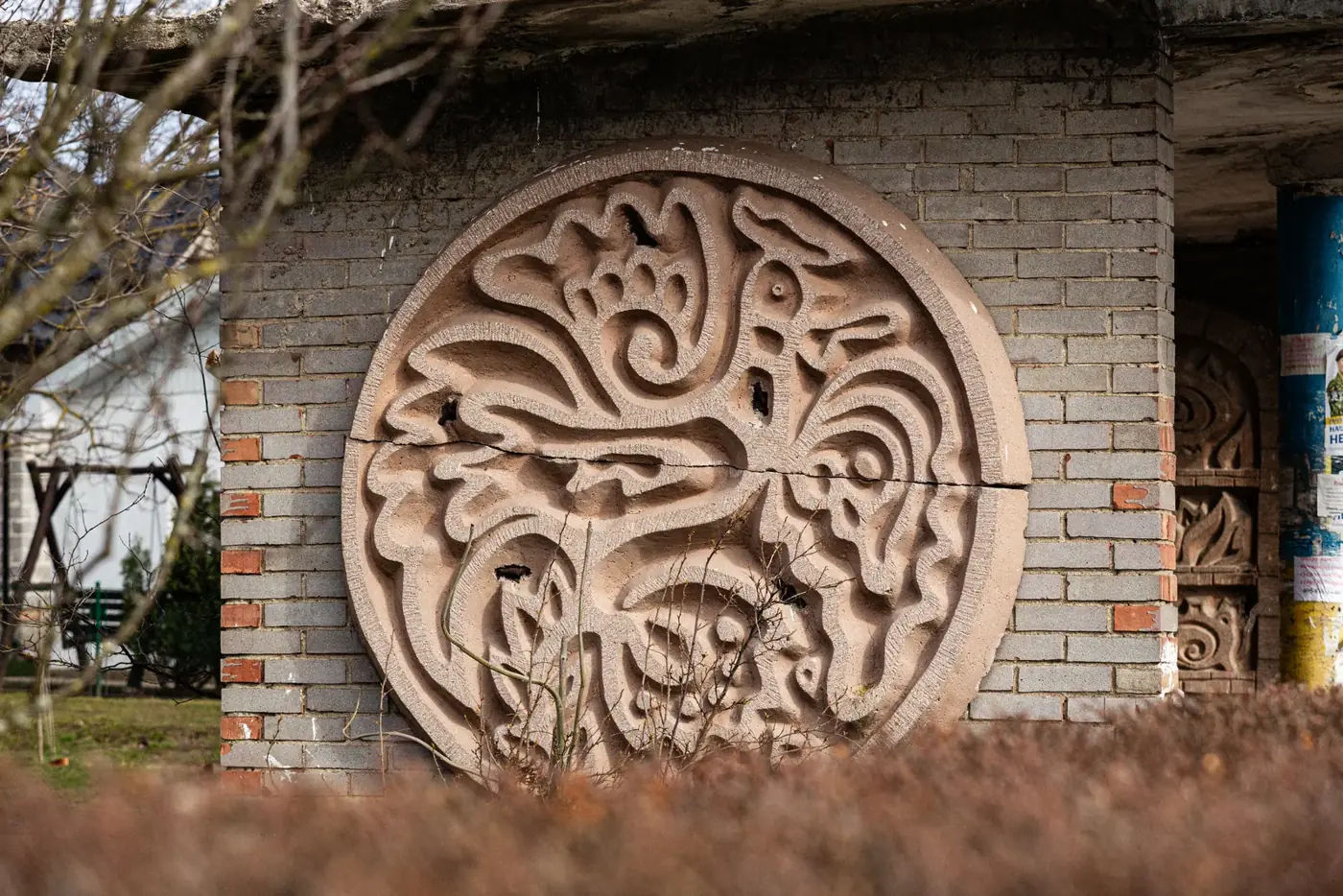
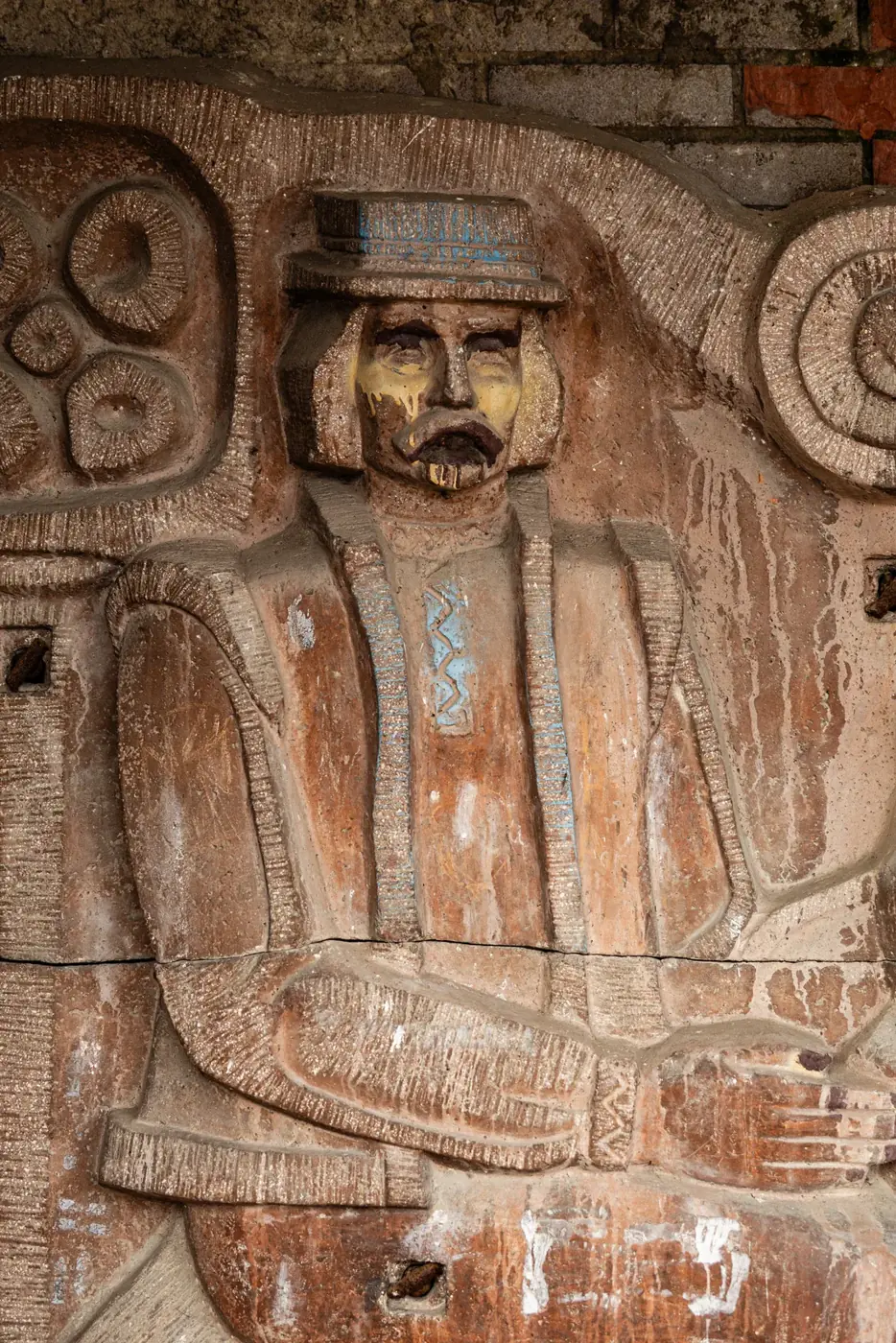
A collection about mosaics can contain important works that are not clearly mosaics. The Hlyboka bus-shelter photographs are a good example. They show brown, sculpted-looking panels with recessed and projecting forms, including a circular ornament on an outer wall. The first responsibility of an archive is to describe that evidence accurately.
The supplied notes identify Hlyboka in Ivano-Frankivsk Oblast, Ukraine. This regional detail matters because the place name alone can lead to unrelated search results. The collection does not provide a technical material analysis or a documented maker.
What “relief” describes
Relief describes forms that project from or are cut into a background surface. In these photographs, shadows within the ornament and the changing depth of the shapes are central to the visual effect. The panels read as modelled surfaces rather than a field of separately visible coloured pieces.
Mosaic usually describes an image or pattern assembled from individual elements. The distinction concerns how the surface is made, not whether the work is valuable or decorative. Some artworks combine techniques, so a photograph may justify a provisional description rather than a final classification.
For Hlyboka, “decorated shelter with relief panels” is a more defensible starting point than assigning a specific mosaic material. Calling the panels concrete, ceramic or carved stone would require additional evidence. Their brown appearance does not settle the question.
Look at the architecture as well as the ornament
The wide view shows pale columns, a shallow roof and a series of panels behind the waiting area. The columns divide the front into bays, while the outer circular panel addresses a different direction. This arrangement helps explain why several photographs are needed.
A detail image can make the relief appear to be a separate sculpture. A wider image restores its relationship to the shelter. Both views belong in a useful record, with captions explaining their different purposes.
A simple classification test
When encountering an unfamiliar decorated surface, ask three questions:
- Can individual pieces and their joints be seen?
- Does the image depend mainly on colour, physical depth, or both?
- Is there a reliable record identifying its technique?
If the answer to the last question is no, describe the visible structure and keep the material field qualified. Do not scrape, touch or remove anything to investigate it. A closer permitted photograph or a documentary source is the appropriate next step for an interested visitor.
Why precision helps the wider archive
Labelling all roadside decoration as mosaic makes searches less useful and can hide differences in conservation needs. It also encourages a false impression that every shelter was made by the same process. Keeping relief in view, while naming it carefully, gives a richer account of Ukrainian public art.
The Hlyboka photographs invite research into the relationship between shelter design and sculpted ornament. They do not need an invented attribution to deserve attention. If you can identify the material or maker from a reliable record, share that evidence through the Alliance’s contact page.
Primary visual evidence: Andrii Shustykevych’s Hlyboka series and supplied location notes. “Relief” is a visual description here; material composition remains unverified.
Explore further
Help us document the next mosaic.
Every gift funds photography, research and preservation advocacy.
Donate