Essay · November 19, 2026 · 3 min read
A Mosaic Near Building Works: Preparing a Clear Documentation Packet
By Slavic Art Alliance ·
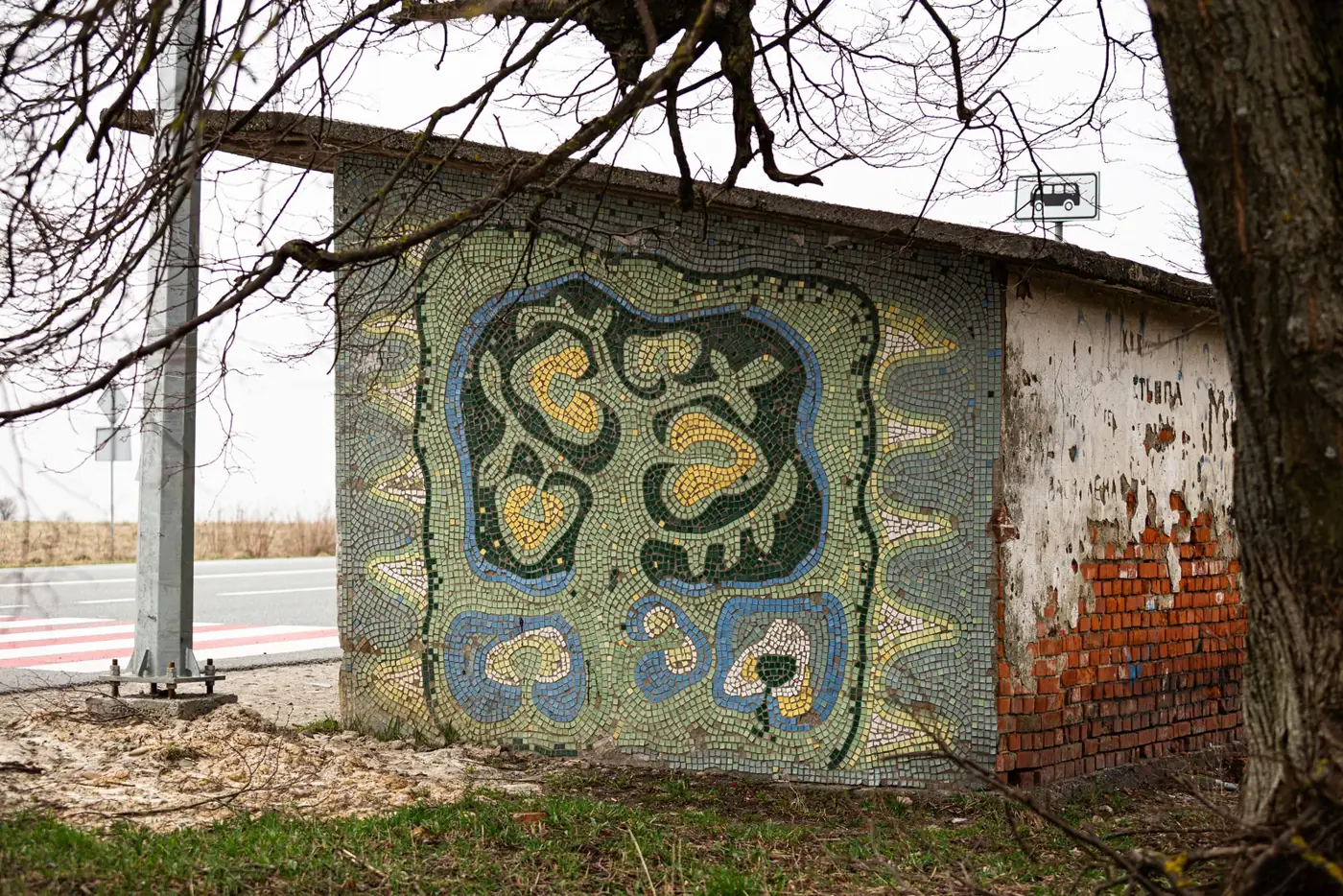
When building work appears near a mosaic, concern can move faster than information. A photograph of scaffolding or an exposed surface does not by itself prove that an artwork is about to be demolished. A concise documentation packet helps separate what is observed from what still needs confirmation.
The featured Lisna Slobidka image is an archive illustration of a decorated wall and exposed construction. It is not evidence of a current renovation proposal or an imminent threat at that site.
Establish the site and the observation
Identify the artwork, building and locality. Include a wide photograph and a clear detail if available, with capture dates and photographer credits. Record exactly what prompted the concern: a notice, visible works or a statement from an identified source.
Keep personal information and sensitive location details out of public circulation where they are not needed. Do not enter a restricted area, approach unsafe works or interfere with the surface to gather evidence.
Find the actual project information
Look for a posted notice or a statement from the responsible organisation. Save the source and its date. Distinguish a proposal from an approved plan and a rumour from a documented action.
If the effect on the mosaic is unclear, make that the question. “Can you confirm how the panel will be documented and protected during the work?” is more useful than asserting an intention that has not been established.
Keep the packet short and traceable
Use a one-page summary with the site identity, observed facts, source list and specific request. Attach a small, labelled photograph set rather than an unorganised archive. Keep original files available separately.
A hypothetical summary might say: “A notice dated [date] describes facade works at [site]. The attached photographs document the mosaic’s position. The published information reviewed does not explain the treatment of the artwork.” This is a sample format, not a claim about an active project.
Describe condition without prescribing treatment
Visible losses or cracks may be relevant, but do not diagnose their causes from a casual photograph. Getty’s conservation-planning example at Bulla Regia shows why condition, significance and risk are considered together in professional planning.
Do not propose detaching or repairing the mosaic yourself. A documentation packet is a request for informed attention, not a treatment specification or a substitute for any required professional process.
Share with a clear purpose
Contact the responsible institution or organisation through an appropriate channel. If seeking the Alliance’s input, explain what you want: help identifying sources, contextual information or review of the photographic record. Do not imply that the Alliance has committed to intervene.
Keep a dated record of responses and update any public statement when new facts emerge. Correcting an early assumption is part of responsible advocacy.
A careful packet preserves the evidence needed for a useful conversation. It can support attention to an artwork without inventing urgency, assigning motives or promising an outcome.
Explore further
Help us document the next mosaic.
Every gift funds photography, research and preservation advocacy.
Donate