Essay · November 19, 2026 · 3 min read
Strymba’s Mosaic Shelter: The Place Name Is Part of the Record
By Slavic Art Alliance ·
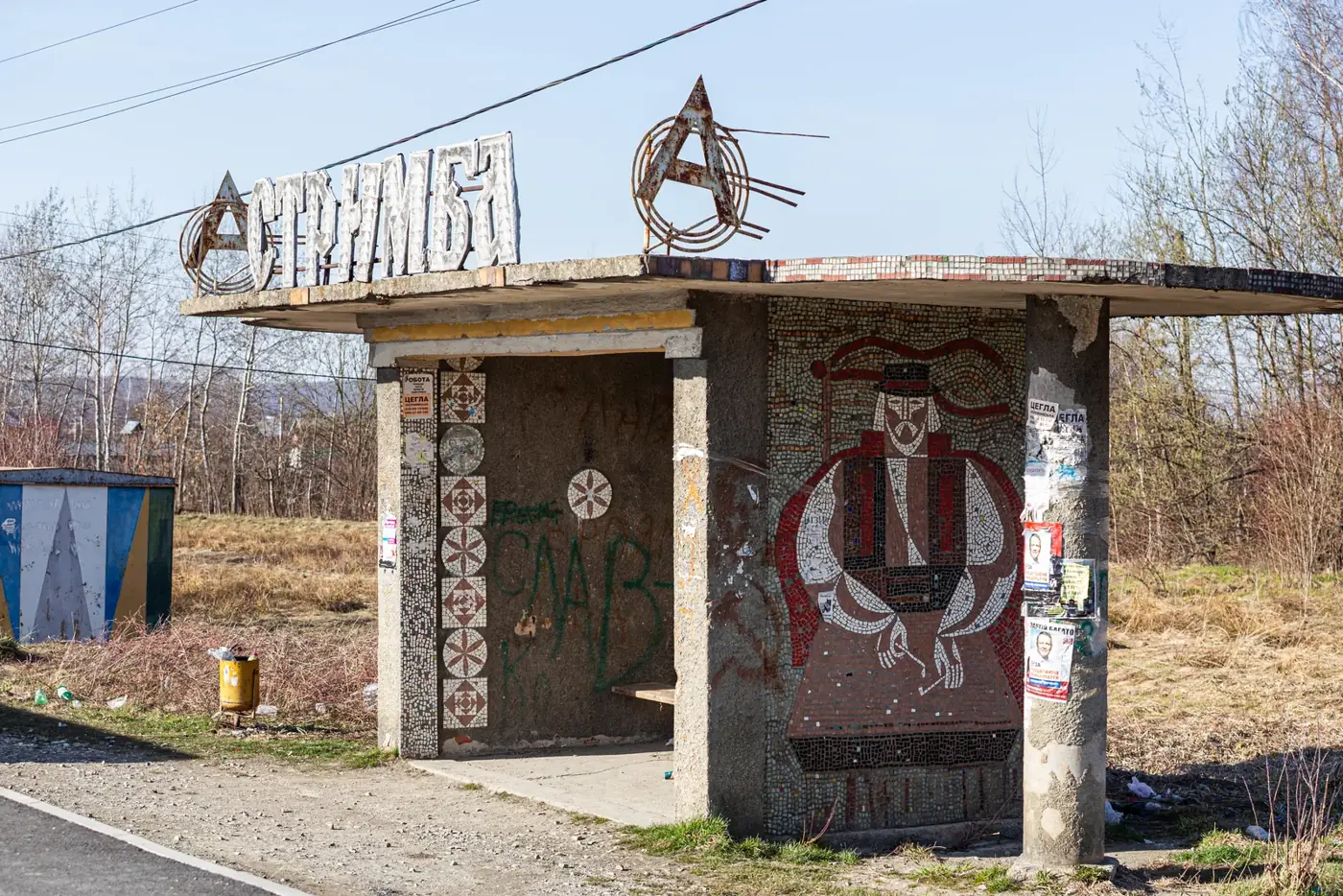
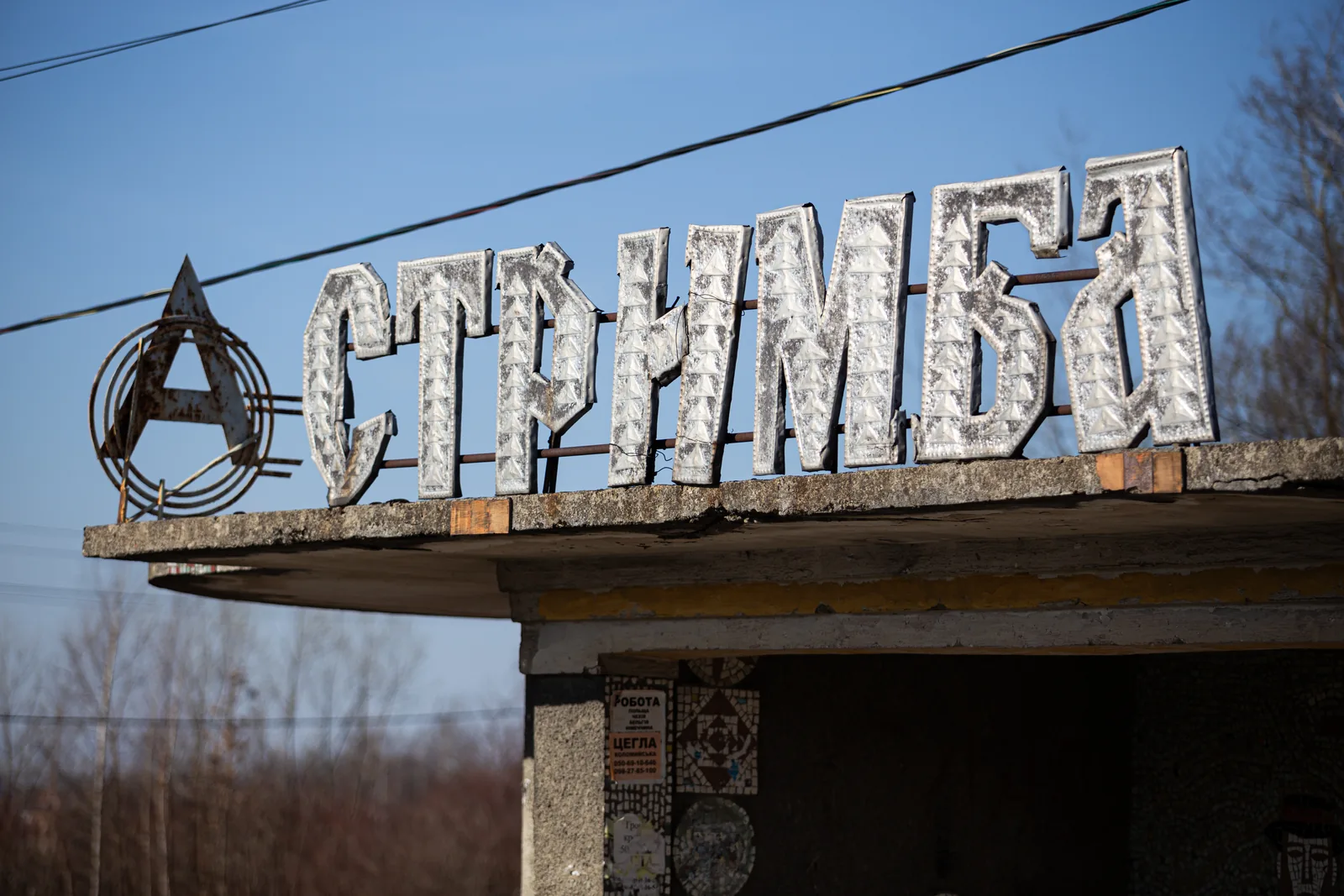
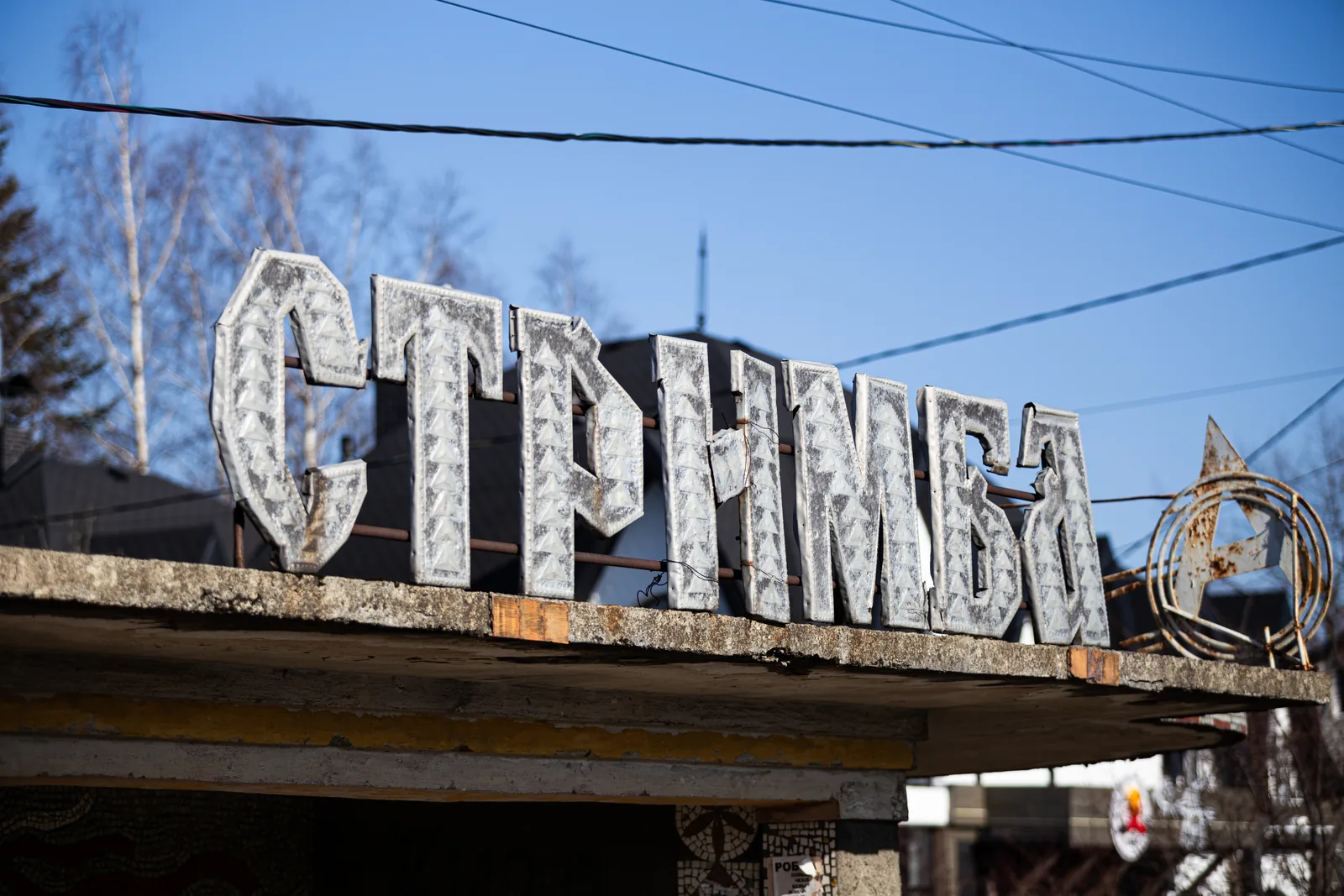
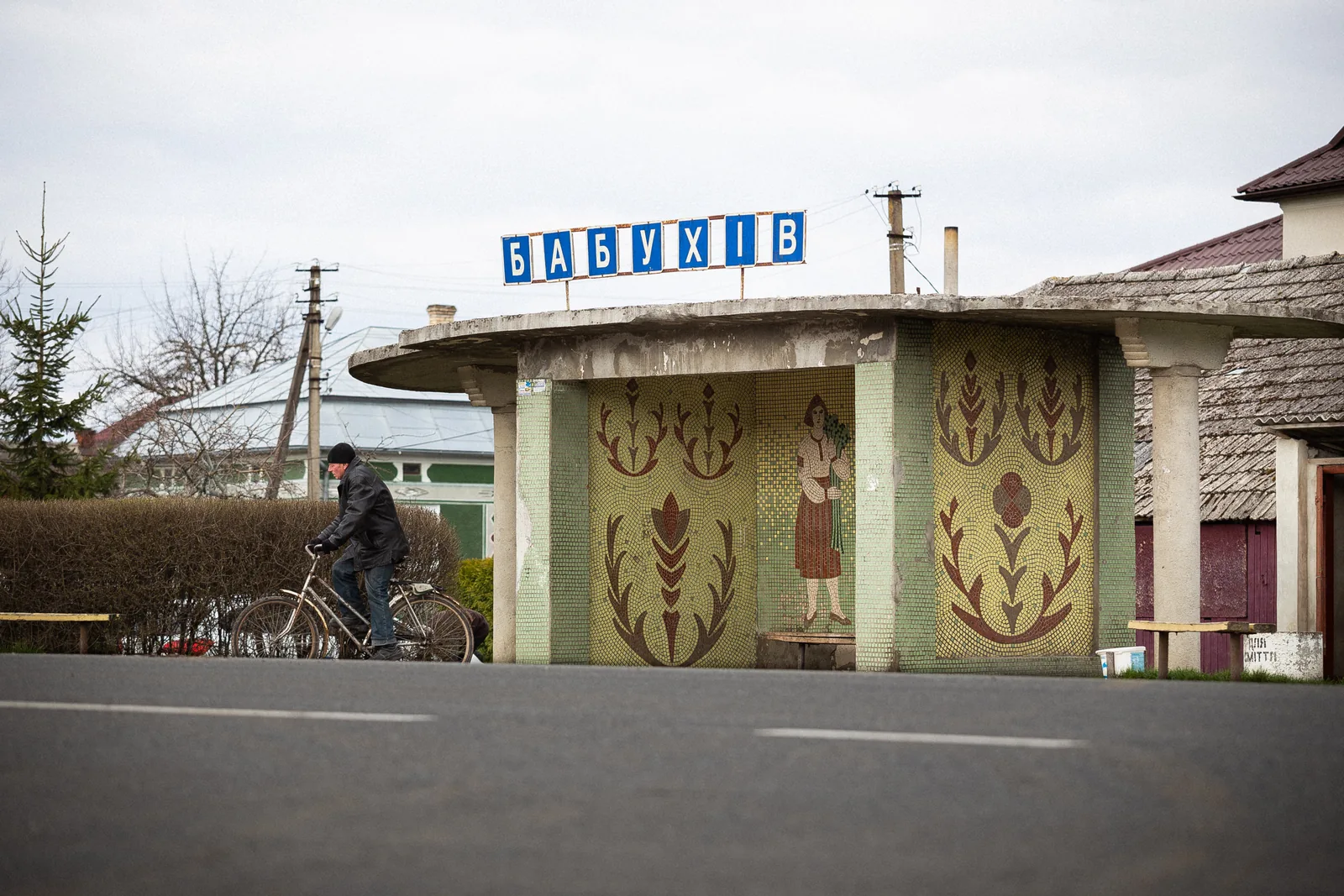
The Strymba collection shows a shelter with large letters above the roof and strongly contrasting imagery below it. The sign is easy to treat as incidental infrastructure. For an archive, however, it is an important connection between a photograph and a named place.
The supplied location file places the shelter in Ivano-Frankivsk Oblast, Ukraine. The photographs and the accompanying note support that identification together. Neither should be discarded simply because the other seems sufficient.
Keep the sign in the wide view
The featured photograph includes the shelter, its name sign, supporting columns and part of the surrounding setting. A close crop of the decorated wall would be useful for studying the image, but it would remove much of the location evidence.
Within the photographed composition, red, white and dark shapes form a tall central figure-like arrangement. It is possible to describe its vertical emphasis and contrasts without assigning an official title or identifying a specific legendary character. The source packet does not establish those details.
The roof lettering provides a different type of information. It names the place as displayed in the photographed scene. Preserve a clear view of the letters, including any gaps or damaged portions, rather than silently reconstructing what you expect them to say.
Place labels and artwork titles are different
“Strymba bus shelter” is a practical location label. It is not necessarily the historical title of the artwork. An archive can use that label while keeping an official-title field empty or marked unknown.
Similarly, the name on a shelter does not identify its artist, installation year or commissioning body. Combining those facts into one confident caption without evidence makes later correction harder.
A useful record separates:
- Place name as shown in the photograph.
- Standard search spelling and any useful aliases.
- The supplied regional and location information.
- A neutral description of the decorated surface.
- Known and unknown attribution fields.
Follow the evidence back to its file
Keep the original filename associated with each derivative image. A descriptive website filename helps readers and editors, but it should not replace the connection to the source. If someone later supplies an inscription reading or a historical photograph, that connection lets the archive identify the exact view under discussion.
The large sign also illustrates a common research trap: search results for a place may concern transport timetables or an entirely different locality. Add the region and the word “mosaic” or “shelter” when searching, then compare the actual structure instead of relying on a name match alone.
An invitation to add context
The photographs establish a distinctive decorated shelter, not a complete history. A maker’s name, original sketch or dated local publication would add another layer. If you can supply such evidence, contact the Alliance and identify the Strymba image you mean.
Preserving a place name is a small act with a large practical benefit: it keeps an attractive image connected to the community and structure from which it came.
Primary visual evidence: Andrii Shustykevych’s Strymba photographs and supplied location note. No present transport service or access arrangement is inferred.
Explore further
Help us document the next mosaic.
Every gift funds photography, research and preservation advocacy.
Donate