Essay · November 19, 2026 · 3 min read
Ukrainian Mosaics in Digital Projection: What Is Preserved and What Changes
By Slavic Art Alliance ·
A mosaic can reach a new audience through a screen or a projected animation. That transformation may be moving and informative, but it also changes the object of attention. The viewer is seeing a new presentation based on a record of an artwork, not the original surface itself.
The Ukrainian Institute describes Discover Ukraine: Bit by Bit as an audiovisual project drawing on Yevgen Nikiforov’s photographic archive. The later Bits Destroyed presentation is documented by the British Council. These institutional accounts establish the project context; they should remain attached to summaries of it.
Three objects, three descriptions
First is the mosaic: a material artwork in a particular setting. Second is the photograph: a view recorded from a particular position and time. Third is the digital presentation: an edited, sequenced or animated work using that image.
Each can be valuable. The problem begins when captions treat them as interchangeable. A projection is not evidence that the original mosaic has been restored. A photograph in an animation is not necessarily a record of its current condition.
Ask what the presentation changes
Animation may introduce movement, cropping, transitions, scale and sound. Those choices can direct attention to details that a passerby might miss. They can also change the way a composition is experienced.
When watching, ask which features belong to the original work and which belong to the presentation. An institution’s project description may explain the source archive and creative team. Keep those credits alongside the names of the mosaic artists where the records establish them.
An archive comparison, clearly labelled
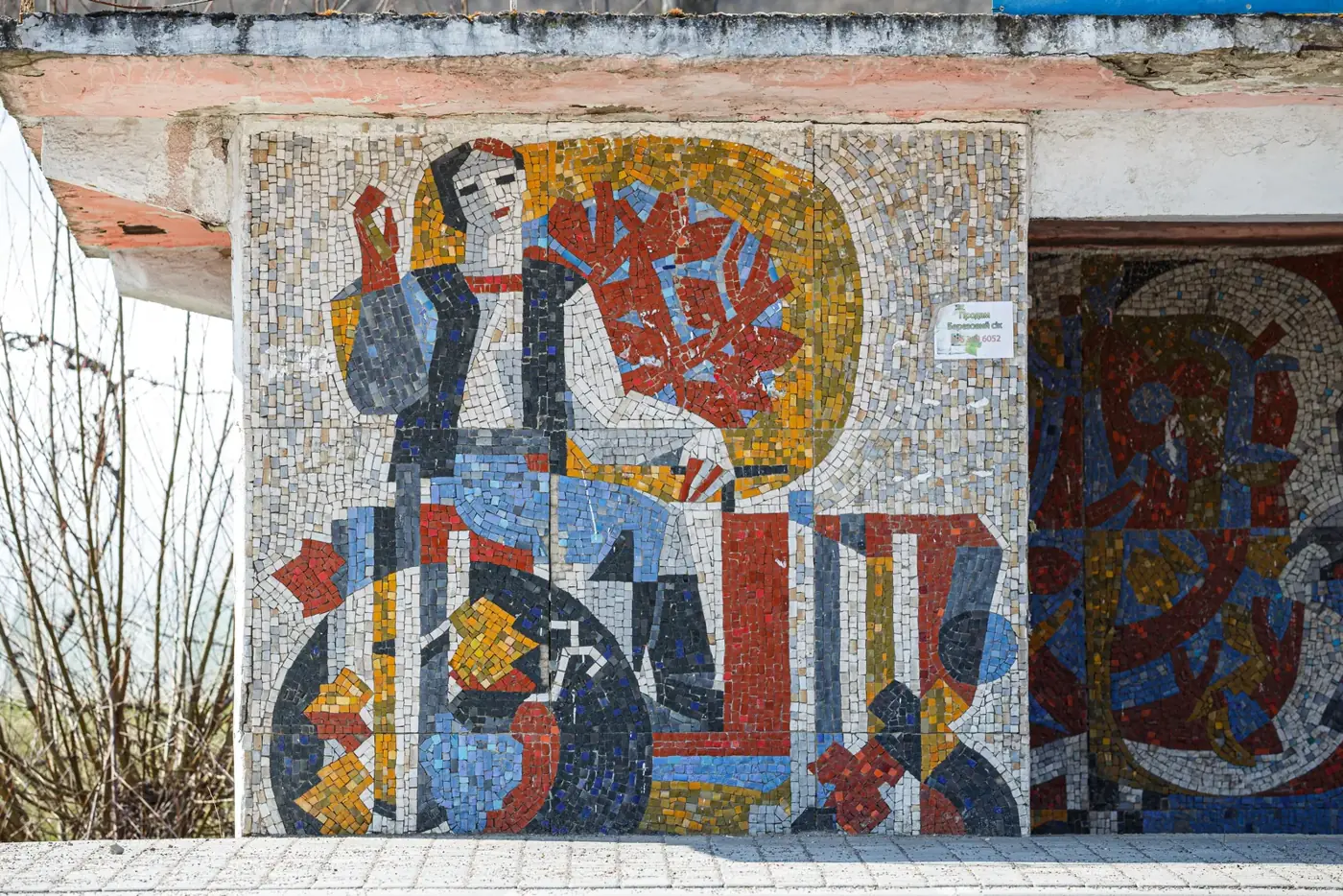
The featured photograph shows a Vilkhivka shelter in Ukraine from the Alliance’s collection. It is not identified here as a work included in Discover Ukraine. Its role is comparative: it lets us consider what would be lost if a wall image were detached from its shelter and shown only as moving shapes.
The original photograph preserves wall edges and architectural context. A digital adaptation could legitimately emphasise another aspect, but the adaptation should retain a link to that source view.
Do not let a powerful presentation outrun the evidence
Claims that a particular mosaic was destroyed, damaged or reconstructed need artwork-specific sources and dates. A report about a group of works should not be applied automatically to every image associated with an exhibition.
Equally, a digital project’s success should not be expressed through invented audience figures or conservation outcomes. Describe what the project did and what its organisers report, with the limits intact.
A useful viewing habit
After seeing an animated presentation, seek one original location photograph and its caption. Compare the setting, crop and orientation. This small step reconnects the experience with the physical work and its documentation.
The Alliance’s archive and photography essay provide further ways to think about visual records. If you share a digital adaptation of your own, identify the source image, explain the changes and make sure the necessary permissions are in place.
Explore further
Help us document the next mosaic.
Every gift funds photography, research and preservation advocacy.
Donate