Essay · November 19, 2026 · 3 min read
A Georgian Mosaic Restoration Case: What the Samegrelo Project Documents
By Slavic Art Alliance ·
A useful restoration story identifies the artworks, the people responsible and the work that was actually reported. It does not simply declare that a heritage tradition has been “saved.” A documented project in Georgia’s Samegrelo region provides a concrete example.
In its July 2024 account, UNDP describes work on three mosaics: Lady in Red, Summer in Samegrelo and Musicians. It names Mosaica Studio and specialists from the Ribirabo Foundation, with EU and UNDP support. These are the organisations credited in that source; this is not a Slavic Art Alliance project.
Read the report as a dated account
UNDP describes removal from deteriorated walls in Rukhi, studio work in Zugdidi and subsequent reinstallation. Those are reported project events. The article’s date matters: it does not by itself establish the mosaics’ condition or access arrangements in a later year.
When summarising a conservation case, preserve that time boundary. “The project report states that…” is more precise than treating every reported outcome as a fresh inspection.
Ask what the documentation makes visible
A strong project account helps readers connect an original location, an intervention and a later setting. It should also distinguish the artwork’s history from the project’s history. Moving a work creates a new chapter; it does not erase where the work came from.
Useful follow-up questions include whether a full condition record exists, how the original setting was documented, and how the new installation will be monitored. These questions do not imply that the published summary is deficient. A public-facing story and a technical report serve different purposes.
A comparison from the Alliance’s archive
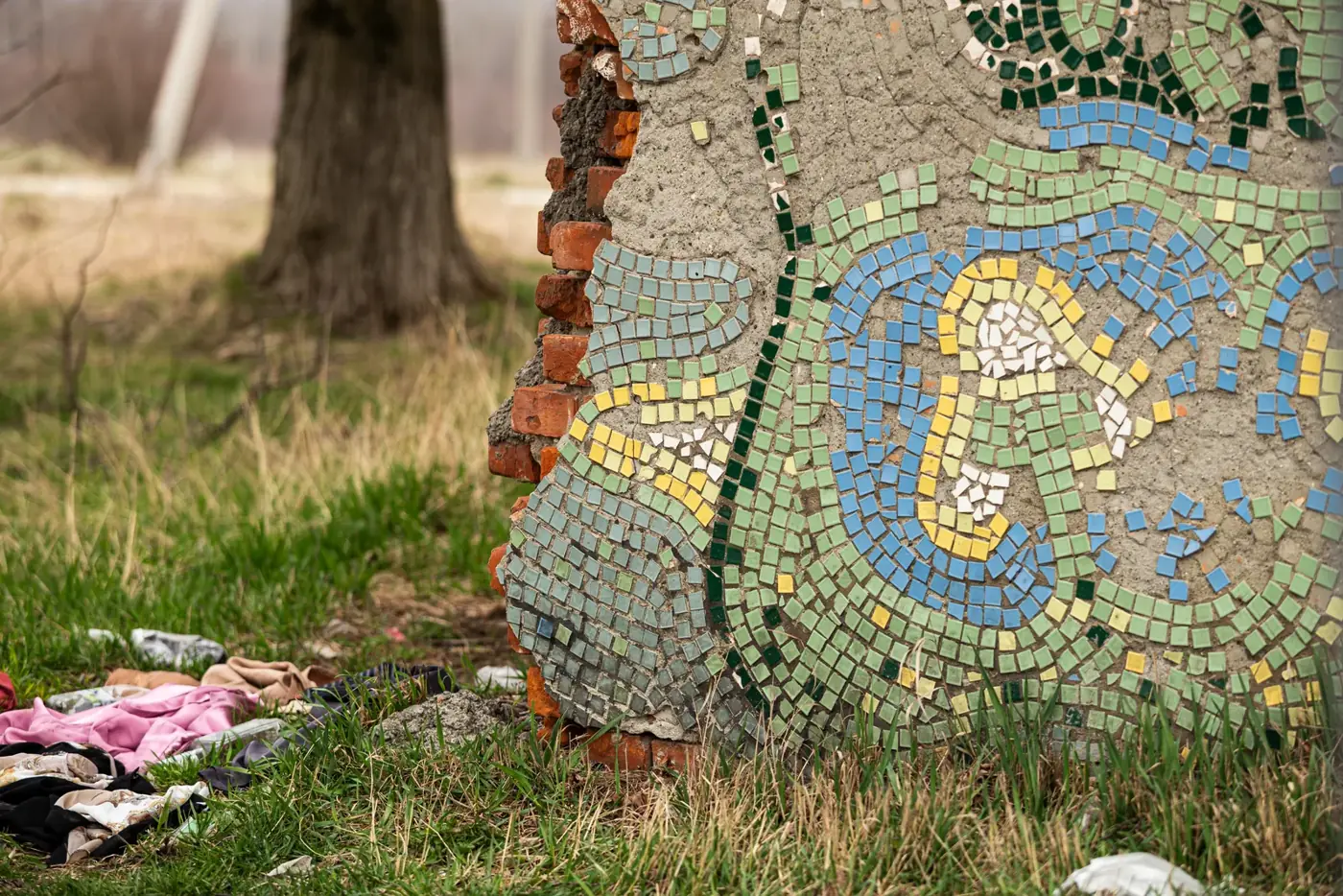
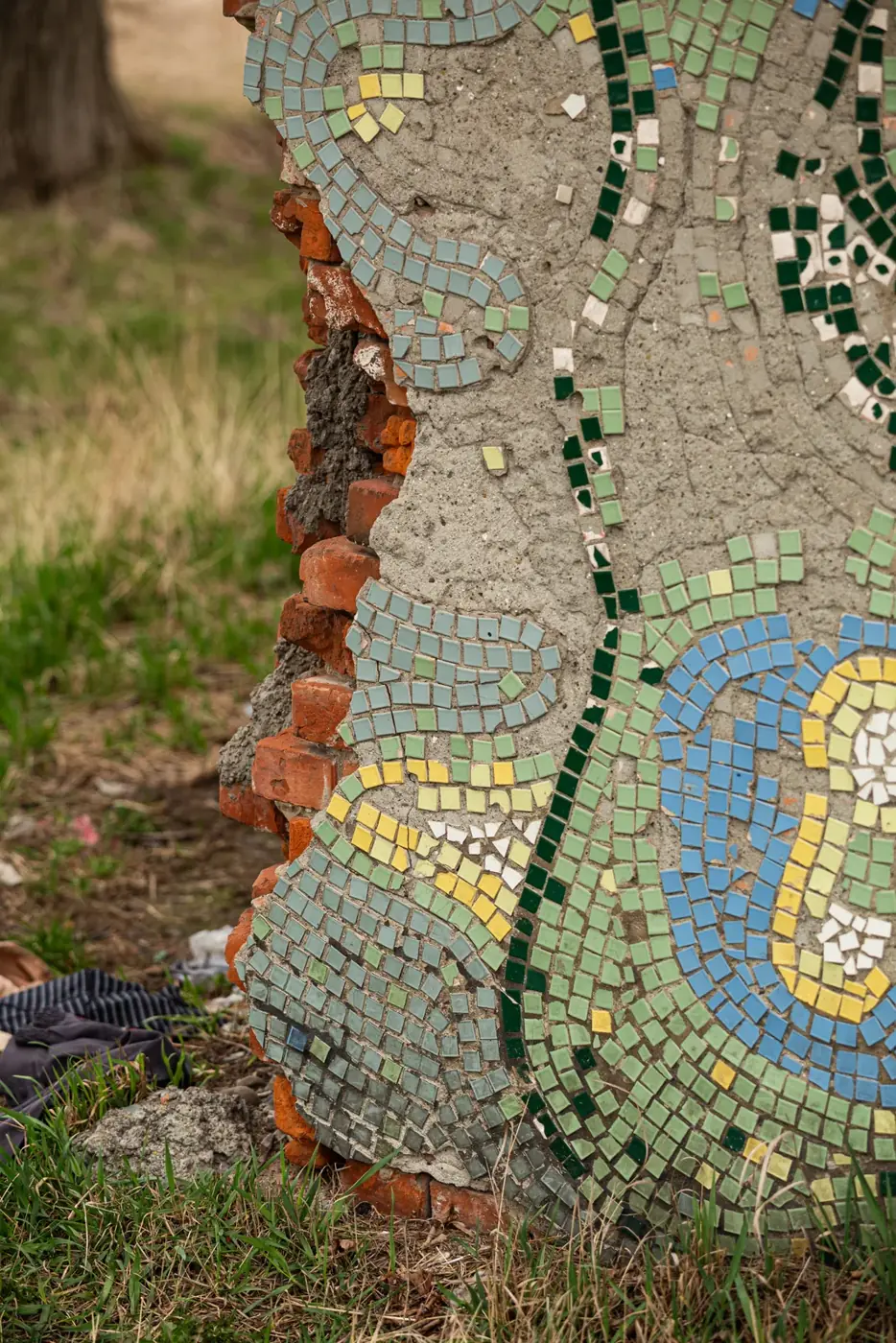
The featured image shows an exposed edge at Lisna Slobidka in Ukraine. It is not one of the Georgian mosaics and does not show a restoration operation. It is included to illustrate the kind of visible condition detail that can prompt questions before professional assessment.
The image cannot establish why the edge is exposed or which treatment would be appropriate. In particular, the Georgian project should not be turned into instructions for removing another mosaic. Decisions about intervention depend on the specific artwork, support and circumstances.
Credit collaboration accurately
Restoration is easily compressed into a single heroic name. Preserve the roles that a source actually identifies: project organisation, specialists, supporting bodies and participating community members. Avoid adding an Alliance partnership, funding contribution or conservation role unless a record establishes it.
The same principle applies to photographs. A photograph of an unrelated damaged surface must not be captioned as evidence of a project’s before-and-after result.
What readers can take forward
Use this case as a model for reading preservation news carefully. Identify the work, source date, responsible team and documented actions. Keep unanswered technical questions visible, and seek the relevant institution’s records when more detail is needed.
The Alliance welcomes evidence-based discussion of mosaic preservation through its contact page. Sharing a reliable project source helps build understanding without inventing outcomes or presenting a general appreciation article as a treatment plan.
Explore further
Help us document the next mosaic.
Every gift funds photography, research and preservation advocacy.
Donate