Essay · November 19, 2026 · 3 min read
Georgian Mosaics Before the Soviet Period: Starting with Gelati
By Slavic Art Alliance ·
A search for Georgian mosaics often leads to twentieth-century buildings and roadside art. That is one important strand, but it is not the whole history. Gelati offers a documented medieval starting point and a reason to keep chronology precise.
UNESCO identifies a twelfth-century apse mosaic at Gelati Monastery depicting the Virgin and Child with archangels. The work belongs to the history of medieval Georgia. Calling it Soviet would be an obvious chronological error; treating every later Georgian mosaic as Russian is a different but equally misleading shortcut.
Start with the specific work
Record the monastery, the architectural position and the subject as stated by the institutional source. Do not substitute a broad label such as “Caucasian religious art” for the place’s own identity.
A monument can have work from several periods. A date for the foundation of a monastery is not automatically the date of every decoration within it. Follow the source’s wording closely and distinguish the building’s history from the history of a particular image.
Compare periods without flattening them
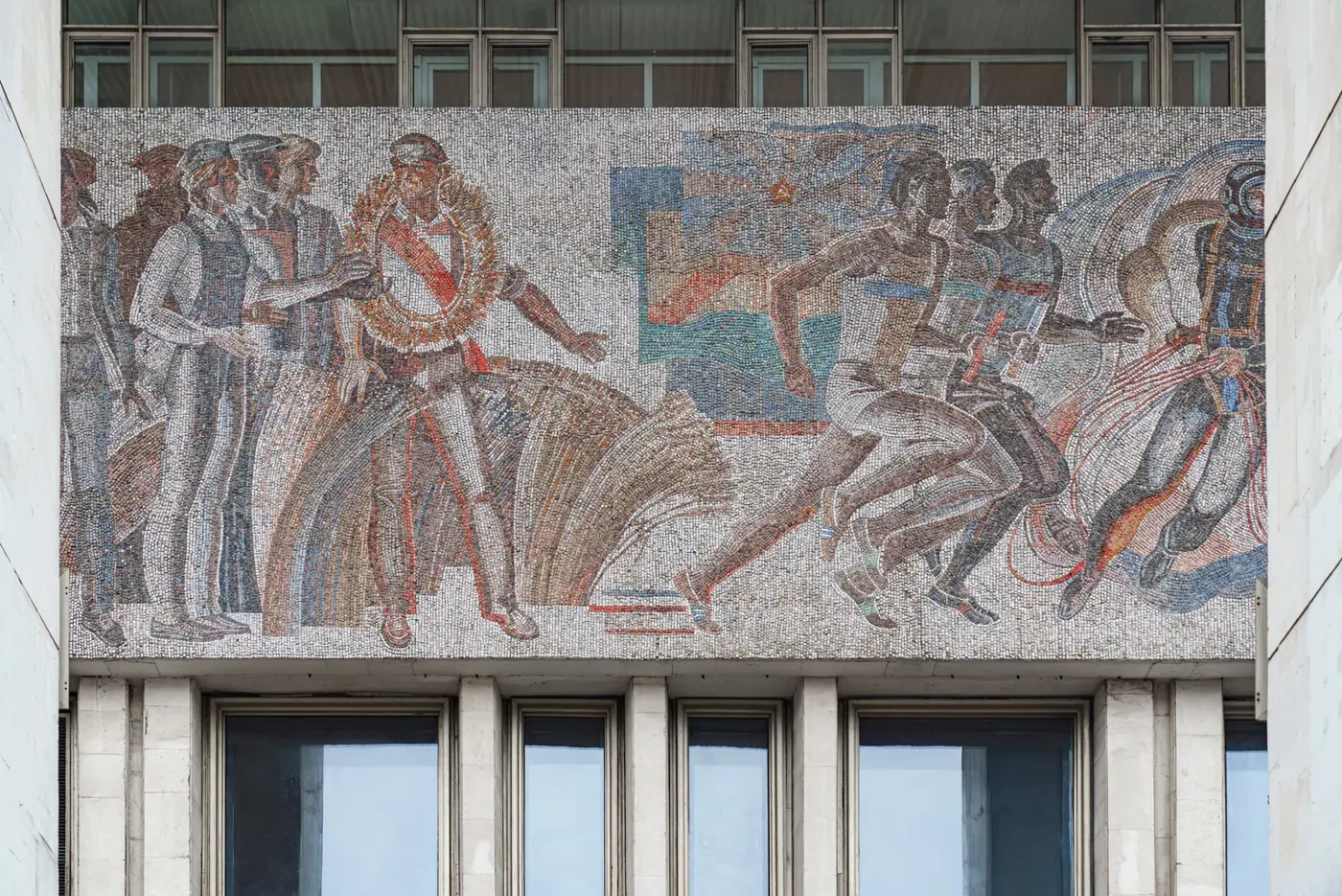
The featured photograph shows Moscow Youth Palace, not Gelati. It is included as a later Russian architectural comparison. Its window band and figurative facade composition provide a contrasting setting to the apse placement documented at Gelati.
The comparison concerns different uses of mosaic within buildings. It does not claim that the Moscow work descends directly from Gelati or that the two share a religious programme. An influence claim would require evidence beyond a shared medium.
Keep geography and period in separate fields
For a research notebook, use distinct entries for present-day country, locality, artwork date and historical context. “Georgia” answers a geographic and national question. “Medieval” and “Soviet-era” answer chronological questions. “Byzantine” may describe a historical or artistic context that needs explanation in the particular record.
Keeping those fields separate makes comparisons more accurate. It also stops a broad regional label from overriding the identity of artists and communities.
Read condition statements with their dates
A heritage description may summarise a monument’s significance and conservation history. It should not automatically be treated as a current visitor notice. Before making a claim about present access or condition, consult the responsible institution’s latest information.
This article is a research introduction, not a travel itinerary. It does not announce current opening arrangements, photography permissions or a newly verified condition assessment at Gelati.
A better next question
Instead of asking whether Georgian mosaics are “really Byzantine” or “really Soviet,” choose a specific question about a specific work. What does its location in a building contribute? Which source identifies its date? What survives, and how is that survival documented?
Those questions allow medieval and twentieth-century works to be studied together without making them interchangeable. The Alliance’s archive offers later comparisons; the cited heritage record provides the starting evidence for Gelati. Readers who can contribute properly identified Georgian photographs or primary records can contact the Alliance to help broaden that conversation.
Explore further
Help us document the next mosaic.
Every gift funds photography, research and preservation advocacy.
Donate