Essay · November 19, 2026 · 3 min read
Soviet, Russian, Ukrainian or Georgian? Naming Mosaic Art Precisely
By Slavic Art Alliance ·
The words used to label a mosaic affect how it is found and understood. “Soviet-era” can describe a historical period. “Russian,” “Ukrainian” and “Georgian” can identify different national, geographic or artistic contexts. They are not interchangeable search tags.
A useful record begins with the particular work and explains what each label means. It does not force every mosaic associated with the former Soviet Union into one national category or assume that every mosaic in the region belongs to that period.
Separate four questions
Where is the work? Record the locality and present-day country, with a source. If it has moved, distinguish original and current locations.
When was it made? Use a documented date or qualified range. A photographic style is not a sufficient dating method.
Who made it? Preserve the attribution and any uncertainty. An artist’s name alone does not establish nationality, ethnicity or every collaborator’s role.
How is it described stylistically? A style label needs a reason. It should not be inferred automatically from a date or political boundary.
These fields can coexist. They answer different questions and make the record more searchable without flattening it.
Use contrasting sources to test your labels
UNESCO’s Gelati record concerns medieval Georgian heritage. The Ukrainian Institute’s mosaic project identifies Ukrainian works within a later historical context. The distinction is not a matter of choosing one preferred adjective; it is a matter of following the evidence for each work.
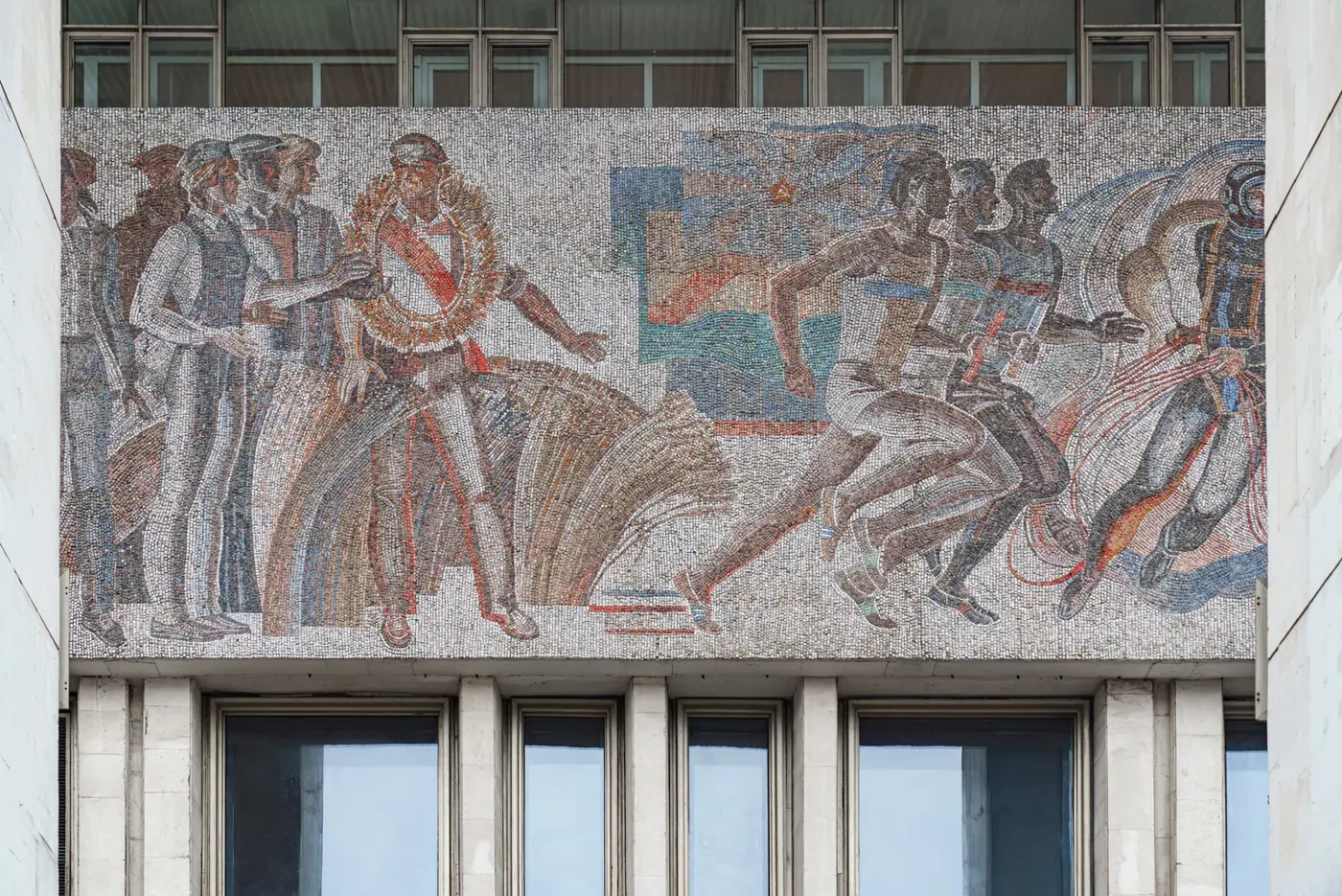
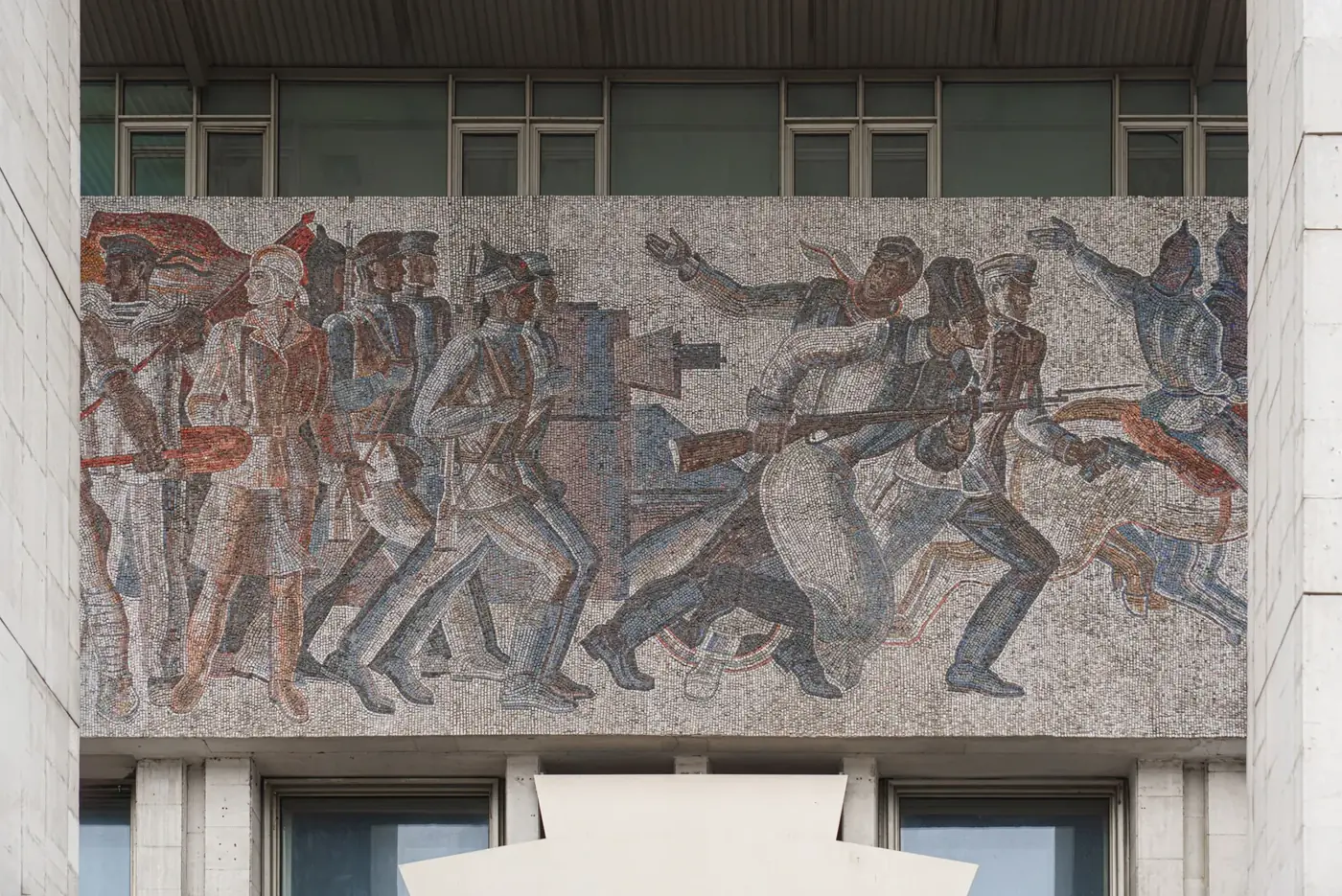
The featured photograph shows Moscow Youth Palace. Its location is a Russian example in the Alliance’s archive. It should not stand in visually for a Georgian or Ukrainian site without an explicit comparative caption.
Avoid turning a region into a personality
Statements such as “northern mosaics are restrained” or “southern mosaics are expressive” may sound explanatory while concealing large differences among artists, commissions and periods. A small number of photographs cannot establish a regional rule.
Describe the actual palette, composition or material record of the work in front of you. If a scholarly source proposes a broader pattern, attribute and define that argument rather than presenting it as a universal fact.
Keep aliases without multiplying identities
An archive may need historical place names and different transliterations to help readers search. Retain these as aliases attached to a clearly identified record. Do not create duplicate works because one source uses a different spelling.
Where a name is disputed or has changed, explain the record’s usage with appropriate sources. Avoid silently replacing the wording in a historical quotation.
A better caption
A practical caption identifies the photographed site, country, available artwork attribution and photographer, then qualifies any uncertain date. It does not need a sweeping cultural label to be meaningful.
Precise naming makes room for comparison. It allows mosaics from several countries and periods to be studied together while keeping their histories distinct. Readers who notice a naming error in the Alliance’s archive can send a correction with the relevant source.
Explore further
Help us document the next mosaic.
Every gift funds photography, research and preservation advocacy.
Donate