Essay · November 19, 2026 · 3 min read
Lisna Slobidka’s Mosaic Shelter: What an Exposed Edge Can Tell Us
By Slavic Art Alliance ·
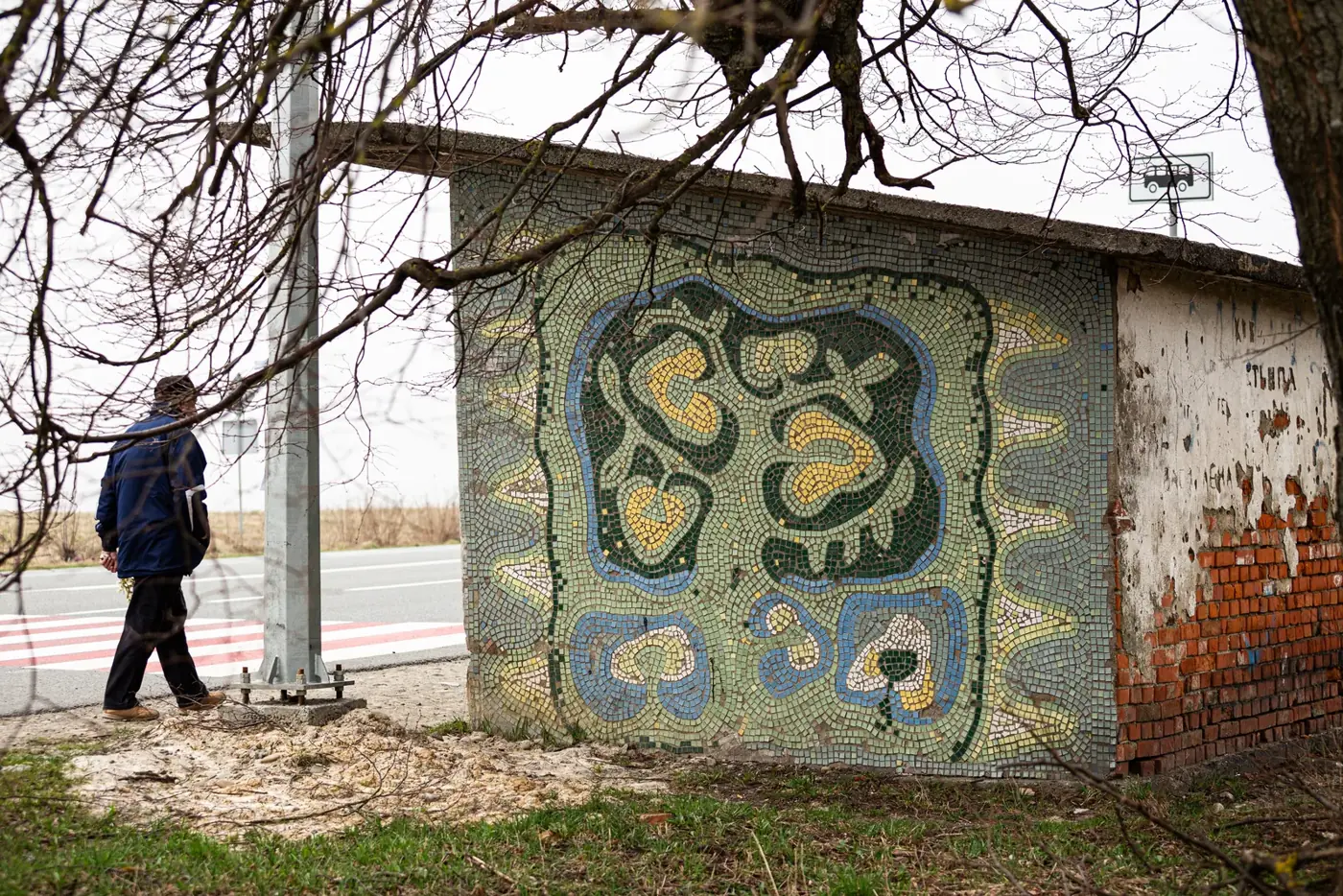
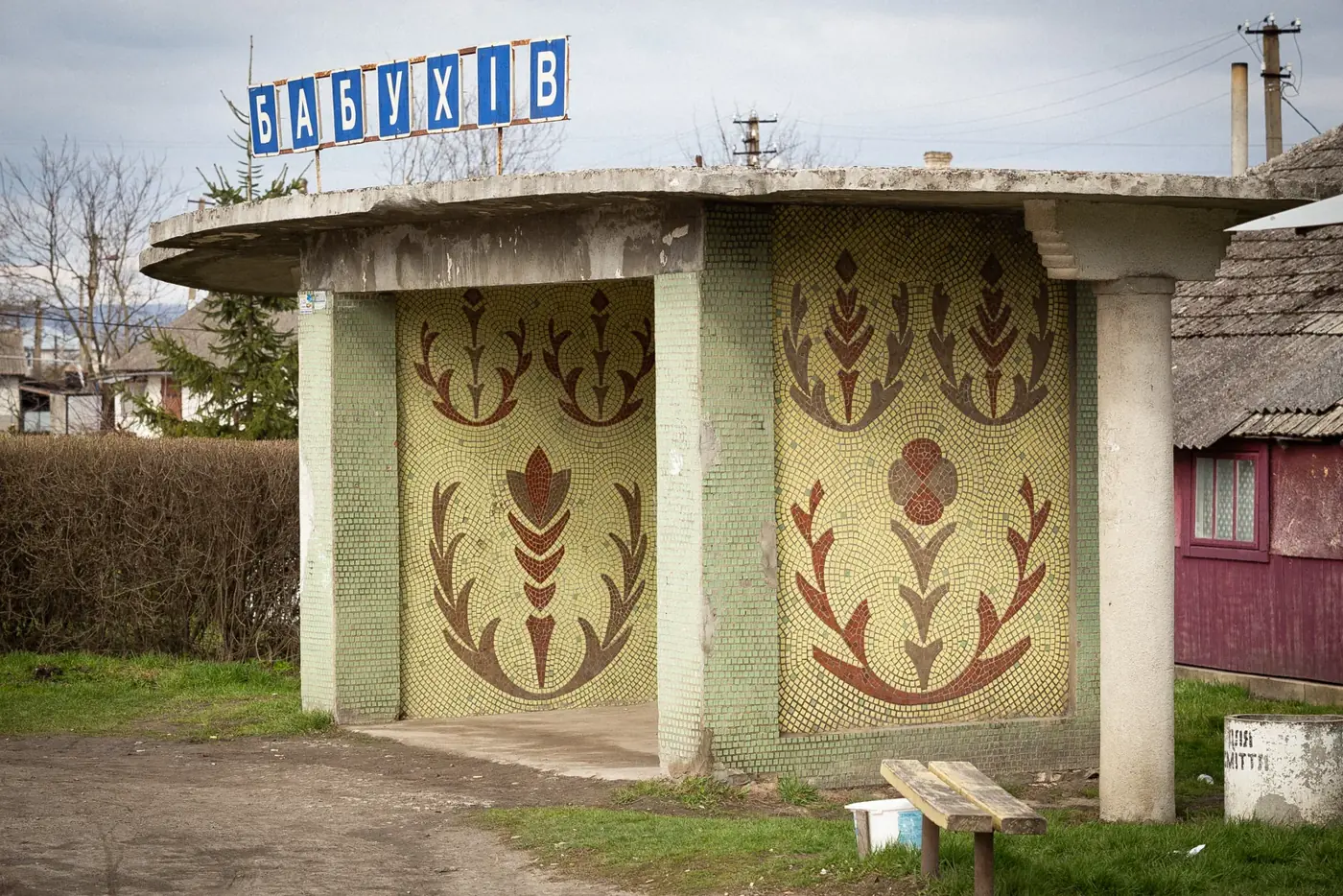
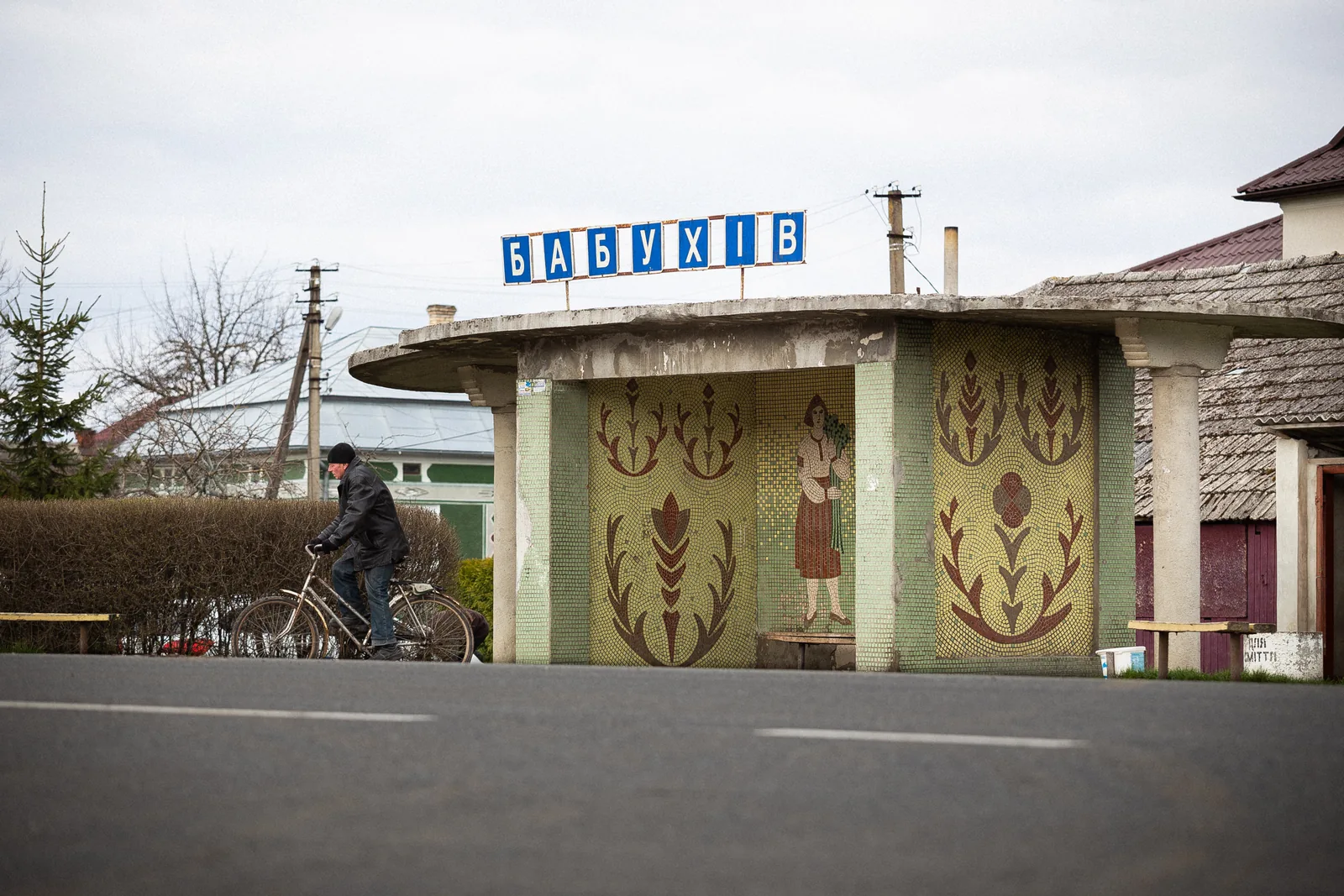
The photographed shelter at Lisna Slobidka has broad patterned surfaces in green, blue and pale tones. Some views show the entire structure beside the road; others move close to an edge where the decorated face meets exposed underlying construction. Together they demonstrate why documentation needs both context and detail.
The source notes identify Lisna Slobidka in Ivano-Frankivsk Oblast, Ukraine. The following observations refer to Andrii Shustykevych’s supplied photographs, not a new inspection of the site.
Read the pattern before examining the interruption
Start with the middle-distance view. Rounded, plant-like shapes sit within contrasting fields. Their scale makes them legible across a broad surface, while smaller pieces become visible in the close photographs. The composition continues around the shelter, so a frontal view cannot describe every decorated wall.
The featured photograph includes a passerby and the shelter’s side. It places the artwork in a lived environment without identifying the person or claiming anything about their connection to the work.
Describe an edge precisely
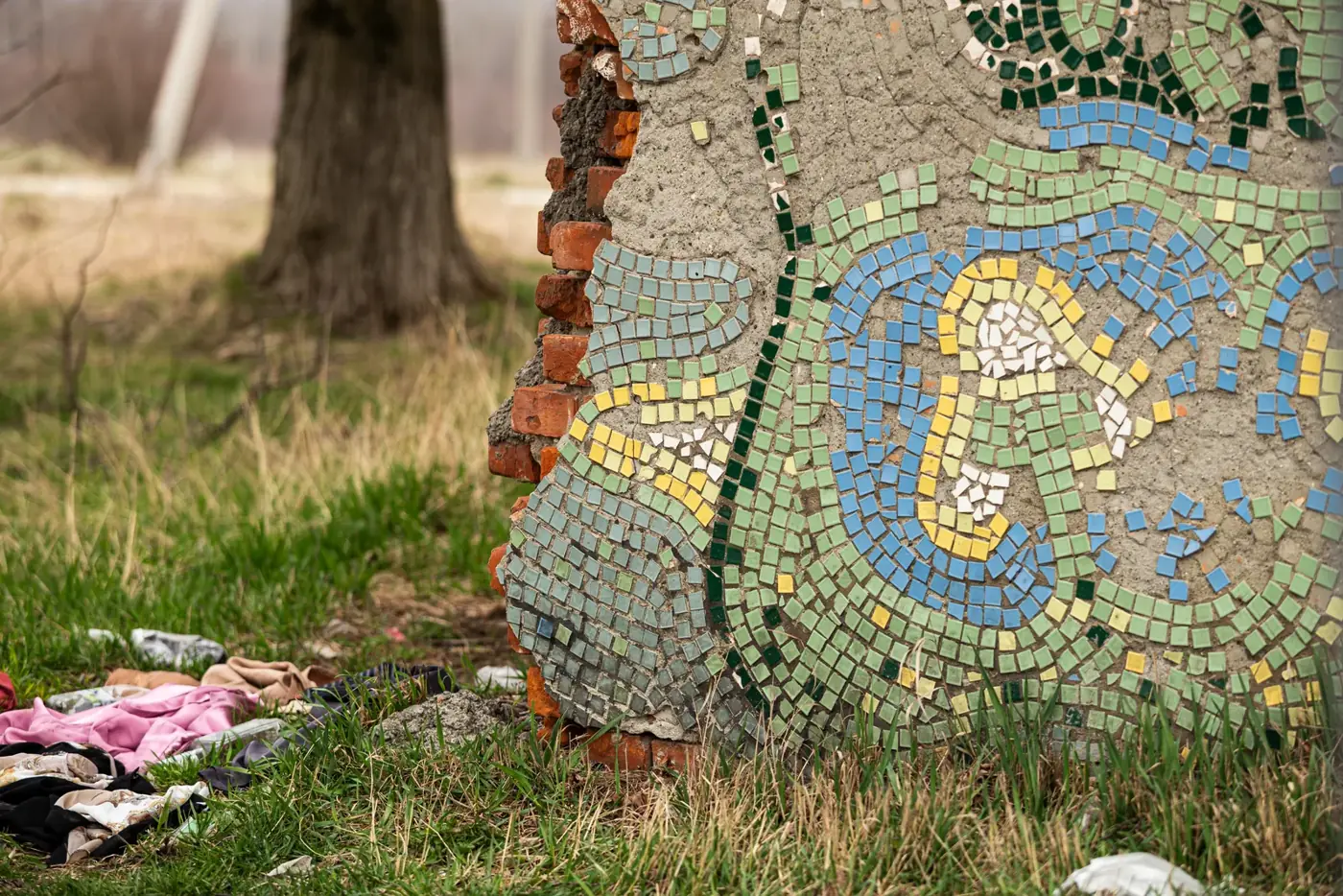
In the detail photographs, an irregular vertical boundary exposes reddish construction beside the mosaic surface. That is a useful observation. It is different from asserting that frost, vandalism, demolition or a failed repair caused it.
A careful note would locate the feature, describe its appearance and identify the photograph. For example: “At the outer vertical edge, the decorated surface is interrupted and reddish material is visible beneath or beside it.” This is a description of the image, not a measured condition assessment.
Avoid words such as “unstable” or “actively deteriorating” unless an appropriate examination supports them. A still photograph does not establish movement, the strength of an attachment or the rate of change.
Why the wide view remains essential
A close photograph can make a small loss seem to define the entire work. The wider image helps a reader locate the detail and understand how much of the composition is visible. Conversely, the wide view alone may conceal the edge completely.
A useful pair therefore answers two questions: where is the feature, and what does it look like at the available resolution? Add a third only when evidence permits it: how has it changed between reliably dated observations?
The date of an article, the date a file was delivered and the date a photograph was taken should remain separate. None is automatically the date when an exposed area appeared.
Turn concern into a useful record
If you notice a comparable feature at another site, record it from a safe permitted position and send an unedited original with a location and capture date. Do not pull at loose material, clean the edge or insert a ruler against the surface. Those actions can change the evidence and harm the artwork.
Lisna Slobidka’s shelter deserves attention for its composition as well as its visible interruptions. A balanced record preserves both. Readers who can add a dated earlier photograph or reliable information about this particular shelter can help clarify its history through the Alliance’s contact page.
Primary visual evidence: the Lisna Slobidka collection by Andrii Shustykevych and accompanying location notes. This article makes no finding about structural safety or present-day condition.
Explore further
Help us document the next mosaic.
Every gift funds photography, research and preservation advocacy.
Donate